
Unveiling the Hidden Mysteries of Leonardo da Vinci’s The Last Supper
Leonardo da Vinci's masterpiece
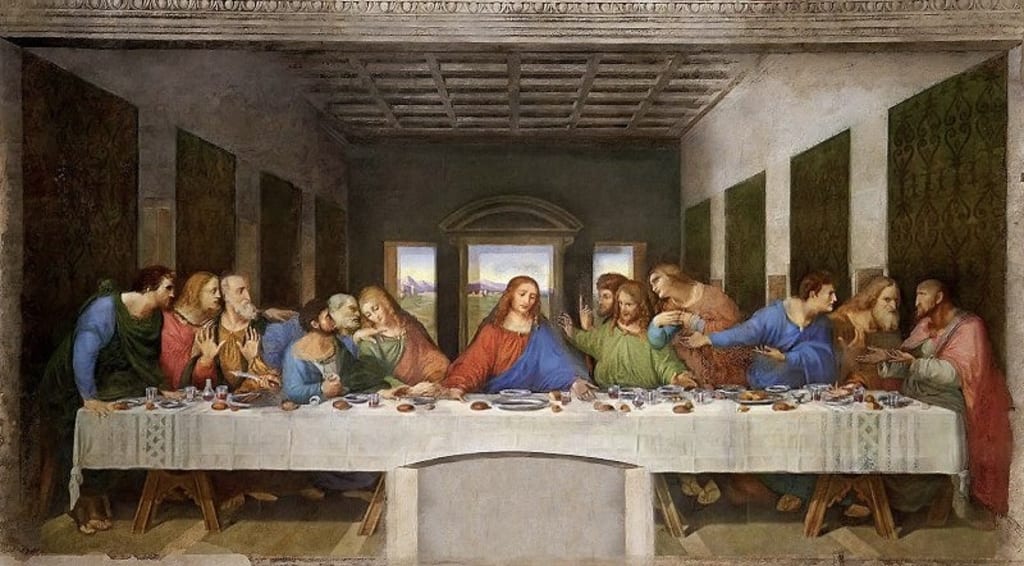
Imagine standing before a 500-year-old masterpiece that not only captures a pivotal moment in history but also hides secrets meant to challenge everything you thought you knew. Leonardo da Vinci’s The Last Supper has inspired awe, debate, and endless curiosity among art lovers, historians, and even conspiracy theorists.
Leonardo da Vinci was a man ahead of his time. In an era when art and science were beginning to merge, he pushed boundaries, blending rigorous observation with poetic imagination. The Last Supper, painted between 1495 and 1498 at the Convent of Santa Maria delle Grazie in Milan, stands as a testament to his genius.
As you gaze upon this mural, consider that every brushstroke might be a deliberate message—a coded dialogue between Leonardo and future generations. It is this possibility that transforms The Last Supper from a simple depiction of a biblical event into a living puzzle, challenging us to look deeper.
The Enigma of the Missing Holy Grail
One of the most intriguing mysteries concerns the conspicuous absence of the Holy Grail. Traditionally, religious artworks showcase a chalice—a symbol of divine grace and sacrifice. Yet in Leonardo’s rendition, no such object graces the table.
Could this omission be accidental? Unlikely. Leonardo was known for his meticulous detail and profound intention. Instead, some scholars argue that the missing chalice hints at a radical idea: that the Holy Grail is not a tangible object but a symbol of transcendent knowledge or spiritual truth. Picture this: Leonardo, with his unorthodox spirit, inviting us to see beyond the physical realm and grasp a deeper, more abstract essence of divinity.
What if the real Holy Grail is not a cup at all, but the very quest for knowledge? Share your thoughts in the comments.
The Controversial Figure: John or Mary Magdalene?
As you scan the scene, your eye is inevitably drawn to the figure seated immediately to the right of Jesus. Conventionally identified as John the Apostle, closer scrutiny reveals features that seem unusually delicate and even feminine. This observation has led some to speculate: might this be Mary Magdalene instead?
Consider the possibility that Leonardo, always the iconoclast, purposefully blurred gender lines to convey a hidden narrative. The soft contours, the subtle interplay of light on her face, and the unconventional posture suggest a complexity that defies traditional labels. Was Leonardo subtly challenging established iconography, or even hinting at a secret relationship between Jesus and Mary Magdalene? While the evidence is far from conclusive, it is this very ambiguity that captivates the modern viewer.
Have you ever questioned a well-known narrative? Let’s discuss how hidden stories can reshape our understanding of history.
A Hidden Symphony: The Musical Code Theory
In 2007, a discovery added an entirely new dimension to the painting’s mystique. An Italian musician, while examining the composition, proposed that Leonardo had embedded a musical code within the arrangement of hands, loaves, and figures. By overlaying a musical staff onto the image, he claimed the positions form a short melody—one that resonates like a solemn hymn.
Imagine a secret song hidden in plain sight, accessible only to those who dare to listen closely. Whether this theory holds or is merely an ingenious coincidence, it underscores Leonardo’s fascination with the interplay between art and science. His work invites us to not only see but also “hear” the mysteries of the past.
If you could decode a hidden melody in any artwork, which one would it be?
The Mysterious Extra Hand
Another perplexing detail is the oddly positioned hand holding a knife. In one section of the painting, the angle and placement of this hand seem detached—almost as if an extra element was added deliberately to provoke thought. Some interpret this as a symbolic gesture of betrayal or impending conflict, while others suggest it might be an intentional visual pun by Leonardo.
This extra hand, floating ambiguously, challenges our assumptions. It forces us to ask: Is this a mere artistic quirk, or is it a clue to a deeper, hidden narrative within the work? Leonardo’s choice to incorporate such enigmatic details only deepens the painting’s allure, inviting endless speculation.
What do you think the extra hand signifies? Could it be a warning, a clue, or something even more unexpected?
Beyond Traditional Religious Iconography
In many sacred artworks, halos represent divinity. Yet, in The Last Supper, neither Jesus nor his disciples wear them. This deliberate omission may be Leonardo’s way of humanizing these historical figures, stripping away the layers of idealization to reveal raw emotion and vulnerability. By rejecting traditional symbols, Leonardo challenges the viewer to see the figures as real, complex individuals rather than static icons.
This approach resonates with Renaissance humanism—a movement that celebrated human potential and questioned established dogmas. It invites us to look beyond superficial symbols and to appreciate the intricate human drama unfolding before us.
Art, Science, or Both?
The allure of The Last Supper lies in its open-ended mystery. Is Leonardo inviting us into a coded conversation about spirituality, gender, and the nature of divinity? Or are we, perhaps, reading patterns where none were intended? The painting’s enduring power is its ability to spark debate and inspire inquiry. Every new theory adds another layer to its legacy, ensuring that it remains as dynamic and engaging today as it was in Leonardo’s time.
The beauty of art is that it lets each of us find our own meaning. What hidden truth do you see in Leonardo’s masterpiece?
The Timeless Quest for Meaning
Standing before The Last Supper, we are not just passive observers of a historical event—we become active seekers of truth. Leonardo da Vinci’s work is a testament to the power of curiosity. His masterpiece reminds us that every great work of art is a dialogue between the creator and the viewer, rich with layers that can be peeled back time and again.
By questioning, analyzing, and even imagining alternative narratives, we honor the true spirit of discovery. Whether you are captivated by the possibility of a hidden melody, the ambiguity of a key figure, or the radical idea that the Holy Grail is an abstract symbol, The Last Supper challenges us to see beyond the obvious and embrace the mystery.
So, the next time you look at this iconic painting, ask yourself: What secret does Leonardo da Vinci want to share with you? And more importantly, what hidden truths are you ready to uncover in your own quest for knowledge?
About the Creator
Zohre Hoseini
Freelance writer specializing in art analysis & design. Decoding the stories behind masterpieces & trends. Available for commissions.
Keep reading
More stories from Zohre Hoseini and writers in Art and other communities.
“What If It Happens?”
Monday, 11 April 2022 Ishrat Jahan One of our friends, Mr. Farooq, is a middle-aged man, yet he has still not been able to free himself from his deeply suspicious and fearful nature. These days, I happened to have some free time, so I thought it would be a good idea to meet him and try to untangle the puzzle of his constant worries. By coincidence, he himself arrived at my humble home, jolting along in a rickshaw.
By Sudais Zakwan3 days ago in Art
Introduction to Organic Solutions
In the realm of fitness, the role of nutrition cannot be overstated, and organic supplements are increasingly recognised as essential components of a well-rounded training regime. Unlike their synthetic counterparts, organic supplements are derived from natural sources, ensuring that fitness trainers can provide their clients with products that are free from harmful additives and chemicals. This not only promotes better health but also supports the body’s natural processes, thereby enhancing overall performance and recovery.
By Organic Products 7 days ago in Art
Autonomy Is The Real Privilege
Good morning, freedom-seekers! Today we’re gonna be looking at autonomy. A strange word, I know; one many would probably look at blankly and run away from on sight. We’re gonna figure out what it actually means, consider how it’s achieved, and decipher just how deeply most of us are tangled up in dependence without realising it.
By That ‘Freedom’ Guyabout 19 hours ago in Humans



Comments
There are no comments for this story
Be the first to respond and start the conversation.