
Titian’s Ecce Homo: A Renaissance Treasure in Romania
Roman Masterpiece

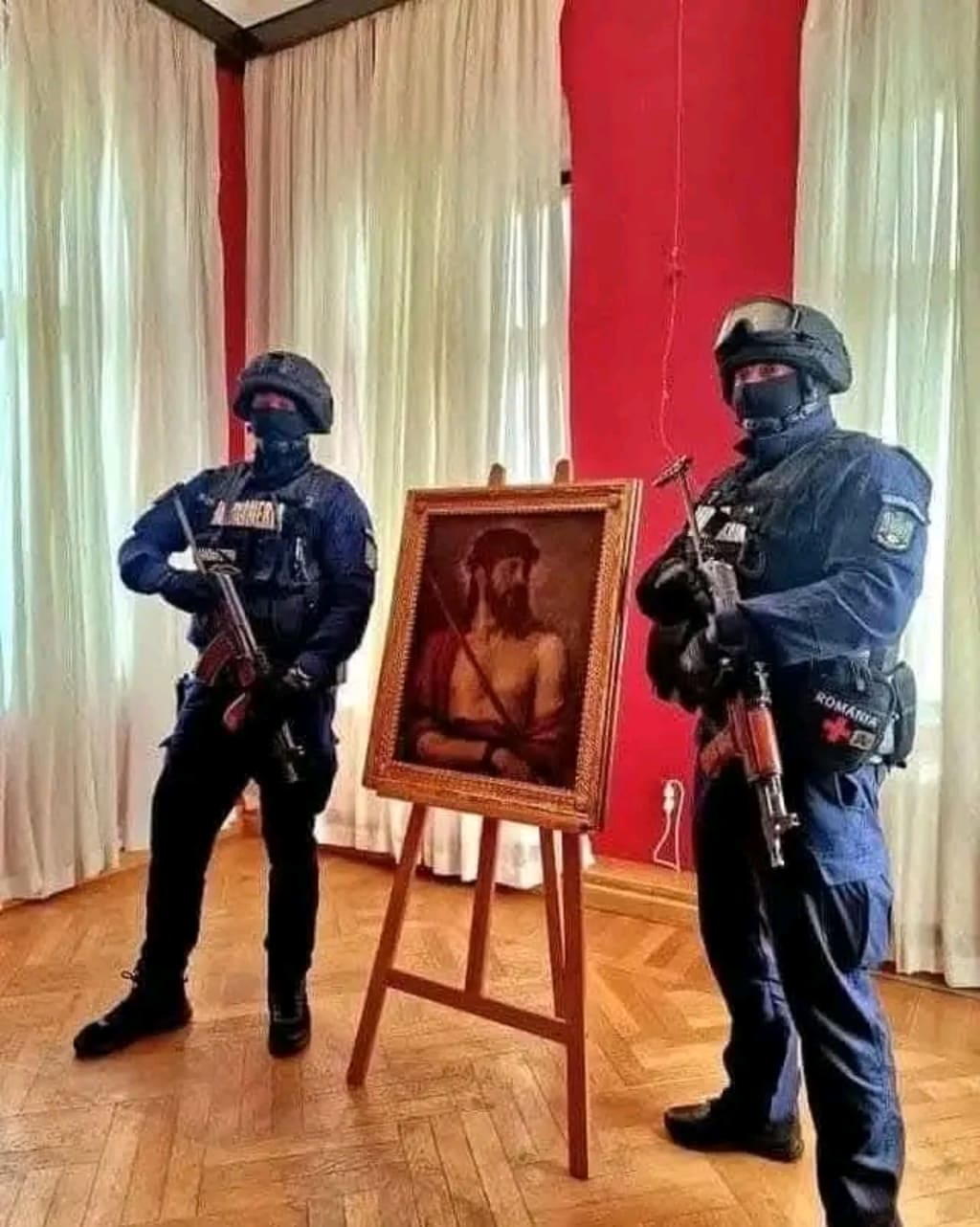
Hidden within the Municipal Museum in Romania lies a masterpiece of immense artistic and historical value—Titian’s Ecce Homo, created in 1543. This remarkable painting, the only known work of the Venetian master in Romania and Eastern Europe, is a cultural treasure that transcends its artistic merits. A beacon of the Italian Renaissance, it enriches local heritage and draws the attention of art lovers and experts from around the globe.
---
Titian: The Venetian Master of the Renaissance
Tiziano Vecelli, known as Titian, was one of the most influential painters of the High Renaissance. Born in Pieve di Cadore, Italy, around 1488, he became a leading figure in Venetian art, celebrated for his mastery of color, innovative compositions, and emotional depth. His works spanned religious themes, mythological subjects, and portraiture, making him a versatile artist whose influence shaped European art for centuries.
Titian’s Ecce Homo is a quintessential example of his ability to convey profound emotion and spiritual intensity. The phrase ecce homo translates to “Behold the Man,” referring to the moment in the New Testament when Pontius Pilate presents Jesus to the crowd before his crucifixion. This dramatic scene has been a favorite subject in Western art, but Titian’s interpretation stands out for its depth and humanity.
---
The Journey of Ecce Homo
Titian painted Ecce Homo in 1543 during the height of his career. The work was likely commissioned by a wealthy patron, as many of his religious pieces were, and it embodies the richness and complexity of Renaissance art.
How this particular painting found its way to Romania is a story shrouded in mystery. Some speculate that it may have been acquired by Romanian nobility during the late Renaissance or through the extensive cultural exchanges between Eastern Europe and the Venetian Republic. Regardless of its exact journey, the painting has become a cornerstone of Romania’s artistic heritage.
---
Artistic Elements of Ecce Homo
Composition and Color
In Ecce Homo, Titian captures the pivotal moment of Christ’s humiliation with a masterful use of composition and color. The central figure of Christ is portrayed with a subdued dignity, standing in stark contrast to the chaotic crowd surrounding him. His calm demeanor amidst the jeering faces creates a powerful emotional tension.
Titian’s trademark use of color is evident in the rich, earthy tones and vibrant reds that draw the viewer’s eye to the central figure. The interplay of light and shadow, a hallmark of his style, adds depth and drama, emphasizing the physical and emotional suffering of Christ.
Emotional Resonance
What sets Titian apart from many of his contemporaries is his ability to evoke deep emotion. In Ecce Homo, the expressions of the figures—ranging from mockery to sorrow—create a spectrum of human responses to the divine. The painting invites viewers to reflect on themes of suffering, compassion, and redemption, making it a deeply personal and spiritual experience.
---
Cultural and Historical Significance
A Symbol of the Italian Renaissance
Titian’s Ecce Homo is more than a painting; it is a symbol of the cultural and intellectual revival that defined the Renaissance. The Renaissance was a period of profound transformation in Europe, marked by a renewed interest in classical antiquity, humanism, and artistic innovation.
As the only known work by Titian in Romania and Eastern Europe, Ecce Homo serves as a bridge between the cultural achievements of the Italian Renaissance and the rich history of Eastern Europe. It highlights the interconnectedness of European art and the enduring influence of Renaissance ideals.
A Romanian Treasure
The painting’s presence in the Municipal Museum elevates Romania’s cultural landscape, showcasing its ability to preserve and celebrate world-class art. It also serves as a point of pride for the region, attracting scholars, historians, and art enthusiasts from around the world.
The museum’s careful preservation of Ecce Homo, including strict surveillance measures, underscores the painting’s irreplaceable value. By safeguarding this masterpiece, Romania not only honors its own heritage but also contributes to the global appreciation of Renaissance art.
---
A Magnet for International Attention
Titian’s Ecce Homo has become a focal point for international experts and visitors. Art historians study the painting to gain insights into Titian’s techniques and the broader context of Renaissance art. Its presence in Romania also highlights the country’s role in preserving cultural treasures, enhancing its reputation on the global stage.
For visitors, the opportunity to see a genuine Titian masterpiece is an unforgettable experience. The painting’s emotional power and artistic brilliance resonate across time and space, reminding viewers of the enduring relevance of art.
---
Conclusion: A Timeless Masterpiece
Titian’s Ecce Homo is not just a painting—it is a testament to the power of art to transcend borders, eras, and cultures. As the only work of its kind in Romania and Eastern Europe, it holds a unique place in the region’s cultural landscape. Its presence in the Municipal Museum enriches local heritage, fosters international connections, and serves as a source of inspiration for generations to come.
For those fortunate enough to stand before it, Ecce Homo offers a rare glimpse into the genius of Titian and the profound beauty of the Renaissance. It is a reminder of art’s ability to capture the complexity of the human experience, making it a treasure not only for Romania but for the entire world.
About the Creator
Keep reading
More stories from Deji Akomolafe and writers in Art and other communities.
Michelangelo’s David: A Colossal Masterpiece of Renaissance Art
Michelangelo’s David is one of the most iconic and celebrated sculptures in the world, a masterpiece of Renaissance art that has captivated viewers for centuries. Commissioned in 1501 and completed in 1504, this monumental statue stands at an astounding 17 feet tall and weighs over 12,000 pounds. Sculpted from a single block of pristine white marble, David is a testament to Michelangelo’s extraordinary skill and vision, as well as the cultural and artistic ideals of the Renaissance period.
By Deji Akomolafeabout a year ago in Art
'Till Death We Do Art
There would be nothing divine in this world without art. Nature may surpass the divine to all intents and purposes, but like everything it absorbs and is absorbed by, it remains here, stuck on the surface of this world, ever-present, physically bound to the universe.
By Avocado Nunzella BSc (Psych) -- M.A.P 26 days ago in Art
The Rising Demand for Custom Physical Therapy Apps
Healthcare delivery is evolving faster than ever, and rehabilitation is no exception. Physical therapy — once limited to in-clinic sessions and paper-based exercise plans — is now being transformed by mobile technology. With increasing smartphone adoption and a growing demand for remote care, healthcare providers are exploring digital solutions to improve patient engagement and treatment outcomes.
By Steve Waugh3 days ago in Art
The Forsyth House Fire
Since 1851, Forsyth House has stood on the corner of Union Street and Gordon Street in the heart of Glasgow. Its iconic, or was... because on Sunday 8th of March, 2026, a fire broke out in a small, seemingly un-named shop in the building and tore all that history down. As I write, the rubble is still unsettled and the street is still blocked off. Central Station is quiet on the upper level, and around 30 small businesses have quite literally gone up in smoke.
By S. A. Crawford2 days ago in The Swamp



Comments
There are no comments for this story
Be the first to respond and start the conversation.