
The Weight of a Name
Some boys are born into struggle—but become men through quiet strength.

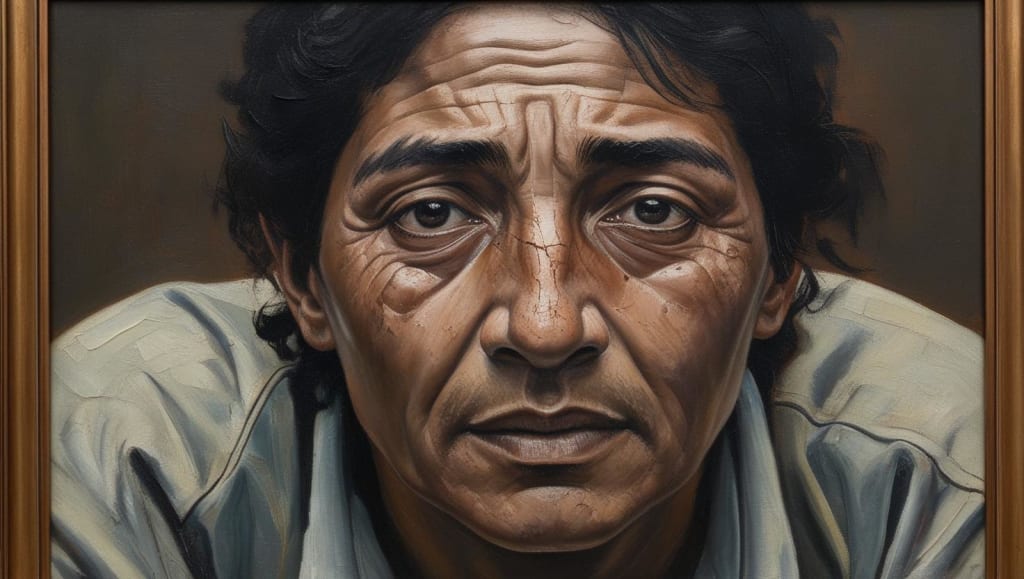
In a small village where the mountains met the sky, there lived a boy named Kian. His name, given by his grandfather, meant “grace under pressure.” But grace didn’t come easy to Kian.
He was born into a family that struggled to make ends meet. His father worked long hours at the quarry; his mother sold handmade scarves at the market. Kian wore secondhand shoes and patched-up jeans. He never complained, but he noticed how the other boys looked at him when he pulled out his lunch—a piece of bread and boiled eggs—while they ate sweet buns and fried meat.
He noticed a lot, actually.
Kian was a quiet observer. He watched how people spoke when they didn’t know others were listening. He noticed the sadness behind his father’s tired eyes, the way his mother’s hands trembled slightly when she counted the day’s earnings, and how his teacher smiled more at the students who wore clean uniforms.
But Kian wasn’t bitter. He simply tucked these truths into the folds of his heart and carried on.
At school, Kian wasn’t the loudest or the smartest, but he was steady. He finished his assignments, helped clean the chalkboard, and once shared his only pencil with a classmate who had lost hers. Most people didn’t notice him. Those who did often overlooked him.
But Mr. Rehan, the literature teacher, noticed.
He once read a story Kian had written—a quiet tale about a tree that had lost all its leaves but gave shelter to birds during winter.
After class, Mr. Rehan stopped him.
“Why do you write like that?” he asked.
“Like what, sir?”
“Like someone who’s seen things.”
Kian shrugged. “I just write what I feel.”
Mr. Rehan didn’t smile. He nodded, slowly. “Keep doing that.”
When Kian turned thirteen, his life changed.
His father injured his back at the quarry and couldn’t work. His mother took extra shifts at the market, often coming home with cracked feet and a hoarse voice. Kian began waking early to deliver newspapers before school and doing odd jobs afterward—fixing fences, cleaning stalls, running errands for the old tailor.
He never told anyone how tired he was. Not even when his grades slipped. Not even when he missed a school trip because he couldn’t afford the fee.
Sometimes, at night, he’d sit on the roof, look up at the stars, and whisper, “Is this what grace under pressure looks like?”
One afternoon, as he was returning from delivering groceries, he found his old friend Amin crying behind the school. Amin’s expensive backpack had been stolen, and he was afraid to go home.
Kian, despite his exhaustion, sat beside him.
“You’re not weak for crying,” he said quietly. “You’re just not used to falling.”
Amin looked at him. “You don’t cry?”
Kian smiled, not proudly, but softly. “I cry when no one’s watching. I just learned how to keep walking after.”
Years passed.
Kian finished high school, not at the top of the class, but with pride. He had saved enough from years of part-time work to enroll in a small writing program in the city. Before leaving, he visited his father’s bedside and kissed his mother’s worn hands.
“Will you be okay?” she asked, her voice a mix of worry and pride.
“I carry your strength,” he said. “And my name.”
In the city, Kian struggled again—new faces, harder lessons, nights when the only meal was instant noodles. But he wrote. He wrote stories that made people feel seen. Tales of small towns, quiet boys, tired mothers, silent fathers, and the beauty in ordinary struggle.
One day, his story “The Tree with No Leaves” was published in a national magazine. It wasn’t loud, or viral, or glamorous. But it was real. And it was his.
When he returned home during a break, he brought a single copy and placed it on his father’s bedside table.
His father didn’t say much—just touched the printed name at the bottom of the story: Kian Rahimi.
“Your grandfather would’ve been proud,” he said.
Kian nodded, quietly.
“I just tried to live up to my name.”
Moral:
Not all boys are raised to roar. Some are raised to carry weight without breaking, to walk quietly with purpose, and to rise—not in a burst—but like dawn. Slowly, surely, with grace under pressure.
About the Creator
DreamFold
Built from struggle, fueled by purpose.
🛠 Growth mindset | 📚 Life learner
'Till Death We Do Art
There would be nothing divine in this world without art. Nature may surpass the divine to all intents and purposes, but like everything it absorbs and is absorbed by, it remains here, stuck on the surface of this world, ever-present, physically bound to the universe.
By Avocado Nunzella BSc (Psych) -- M.A.P 19 days ago in Art
Ink & Imagination
In a small town named Inkwood, nestled between hills and rivers, there existed a peculiar bookshop called “The Imagination Hub.” The shop was run by a kind old man named Mr. Penrose. He was the type of person who could bring stories to life with just a few words. Every child in Inkwood believed that Mr. Penrose had a magical power. They would gather around him every Saturday to hear tales of adventure, bravery, and far-off worlds.
By Hamad Afridi 7 days ago in Art
The BAFTA Awards
By now, in a stunning departure from recent years, most of the world is aware of what happened at the BAFTA film awards. Social Media Headlines will tell you the bare bones: that John Davidson, a Tourette's Syndrome advocate, shouted a racial slur at two Actors of Colour, Michael B Jordan and Delroy Lindo.
By Natasja Rose4 days ago in Psyche




Comments
There are no comments for this story
Be the first to respond and start the conversation.