
The. Viral Banana Duct-Taped to a Wall? It Just Sold for $6.2 Million
Pricey Art

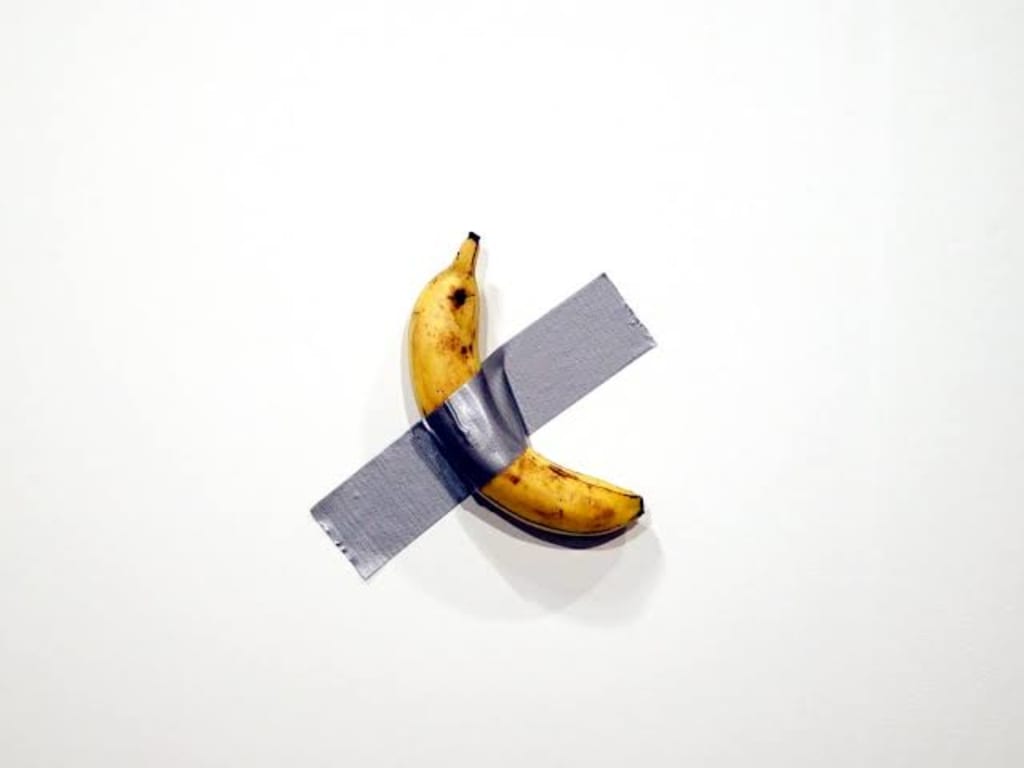
In December 2019, at Art Basel Miami Beach, a simple yellow banana duct-taped to a white wall transformed into one of the most polarizing and provocative art pieces of the decade. Titled Comedian, the work by Italian artist Maurizio Cattelan sparked heated debates, viral memes, and profound discussions on the nature of art and its value. While to some, it was a joke taken too far, to others, it was a revolutionary commentary on contemporary art and culture.
The Birth of a Banana Sensation
Cattelan’s Comedian was, on the surface, as simple as it gets: a banana purchased for 35 cents from a fruit stand, affixed to a wall with a strip of gray duct tape, and displayed precisely 160 centimeters (63 inches) above the ground. But its impact was anything but ordinary. The piece sold three editions for between $120,000 and $150,000 each during the fair, garnering a level of attention rarely seen in the art world.
It wasn’t just the price tag that caused a stir. Comedian was, at its core, a conceptual work. Buyers didn’t just purchase the banana and tape but received a certificate of authenticity and instructions on how to re-create the piece. The physical banana, perishable as it was, could be replaced as needed. This highlighted a central tenet of conceptual art: the idea or story behind the artwork often outweighs its material components.
From Artwork to Performance Piece
The public reaction to Comedian was as much a part of its story as the artwork itself. Crowds gathered around the banana at Art Basel, snapping photos, posting on social media, and debating its merit. Then came the performance interventions. Artist David Datuna famously removed the banana from the wall, peeled it, and ate it in front of an astonished crowd. In 2023, a university student repeated this act while Comedian was on display at Seoul’s Leeum Museum of Art. These acts of “vandalism” became performances in their own right, further blurring the line between art and reality.
Cattelan later remarked that Comedian was “not a joke” but a “sincere commentary and a reflection on what we value.” He intended the piece to disrupt traditional viewing habits and provoke discussions about the nature of art, consumerism, and value.
The Art Market and the Value of Stories
The banana’s astonishing price tag led many to question the logic of the art market. After all, the physical components of Comedian were worth less than a dollar. What justified the six-figure price? According to art market columnist Melanie Gerlis, the value lay in the “story of Comedian, the publicity, and the buyer’s own version of how they want to be seen as a collector.”
By purchasing Comedian, buyers weren’t just acquiring a piece of fruit—they were buying into a narrative, a moment, and a piece of art history. This aligns with broader trends in the art world, where intangible qualities like concept, provenance, and cultural impact often outweigh the physical medium.
Cattelan’s work pushed this idea to its extreme. By reducing the materiality of the artwork to almost nothing, he forced viewers and buyers to confront the often arbitrary nature of value in the art market. Why are some paintings worth millions? Why do we value some objects over others? Comedian dared to ask these uncomfortable questions.
The Role of the Provocateur
Maurizio Cattelan is no stranger to controversy. Often described as a provocateur, prankster, and “poseur joker,” he has a long history of creating works that challenge conventional norms. His La Nona Ora (The Ninth Hour), a sculpture of Pope John Paul II struck by a meteorite, and America, a fully functioning 18-karat gold toilet, exemplify his flair for combining shock value with deeper commentary.
With Comedian, Cattelan took this approach to its logical conclusion. The banana, a mundane and perishable object, became a symbol of the absurdities and contradictions of the art world. It invited viewers to question not just the value of the artwork but the nature of art itself.
Criticism and Legacy
Of course, not everyone embraced Comedian. Critics dismissed it as a gimmick, a joke at the expense of serious art collectors, or a cynical commentary on the pretentiousness of the art world. For many, the idea of paying thousands for a banana and duct tape seemed to epitomize everything wrong with contemporary art.
Yet, Comedian has endured as a cultural touchstone. Its viral success, the debates it sparked, and the performances it inspired have ensured its place in art history. In 2020, one of the editions was anonymously donated to the Guggenheim Museum in New York City, cementing its status as a significant—if controversial—work of conceptual art.
What Comedian Teaches Us About Art
At its heart, Comedian challenges us to think about what we value and why. Is it the physical object that matters, or the story behind it? Does art have to be beautiful or technically skilled to be meaningful? And who gets to decide what is or isn’t art?
For all its absurdity, Comedian succeeds in doing what great art often does: it starts a conversation. Whether you love it, hate it, or simply find it baffling, you can’t ignore it.
In the end, Cattelan’s banana reminds us that art is as much about ideas and reactions as it is about objects. And sometimes, a simple piece of fruit can hold a mirror up to the world, reflecting the absurdities, contradictions, and beauty of the human experience.Start writing...
About the Creator
Keep reading
More stories from Deji Akomolafe and writers in Art and other communities.
Anne Boleyn and the Mystery of the Lumley Portrait
Anne Boleyn, one of the most enigmatic figures in English history, continues to fascinate historians and enthusiasts alike. As the second wife of King Henry VIII and the mother of Elizabeth I, her story is marked by ambition, passion, and tragedy. Yet, while her life has been the subject of extensive study, the visual representation of Anne has long been shrouded in mystery.
By Deji Akomolafeabout a year ago in Art
Impressive Artwork by Odilon Redon
French symbolist artist Odilon Redon was famous for his drawings in the 1880s. The artist’s artworks were mentioned in the popular 1884 novel “A Rebours,” or “Against the Grain,” by Joris-Karl Hysmans. His later artworks were created in oils and pastels. He developed an interest in Hinduism and Buddhism, and this interest in mysticism is reflected in his works of art.
By Rasma Raisters6 days ago in Art
Wild Card Weekend Recap: What Happens Now?
I think I figured out why I love Wild Card Weekend so much. It's because it's the first playoff anything of the calendar year. The NFL season starts in the fall, and once upon a time, the champion was crowned either on or slightly before New Year's. The evolution of the NFL schedule has resulted in the playoffs starting just into the New Year, and currently, the final week of the season falls on the first weekend of the New Year, with Wild Card Weekend coming a week after that. So yes, chronologically, the NFL's Wild Card Weekend serves as the first playoff anything of the calendar year.
By Clyde E. Dawkins6 days ago in Unbalanced



Comments
There are no comments for this story
Be the first to respond and start the conversation.