
The United States Canvas American Art Becoming the Soul of the Nation
From Harlem's skyscrapers to desert stillness, American art doesn't just speak but shouts, whispers, and remembers.
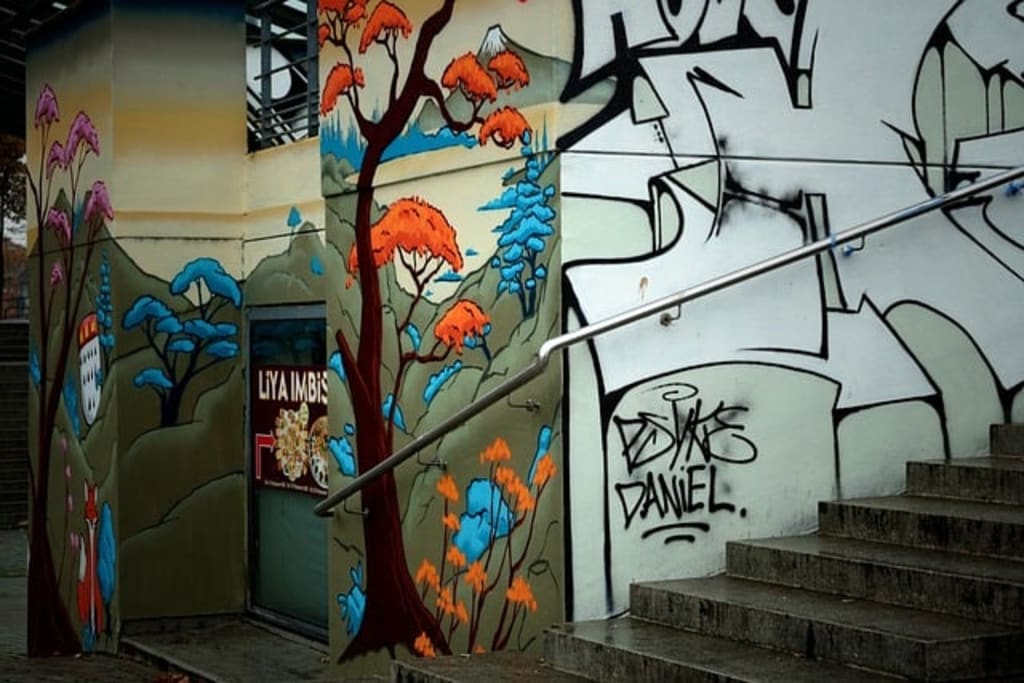
If you're truly determined to get America—to get at what America's about beyond politics and history but, yes, soul—you need to look at its art.
American art isn't about portraits of kings or old ruins. It's about rebellion identity freedom struggle and hope. It's about having a story that's distinctly American—bold loud messy and stunning.
Walk into any U.S. museum—the MoMA in New York the Broad in L.A. or even a small community gallery in Kansas—and you’ll see that art in America isn’t just something to look at. It’s a living conversation. A canvas with a heartbeat.
Here’s how some of the most influential American artists have helped shape that conversation.
Jackson Pollock The Rebel of the Canvas
In an East Hampton barn Jackson Pollock made a mess—and called it art.
Paint cans in hand he danced around canvases dripping splashing and spraying color everywhere. It was not tidy, nor conventional but charged. In his 1950 masterpiece Autumn Rhythm there are no absolute shapes—only pure emotion, frozen in time.
Pollock co-invented Abstract Expressionism, a specifically American art style that reflected a country brimming with energy doubt and post-war freedom. His point? You don't require perfection to make something robust.
Georgia O'Keeffe: Painting Silence in the Desert
While Pollock yelled with paint, Georgia O'Keeffe spoke quietly with color.
She moved from New York to the desert in New Mexico, where she found inspiration in empty spaces, bones, flowers and sky. Her flower paintings enlarged and glowing invited observers to see the world differently—to come closer.
During the 1930s and '40s O'Keeffe was not only impressive with her unique style but also as a female presence in an art world that was largely male-dominated. Her paintings proclaimed independence nature and strength—without screaming.
Her desert became a site of power and her paintings made the American Southwest a place of beauty and reflection.
Jean-Michel Basquiat The Voice of the Streets
Jean-Michel Basquiat was born in 1960 in Brooklyn and began working as an artist painting graffiti—spraying cryptic messages under the name SAMO on city walls in downtown areas.
By the 1980s, he was a superstar known for his bold layered paintings chock-full of crowns skulls words and strong figures. His work addressed racism identity history and inequality. Unlike normal galleries Basquiat's work felt alive urban and raw just like the city that had raised him.
His crown emblem was a testament to Black excellence, his paintings a war of ideas. Despite his untimely death, Basquiat proved that art could be conceived on the streets and shake the world.
Edward Hopper The Painter of Loneliness
In a country obsessed with movement Edward Hopper painted stillness.
His Nighthawks of 1942—a quiet picture of figures in a diner at midnight—is among the most admired works of art in America. Hopper's work uncovered the loneliness behind city life, the isolation between strangers in crowded cities.
While other artists went for noise and speed, Hopper captured the emotional desolation of American life. His paintings spoke for those who ever felt alone in a crowd or paused to wonder what is happening behind a lit-up window.
Faith Ringgold Stories Sewn in Thread
Faith Ringgold painted not only but also quilted wrote and protested.
Born in Harlem in 1930, Ringgold used her paintings as ways of telling the stories of African American life, civil rights and women's empowerment. Her legendary Story Quilts united fabric paint and words reinventing conventional women's crafts into radical visual storytelling.
In Tar Beach she tells the story of a young Black girl who dreams of flying over her city claiming it as her own. The story is simple but powerful. Like so much of Ringgold's work it celebrates dreams dignity and the strength of community.
Why It All Matters
All of these artists—Pollo O'Keeffe Basquiat Hopper Ringgold—told a different American narrative.
Pollock provided us with chaos. O'Keeffe provided us with calm. Basquiat provided us with fire. Hopper provided us with silence. Ringgold provided us with roots.
They worked in other decades other cities other media—but they all did one thing vital they told us who we are and who we could be.
American art matters because it stirs. It reminds us of what we're made of. It shows us our shadows and our sunshine.
With every brush stroke can of spray stitch or silence these artists drew a wedge of the American character—raw complex and indelible.
Final Thought
The next time you walk by a mural step into a gallery or even surf art on the web, remember you're not viewing colors and forms. You're viewing a narrative in silence—a narrative louder than language.
Because in the end art isn't something Americans do.
It's something we live.
About the Creator
Siddharth Kamble
Siddharth Kamble
My mission is to educate, inspire, and spark meaningful conversations through well-researched stories that connect communities and bring clarity to complex topics.
Keep reading
More stories from Siddharth Kamble and writers in Art and other communities.
'Till Death We Do Art
There would be nothing divine in this world without art. Nature may surpass the divine to all intents and purposes, but like everything it absorbs and is absorbed by, it remains here, stuck on the surface of this world, ever-present, physically bound to the universe.
By Avocado Nunzella BSc (Psych) -- M.A.P 28 days ago in Art
Rewire Your Mind for Success
brilliant inventor and worked day and night in her small lab, filled with glowing screens and strange gadgets. Despite her talent, she struggled to find success. Her inventions were often overlooked, and her ideas remained trapped in her mind.
By Hamad Afridi 6 days ago in Art



Comments
There are no comments for this story
Be the first to respond and start the conversation.