
The Thursday Beggar
A touching tale of kindness, loss, and the unseen rewards of compassion.

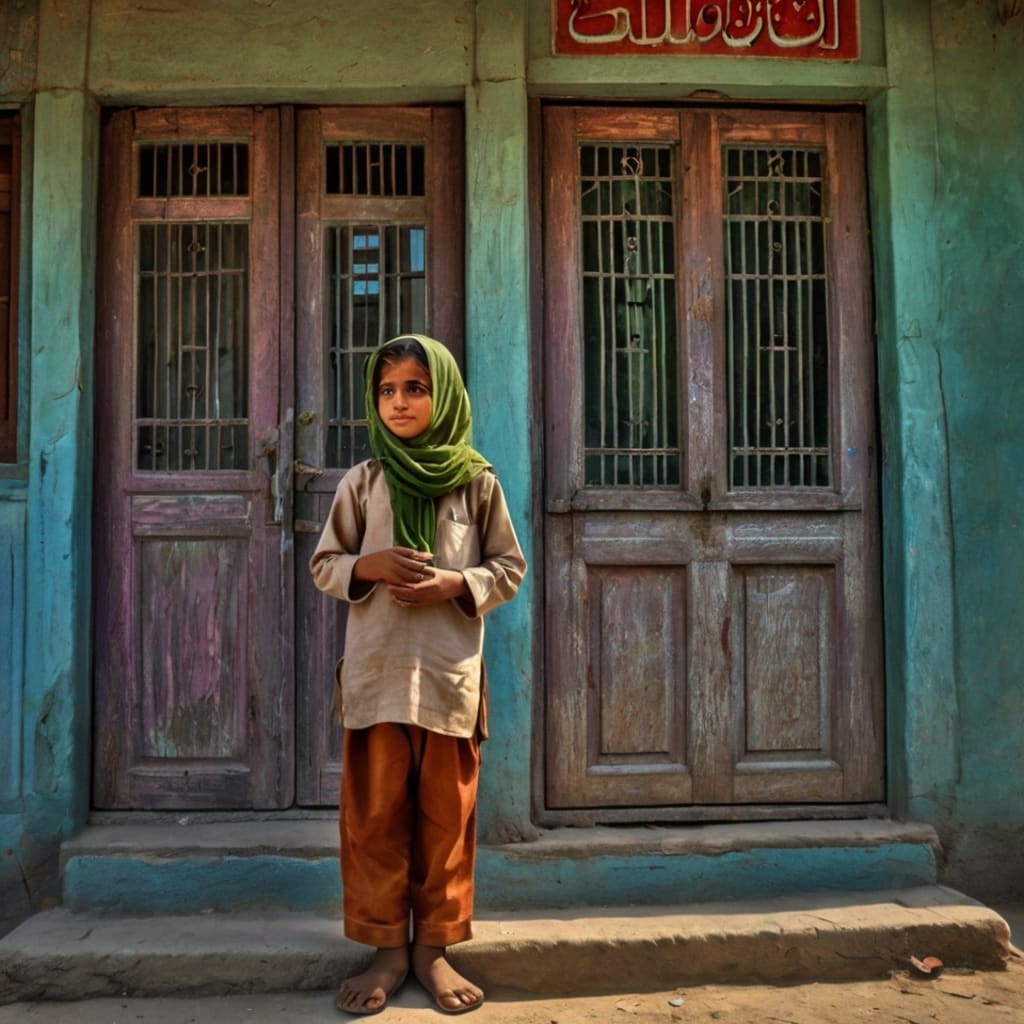
The Thursday Beggar
BY:Khan
Every Thursday, he would come. Qaniah would give him one rupee. Beggars came almost every day — calling out loudly, pleading with emotional voices, invoking the names of Allah and His Messenger, talking about their hungry children, and narrating tales of starvation. But this man was different from them all.
He didn’t cry or plead. He said only one thing, softly and sincerely: “May Allah keep you happy.”
He never went to the backdoor like others; instead, he always came to the front gate. Standing there silently, he would utter his usual words in a voice full of pain and then quietly wait.
The first time Qaniah saw him, she felt a deep pity. He looked so helpless, so gentle. She immediately brought one rupee and placed it in his trembling hands. From that day on, this became a ritual. Every Thursday, he came, said his words, and Qaniah would hand him a rupee. Then, before leaving, he would again say softly, “May Allah keep you happy.”
He never stayed long at any door. If no one appeared after a short wait, he would simply move on.
One day, Qaniah’s elder sister Naheed said teasingly,
“Qaniah, what’s so special about that beggar? You give him a whole rupee every Thursday, but you give others only twenty-five paisas.”
Their father overheard and smiled. “Our daughter has a kind heart,” he said warmly. “She can’t bear to see anyone in distress.”
Naheed rolled her eyes. “I know, Abu! But still, why only this man? Others come daily — yet she gives them just coins. But this Thursday man gets a full rupee every week!”
“Who’s the Thursday man?” asked their father curiously.
Naheed explained everything — his visits, his words, and Qaniah’s strange devotion. Their father nodded thoughtfully. “You see, my dear, sometimes a person’s face or manner stirs deeper sympathy in our hearts. Qaniah feels more compassion for him, that’s all.”
He was right. Qaniah’s heart was tender. She couldn’t see anyone suffer.
But she was a little hurt. “Abu, did you hear? Baaji has given him such a bad name — ‘Thursday man!’”
Naheed snapped, “So what should I call him? Nawab Sahib? He comes every Thursday, so I named him that. What’s wrong with it?”
Their father smiled patiently. “No need to argue, girls. Try to understand each other’s point of view. Arguing only leads to stubbornness. Even truth begins to sound wrong when spoken in anger. Now come, your mother’s calling — dinner is ready.”
A few weeks later, tragedy struck.
Qaniah’s father had to go on a business trip to Hong Kong. He left cheerfully, hugging everyone goodbye. But only a few hours later, the radio announced horrifying news — the plane from Karachi to Hong Kong had crashed. There were no survivors.
The household was plunged into grief. But no one suffered more than gentle-hearted Qaniah. She cried endlessly until her health began to fail. Days passed in mourning, and gradually, her tears subsided into silence.
Then came Thursday morning.
As always, a familiar voice rose from outside: “May Allah keep you happy.”
Qaniah froze. That same soft, sorrowful tone. Slowly, she opened her cupboard, took out her purse, and pulled a rupee note. Her eyes filled with tears.
When she reached the door, she handed it over and said faintly, “Here, Chacha. This is the last time I can give you anything.”
The old man looked surprised. “Why, my child? What happened?”
Her lips trembled as she replied between sobs, “My father… he was on that plane… he’s gone. We have nothing left now. I don’t know how we’ll manage.”
The beggar listened quietly, his weathered face full of sorrow. After a long silence, he sighed deeply and said in a trembling voice, “Allah is the Greatest King.” Then, turning away, he slowly walked down the street.
That evening, after sunset, the same voice echoed again at the door: “May Allah keep you happy.”
Qaniah thought she was imagining things. “He never comes twice a day,” she murmured. “Maybe some mischievous boy is mimicking him.”
But when the voice came again — gentle, sincere, unmistakable — her curiosity overcame her fear. She hurried to the door.
And there he was — the same old man, standing in the dim light.
“Chacha… you again?” she asked softly.
He looked at her with calm eyes and said, “Child, remember — wealth belongs to no one. It moves from one hand to another. But hearts — they belong to the poor. That’s where true riches lie. May Allah keep you happy.”
Before she could speak, he reached into his worn-out pocket, took out a small cloth bundle, and placed it gently in her hand. Then, without another word, he turned and walked away — his frail figure fading into the darkness.
Qaniah stood motionless, her hands trembling. She slowly opened the bundle — and gasped. Inside were stacks of currency notes, neatly tied together.
Tears rolled down her cheeks. She looked toward the street where the old man had vanished and whispered through her sobs,
“May Allah keep you happy too, Chacha.”
That night, she realized the true meaning of her father’s words — that compassion never goes unrewarded, and sometimes, those who seem poorest are the ones who give the most.
About the Creator
'Till Death We Do Art
There would be nothing divine in this world without art. Nature may surpass the divine to all intents and purposes, but like everything it absorbs and is absorbed by, it remains here, stuck on the surface of this world, ever-present, physically bound to the universe.
By Avocado Nunzella BSc (Psych) -- M.A.P 18 days ago in Art
Sahara Desert of Merzouga: The Complete Travel Blog Guide
Sahara Desert of Merzouga is one of the top places, you should not miss when visiting Morocco. It's place where golden dunes stretch endlessly, camels walk across the horizon, and nights sparkle with a sky full of stars. Located near the Algerian border, Merzouga is the gateway to the spectacular Erg Chebbi dunes, the most lovely sand dunes in Morocco. Merzouga desert is highly recommended among travelers due to its lovely high, clean and golden dunes offering visitors the chance to enjoy their vacation. Morocco Tours Company
By Othmane Anaam5 days ago in Art


Comments
There are no comments for this story
Be the first to respond and start the conversation.