
The Hidden Piety of a Sultan: The Funeral of Khwaja Qutbuddin Bakhtiyar Kaki
A saint’s last will revealed a ruler’s secret devotion—and reminded the world what true greatness really is.

The Secret Unveiled at a Saint’s Funeral
BY:Khan
The streets of Delhi were wrapped in sorrow. News had spread that the great Sufi saint, Hazrat Khwaja Qutbuddin Bakhtiyar Kaki (may Allah’s mercy be upon him), had passed away. From every corner of the city and beyond, people poured in—scholars, mystics, common villagers, and nobles alike.
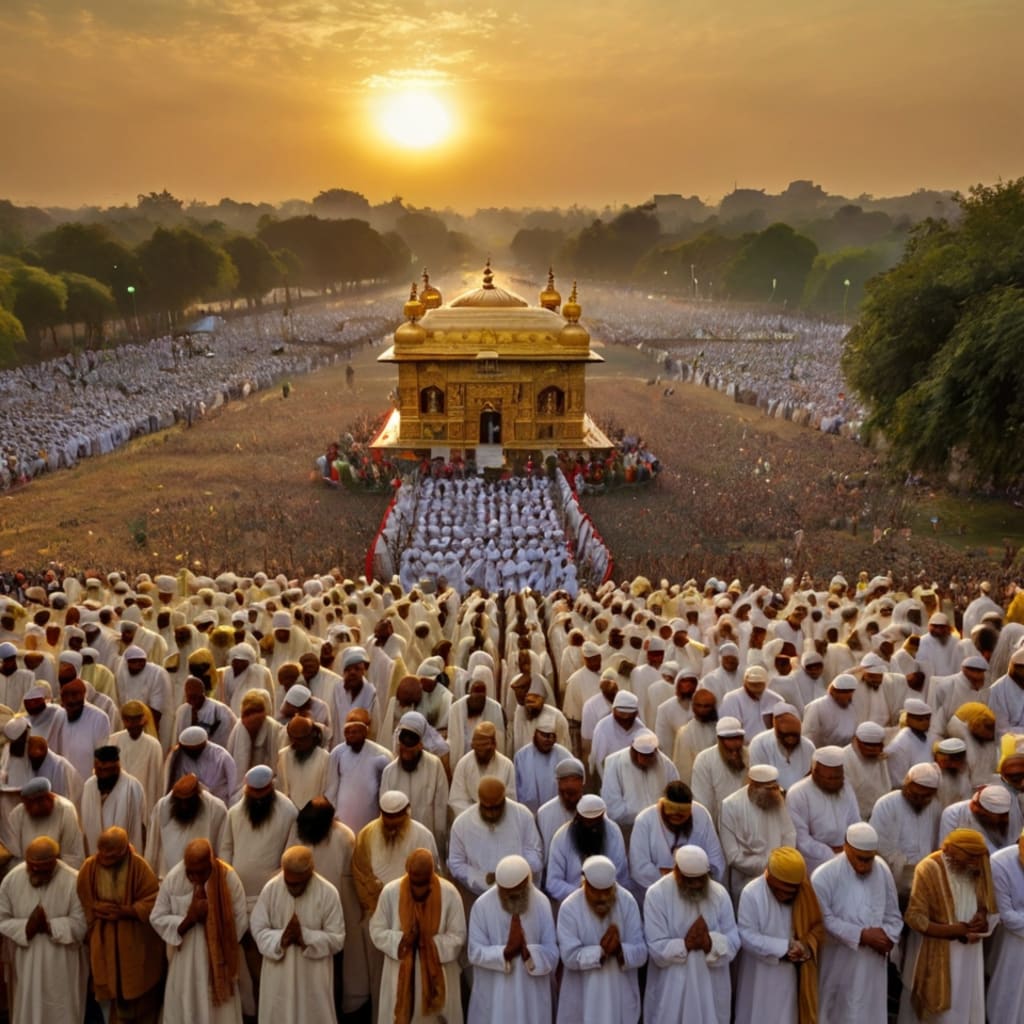
A sea of humanity gathered in the open grounds where the funeral prayer was to be held. It seemed as though the entire city had arrived to bid farewell to the saint who had spent his life teaching humility, piety, and love for God. The atmosphere was heavy, and yet, there was a sense of sacred anticipation.
The bier was placed at the center, covered with a simple shroud, radiating the calm dignity of the saint who had never sought grandeur in his lifetime. People wept openly, for his presence had been a guiding light for decades. Now, all awaited the moment when someone would step forward to lead the funeral prayer.
Just as the time for the prayer approached, a man emerged from the crowd and addressed the gathering. His voice was steady, though it carried the weight of something extraordinary.
“I am the legal executor of Hazrat Khwaja Qutbuddin Bakhtiyar Kaki,” he announced. “Before his passing, he entrusted me with a final will. It is my duty to share it with you now.”
At once, silence spread across the crowd. The rustle of garments stilled. Even the cries of mourners subsided as all ears strained to hear the last wish of their beloved saint.
The man continued:
“Khwaja Sahib left clear instructions that his funeral prayer should not be led by just anyone. He said, ‘My janazah should be led by the one who possesses four qualities.’”
The executor paused and then began listing them one by one:
1. “The one who has never missed the first takbeer (the opening call) of prayer in his entire life.”
2. “The one who has never missed the tahajjud, the voluntary night prayer.”
3. “The one whose eyes have never fallen on a non-mahram with ill intent.”
4. “The one so devoted to worship that he has never once abandoned the sunnah prayers of Asr.”
When these words were spoken, the silence grew deeper. The crowd, vast as an ocean, stood frozen. No one dared to step forward. For all their devotion, who among them could claim to have lived a life so perfectly guarded?
Minutes passed. People began shifting uneasily. Tears welled up in many eyes, not only from grief but from the realization of the saint’s standard of piety. The funeral of Khwaja Qutbuddin Bakhtiyar Kaki seemed to halt in time, waiting for a soul worthy of fulfilling his last will.
Then, slowly, a man emerged from among the crowd. He walked forward, trembling, his eyes brimming with tears. Approaching the bier, he gently lifted a corner of the shroud and whispered as though speaking directly to the saint:
“My master, you have departed from this world, but in doing so, you have revealed my secret.”
Turning to the crowd, his voice broke with emotion. “By Allah, the Almighty, I testify before you all—these four conditions are true in my life. Not out of pride, but because Khwaja Sahib has willed it so, I must step forward.”
The crowd gasped in astonishment as the man’s identity became clear. He was none other than Shamsuddin Iltutmish, the Sultan of Delhi.
To the people, it was a moment of revelation. Here was the most powerful man in the land, a ruler commanding armies and treasuries, yet hidden beneath his royal robes was a servant of God whose private devotion was so pure that even the great saint had recognized it. Until that day, no one had known. Iltutmish had kept his piety concealed, for true worship needs no applause.
As he took his place before the bier, a wave of awe passed through the crowd. The Sultan, who in worldly terms was the highest of them all, now stood humbly as the chosen imam for the saint’s final prayer. His tears fell freely, his voice cracked as he led the congregation, and behind him thousands of men and women bowed their heads in unison, sending the soul of Khwaja Qutbuddin Bakhtiyar Kaki to its eternal abode.
That day became more than a funeral. It was a reminder carved into history that true greatness lies not in crowns, palaces, or armies, but in the secret acts of devotion that are known only to God. It reminded the world that the saints, even in death, continue to guide us toward sincerity.
For those who attended, the memory of that silence—the hesitation of the crowd, the humility of the Sultan, and the unveiling of a hidden saintliness—remained etched in their hearts forever. And for generations after, the story was told not merely as a tale of a funeral but as a lesson:
The worth of a human being is measured not by titles or appearances but by the unseen prayers whispered in the stillness of the night, by the restraint of the eyes, by the consistency in worship, and by the sincerity of the soul.
About the Creator
21 Freelancing Tips to Build a Successful Career (From Someone Who Actually Did It)
TL;DR version (60 seconds read time) + Paypal receipt at the end of the blog. I’ve made thousands of dollars with freelancing. See screenshots at the end of the post. Everything I say to you, I’ve tested it first on myself.
By Dena Falken Esqabout 13 hours ago in Art
Wild Card Weekend Recap: What Happens Now?
I think I figured out why I love Wild Card Weekend so much. It's because it's the first playoff anything of the calendar year. The NFL season starts in the fall, and once upon a time, the champion was crowned either on or slightly before New Year's. The evolution of the NFL schedule has resulted in the playoffs starting just into the New Year, and currently, the final week of the season falls on the first weekend of the New Year, with Wild Card Weekend coming a week after that. So yes, chronologically, the NFL's Wild Card Weekend serves as the first playoff anything of the calendar year.
By Clyde E. Dawkins7 days ago in Unbalanced



Comments
There are no comments for this story
Be the first to respond and start the conversation.