
The Things We Leave Behind
Sometimes, the smallest things carry the weight of everything we never said.


When my father passed away, I found a small wooden box tucked beneath his bed.
No lock, no label — just a simple box that smelled faintly of cedar and dust.
I almost didn’t open it. But something about its quiet presence pulled me in.
Inside were objects that looked ordinary: an old wristwatch that didn’t tick, a postcard from Paris, a dried flower pressed flat between yellowed pages, and a letter — folded and worn, sealed but never sent.
The envelope read:
“To my son, when you’re ready.”
For hours, I sat on the floor just staring at it.
Grief is a strange thing. It comes in waves — not loud or sudden, but slow and heavy, like the tide creeping up your chest until you can’t breathe.
I wasn’t ready to read it that day. So I put it back in the box and left it on my desk.
Days turned into weeks. The letter waited.
My father and I weren’t close. Not in the way movies make it look — no fishing trips, no heart-to-heart talks.
He was quiet, the kind of man who measured love in actions, not words.
He’d fix your car instead of saying I’m proud of you.
He’d cook breakfast instead of saying I’m sorry.
And when things got hard between us — after my mother left, after I stopped coming home — he didn’t chase me. He just waited, the same way he waited for sunsets on the back porch, with that calm, steady silence that used to make me angry.
Now, I’d give anything to hear it again.
It was a rainy afternoon when I finally opened the letter.
The ink had bled slightly, but his handwriting was still unmistakable — sharp, careful, the way he signed bills and grocery lists.
He began with words I never expected to read:
“Son,
If you’re holding this, I’m probably gone. I’m not good with talking, and I know we left a lot unsaid. But there are things I need you to know — before time takes them from me.”
I stopped there for a moment, already trembling. Then I kept reading.
“You used to think I didn’t understand you. You were right. I didn’t. But that never stopped me from trying. Every time you came home late, every time you slammed the door — I saw myself in you. The same anger, the same loneliness. I just didn’t know how to tell you that I understood.”
My throat burned as I read. I could almost hear his voice — slow, thoughtful, with pauses that carried whole sentences in between.
“The truth is, I never stopped being proud of you. Even when I didn’t say it. Especially when I didn’t say it.”
I had to put the letter down. My vision blurred.
That night, I couldn’t sleep. I kept thinking about all the moments we wasted — years spent avoiding words that might’ve healed us.
And then I realized: maybe that was why he left the box. So I could find the things he couldn’t say out loud.
I took out the other objects — one by one — and began to understand them differently.
The wristwatch, for instance, wasn’t broken. When I wound it gently, it ticked again. On the back was an engraving:
“For when time stands still.”
The postcard from Paris — written in my mother’s handwriting — simply said,
“We almost made it. Tell him I’m sorry.”
And the dried flower? It was the same kind he used to tuck behind her ear in the old photos from their wedding.
Each item told a story, but none more than the letter did.
Weeks later, I decided to visit the old house — the one I grew up in.
The porch still creaked in the same places. The paint was fading, the air smelled like pine and old rain.
I sat on the same step where he used to drink his morning coffee, and for the first time in years, I spoke out loud to no one.
“I get it now, Dad,” I said softly. “You didn’t say much — but you didn’t have to.”
A gust of wind swept across the porch, and a single yellow leaf landed beside me. I laughed quietly through the tears.
It felt like an answer.
I keep the box on my shelf now. Sometimes I open it, not because I need to remember him — but because I want to remind myself how to live differently. To speak before silence grows too heavy.
Because I’ve learned that the things we leave behind aren’t always objects — sometimes they’re unsaid words, unfinished moments, and love we were too afraid to show.
So I write more letters now. Not for when I’m gone, but for when I’m here.
Because one day, someone might need to open them — the way I opened his.
And maybe they’ll understand me a little better, too.
About the Creator
Charlotte Cooper
A cartographer of quiet hours. I write long-form essays to challenge the digital rush, explore the value of the uncounted moment, and find the courage to simply stand still. Trading the highlight reel for the messy, profound truth.
Keep reading
More stories from Charlotte Cooper and writers in Art and other communities.
Before the Light Fades
The day I realized my mother was forgetting me, the sun was setting. The sky looked like it was bleeding—orange fading into violet, then blue, then almost nothing. She stood by the window, her fingers tracing the glass as if she could touch the light before it disappeared.
By Charlotte Cooper3 months ago in Art
Best Artwork by Gustave Moreau
French Symbolist artist Gustave Moreau was known for his brilliant depictions of mythological and religious themes. He studied at the Ecole des Beaux-Arts and took private art courses with artist Theodore Chasseriau. In 1857 Moreau went to Italy and studied the paintings of Leonardo da Vinci, Michelangelo, and Giovanni Bellini. He became the professor of the artists Henri Matisse and Georges Rouault at the Ecole des Beaux Arts. The Musée National Gustave Moreau is in Paris.
By Rasma Raisters6 days ago in Art
Catherine: The Unshakable Heart of the Monarchy
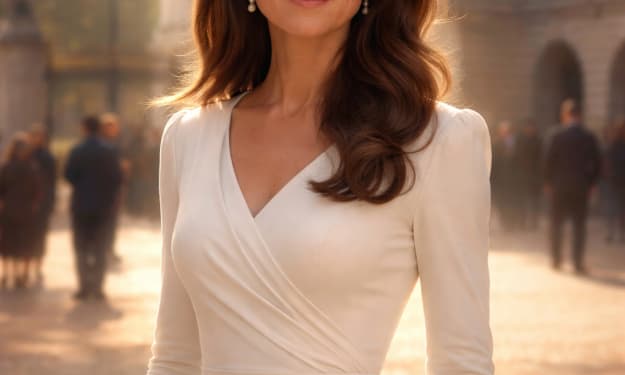
The House of Windsor is facing a subtle but undeniable shift. Tension runs high, and the once-clear lines of loyalty and influence are now blurred. At the center of it all stands Catherine, Princess of Wales—a figure who has long been admired for her grace, calm, and unwavering dignity. But recent events have brought a storm to the palace doors, one that threatens to test the very foundation of royal stability. For years, Catherine served as the quiet anchor of the monarchy. She carried her role with elegance, weathering constant scrutiny from the public and press alike. Then came a serious health challenge, a period of uncertainty and silence that left many wondering if she would step back permanently. But she did not. Instead, she returned stronger, her poise and presence commanding renewed attention and respect. Public admiration for her soared, culminating in headlines that celebrated her as more than a royal figure—they crowned her a symbol of strength. This rising public affection, however, has created ripples behind palace walls. Reports suggest that King Charles feels overshadowed, and Queen Camilla may be aligning with palace traditionalists in response to Catherine’s prominence. What was once a harmonious center of royal life now shows signs of friction. Influences are shifting, whispers and press narratives become tools of subtle power struggles, and Catherine, the stabilizing force, is suddenly cast as a threat. This isn’t about Catherine versus Meghan Markle, though the comparison is inevitable. Meghan, once seen as the disruptor, now observes the palace from outside. Her era of controversy shaped her influence, but today’s narrative highlights endurance over disruption. Catherine doesn’t need confrontation to command attention—her consistency, humility, and resilience naturally draw public support. This quiet power is precisely what unsettles those who rely on control and manipulation. Catherine’s return demonstrates a fundamental truth: legacy outlasts noise. She embodies a rare combination of grace under pressure, emotional intelligence, and unshakable composure. Her strength is evident not in headlines or controversy but in her ability to maintain dignity amid chaos. People don’t just admire her; they trust her. They feel her presence, and in her, they see continuity, reliability, and hope for the monarchy’s future. The palace may attempt to manage narratives, deploy commentators, or subtly influence the media, but they cannot manufacture the connection Catherine shares with the public. Her influence is organic. It is the result of years of consistent, visible dedication, and it resonates far beyond the confines of Buckingham Palace. While power struggles may unfold within, the world watches, and the audience has already chosen a champion. Meanwhile, Meghan’s story, once loud and all-encompassing, fades into the background. Her brand of influence—rooted in challenge and controversy—cannot compete with Catherine’s enduring presence. The public craves stability, someone who embodies calm, resilience, and authenticity. Catherine provides that in abundance, and the contrast is unmistakable. Enduring legacy outshines transient disruption. Ultimately, Catherine’s rise is not a threat to the monarchy—it is its lifeline. She is the bridge between tradition and relevance, connecting generations with quiet confidence. The very qualities that some may perceive as challenging palace control—her popularity, her grace, her resilience—are precisely what sustain public trust. This isn’t a story of rivalry; it’s a lesson in the power of character, the influence of consistency, and the enduring appeal of authenticity. History has a way of remembering who strengthens institutions and who allows petty conflicts to erode them. Catherine stands as a testament to steadfast leadership, quiet courage, and the enduring bond between a royal and her people. Those who underestimate her do so at their peril, for her strength is both visible and deeply felt. The narrative is clear: Catherine isn’t merely surviving; she is thriving. She faces pressure, criticism, and palace politics with unflinching dignity, reinforcing her role as an indispensable figure in the monarchy’s future. Her story reminds the world that true influence is built on resilience, authenticity, and the unwavering commitment to serve, rather than to command attention. As the palace navigates shifting alliances and personal insecurities, the public stands with Catherine. Her legacy, already forming, will outlast the temporary noise of gossip and speculation. She is the embodiment of stability, grace, and leadership—a woman whose presence strengthens the monarchy and whose endurance inspires the world. The House of Windsor may grapple with internal tension, but Catherine has already secured her place in the hearts of those she serves. In a world of fleeting attention and manufactured drama, Catherine proves that true influence is quiet, steady, and lasting. She faces life’s storms not with theatrics, but with poise and resilience, leaving a legacy that no palace intrigue can diminish. The world watches, admiration grows, and history quietly notes who stood firm, who served with dignity, and who became a true icon of endurance. Image Creation Format for This Story: Subject: Catherine, Princess of Wales, standing gracefully in a sunlit palace courtyard, with subtle shadows representing tension behind palace doors. Mood: Elegant, dignified, serene, yet powerful—contrast of calm versus tension. Style: Realistic digital painting, slightly cinematic, focus on light and expression.
By Behind the Curtain7 days ago in Art



Comments
There are no comments for this story
Be the first to respond and start the conversation.