
The Storm on the Sea of Galilee
Peace amidst the dangers of life.

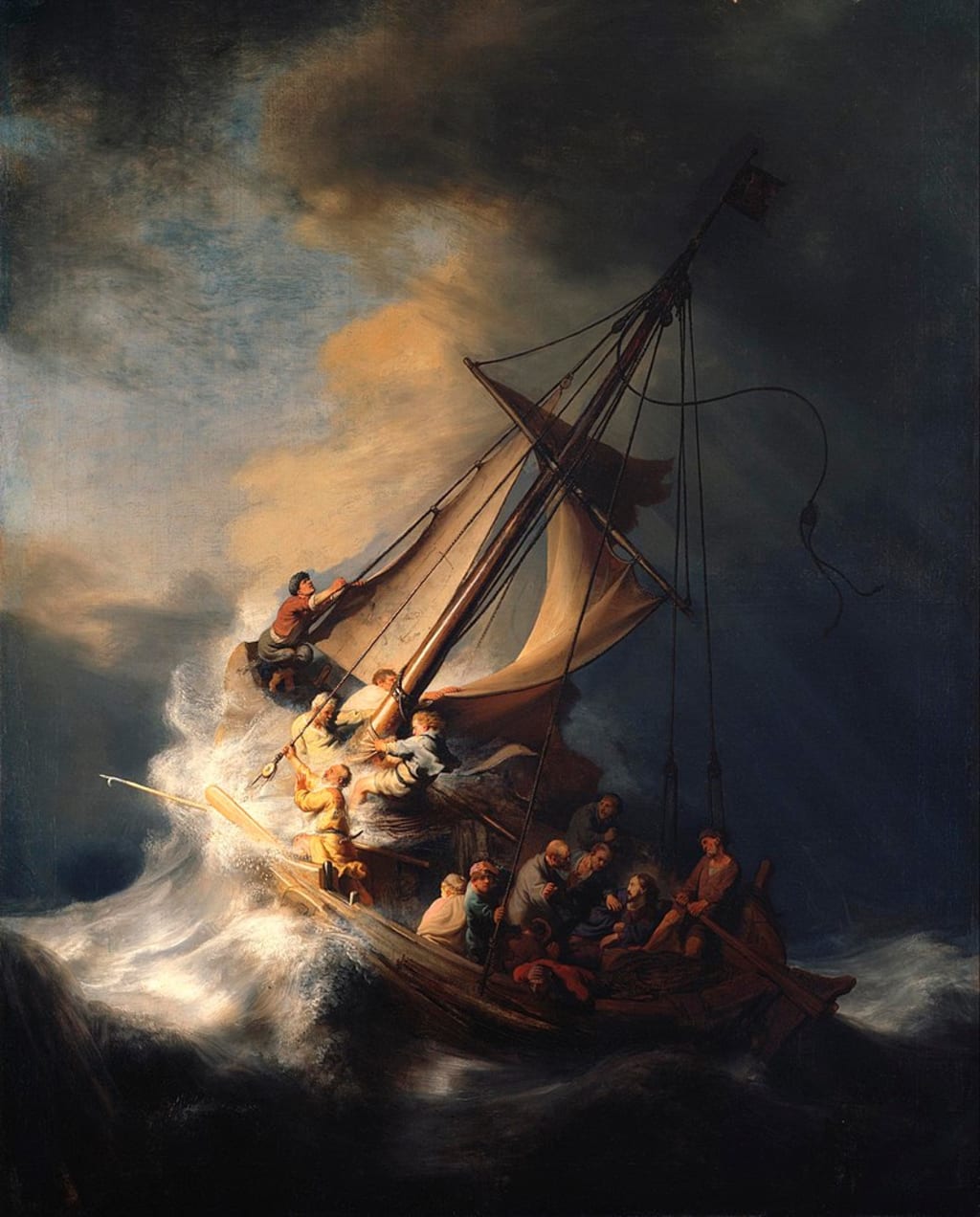
Rembrandt's The Storm on the Sea of Galilee captivates with its depiction of crashing waves and turbulent skies. This painting is not just something to admire—it holds a special place in my heart. Rembrandt, my favorite artist, masterfully blends nature's chaos with human hope, creating a piece rich in storytelling and emotion.
Nature's Force and Human Strength
The painting immediately showcases nature's immense power. The sea is depicted as wild, with waves in deep blues and grays. You can almost sense the boat rocking and hear the waves crashing against it. This small, fragile vessel symbolizes human determination against overwhelming forces.
What distinguishes Rembrandt is how he elevates the scene. The light breaking through the storm is more than scenery; it serves as a lifeline. Beams of light penetrate the clouds, illuminating parts of the boat and its passengers, creating undeniable tension. It offers a message of hope in the midst of darkness.
The Drama of Light and Darkness
Rembrandt's use of chiaroscuro—contrasting light and dark—gives the painting a dramatic, theatrical quality. Shadows dominate the canvas, yet bursts of light reveal the people on the boat struggling against the storm. This battle is not only with the sea but also within themselves. The light suggests salvation or divine help, while the surrounding darkness hints at despair and doubt.
This interaction between light and dark makes the painting so compelling. It mirrors life itself—those moments when we oscillate between hope and fear, belief and uncertainty. Each beam of light serves as a reminder that even in the fiercest storms, we are not entirely lost.
A Personal Connection to Its Feeling
For me, this painting transcends its biblical roots. It symbolizes the personal storms we all encounter—times when life feels overwhelming, and we cling to hope. Rembrandt’s portrayal of this struggle resonates deeply with me. He doesn’t just depict the storm; he makes us feel it. Each figure on the boat expresses a different reaction to crisis—some panic, some pray, and one man, perhaps representing calm, looks directly at us.
Rembrandt's ability to capture such profound emotions is why I hold him in high regard. His work is timeless. In The Storm on the Sea of Galilee, he illustrates that vulnerability and strength coexist, and that our battles against life's storms are universal.
The Power of Art to Encourage
What truly moves me is how this painting transforms chaos into beauty. Rembrandt's brushstrokes are infused with emotion. There's a rhythm, a flow that draws you in, prompting reflection on resilience, faith, and survival.
Great art changes our perspective, and this painting achieves that for me. It transforms a violent storm into something meaningful, prompting me to reflect on my own life's challenges and the light that guided me. It’s not merely a painting—it serves as a source of inspiration, reminding me that even in uncertainty, we can find strength within ourselves.
A Lasting Symbol of Hope
Ultimately, The Storm on the Sea of Galilee is more than a portrayal of nature's fury. It captures the complexities of the human experience—the fear, determination, and moments when we seek guidance. I return to this painting often because it reminds me that even in life’s darkest moments, there is light.
This is why Rembrandt remains my favorite artist. His gift lies in transforming external chaos into a reflection of our internal struggles. Through this painting, he invites us to reflect, face our fears, and discover beauty in our endurance.
About the Creator
Darush Studio
Darush Studio blends art, storytelling, and history through AI-assisted painting, reimagining myths and emotions while exploring the tension between beauty, tragedy, and the stories that define us.
See more of my work at:
Keep reading
More stories from writers in Art and other communities.
Valentino Garavani
In the golden age of couture, when fashion was less about speed and more about soul, one name quietly rose to become synonymous with timeless elegance: Valentino Garavani. To speak of Valentino is to speak of romance, discipline, beauty, and a lifelong devotion to the art of dressing the world’s most admired women.
By S.A Charles4 days ago in Art
Affection and Healing for Yourself
During the night of the last quarter moon, I gathered my ritual supplies. I carefully handled the chunk of black tourmaline that would protect me from your overall negative and narcissistic energy. I carefully walked the house with my stick of selenite in hand, asking the universe to cleanse our working space.
By Alisha Wilkins ✒️🦋🖋️4 days ago in Fiction
🅼🅸🅳🅽🅸🅶🅷🆃 🆂🅽🅰🅲🅺🆂
"It's 10 in Tuscon! We all know what that means... It's Time for Midnight Snacks with your man, Gerald Gee! Ready to spend the night together? Me too! I'm full of snacks and can't wait to regurgitate them all back into your hungry ears. Crack a brew! Pop some corn! Anything to get ready for one hell of a show where the talk maybe cheap but the words cut deep...
By Lamar Wigginsa day ago in Fiction




Comments
There are no comments for this story
Be the first to respond and start the conversation.