
The Sinister Qiongqi in "Shanhaijing"
Record of Strange Beasts in the Classic of Mountains and Seas

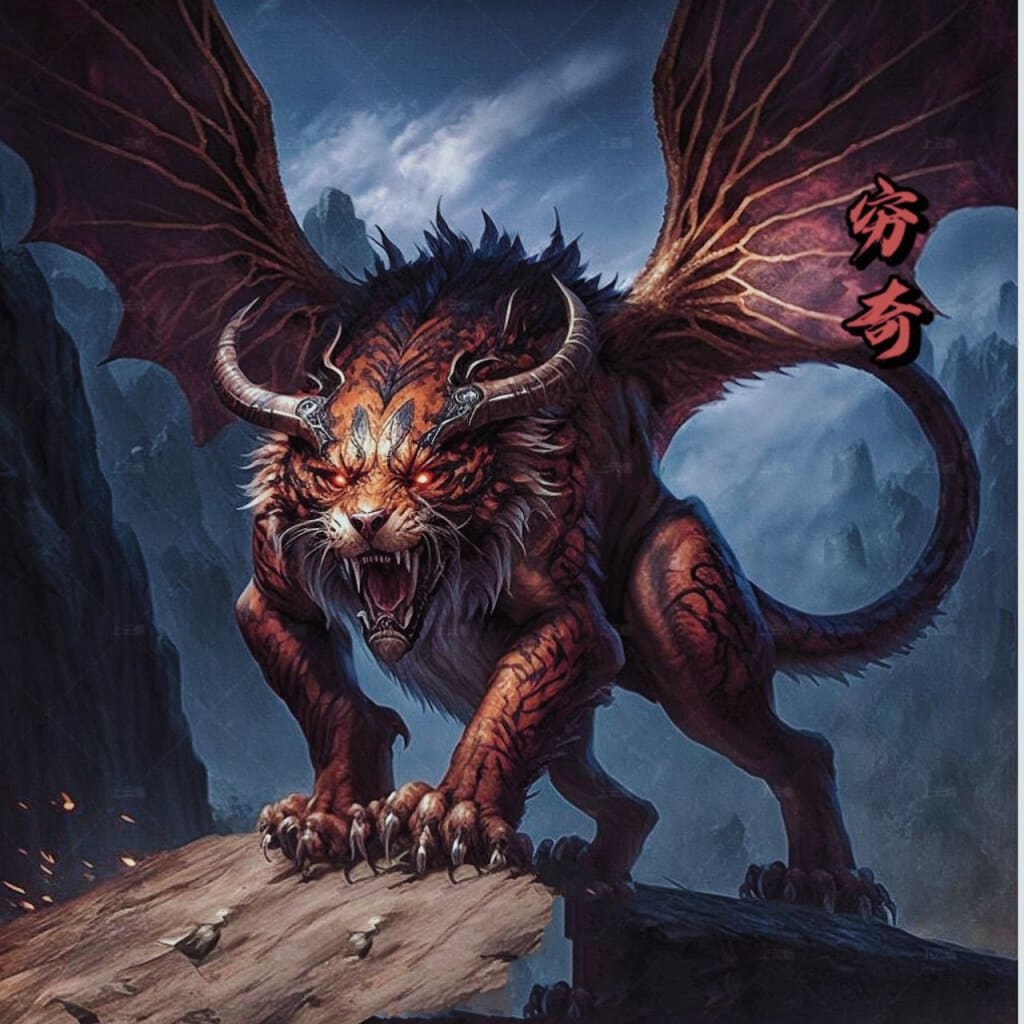
Amidst the rich tapestry of mythical creatures in the "Shanhaijing," Qiongqi stands out as a symbol of malevolence and chaos. This fearsome being has intrigued and horrified people for centuries with its unique characteristics and dark deeds.
Appearance and Physical Traits
Qiongqi is described as a rather extraordinary creature. It has the body of a large, muscular bull, covered in thick, bristly fur that gives it a rugged and intimidating look. Its fur color often varies in accounts, with some descriptions suggesting it is black, a color associated with darkness and evil in many cultures. Its head, however, is that of a human, but with a grotesque twist. The human - like face is distorted, with a wide, sneering mouth filled with sharp, jagged teeth. Its eyes are small and beady, glowing with a malevolent light that seems to pierce through the shadows.
Adding to its menacing appearance are a pair of massive wings sprouting from its back. These wings are large and powerful, enabling Qiongqi to soar through the skies with ease. The wings are often depicted as being leathery, with sharp edges that could potentially be used as weapons in a fight. Qiongqi also has a long, whip - like tail, which it can use to lash out at its enemies.
Malicious Behavior and Habits
Qiongqi is known for its extremely malevolent nature. It has a penchant for chaos and destruction, and it takes pleasure in causing harm to others. It is a fierce predator, preying on both humans and other animals. Unlike many other creatures that hunt for sustenance, Qiongqi seems to kill for the sheer joy of it.
One of the most disturbing aspects of Qiongqi's behavior is its affinity for evil. It is said that when it encounters a person who is doing good deeds, it will fly down and attack them, often with great ferocity. On the other hand, when it comes across a person who is engaged in wickedness, it will bring them gifts, as if rewarding their immoral behavior. This perverse behavior makes Qiongqi a symbol of the inversion of moral values, a creature that thrives in a world of chaos and injustice.
Mythological Stories
In one well - known mythological tale, Qiongqi was one of the four evil beasts in ancient China. Along with Taotie, Hundun, and 饕 ti, it was a constant source of trouble and despair for humanity. The story tells of how these four beasts would roam the land, causing destruction and chaos wherever they went. The people, helpless against their might, prayed for deliverance. Eventually, the gods took pity on the humans and decided to take action. They sent forth heroes to subdue these evil beasts. In the battle against Qiongqi, the hero had to use all of his wits and strength to outsmart the cunning and powerful creature. After a long and arduous fight, the hero was finally able to defeat Qiongqi, bringing a temporary respite to the land.
Another story involves Qiongqi's role in a great war between the forces of good and evil. Qiongqi sided with the evil forces, using its powerful wings and fierce strength to turn the tide of the battle in their favor. Its presence on the battlefield struck fear into the hearts of the good - aligned warriors, and it seemed for a while that the forces of evil would prevail. However, in the end, the combined efforts of the heroes and the gods managed to overcome Qiongqi and its allies, restoring peace and order to the world.
Cultural Significance
In Chinese culture, Qiongqi represents the embodiment of evil, chaos, and the perversion of moral values. It serves as a cautionary symbol, reminding people of the dangers of giving in to their darkest impulses. The story of Qiongqi's defeat by the heroes also symbolizes the triumph of good over evil, the power of courage and righteousness in the face of overwhelming odds.
Qiongqi's image has also been used in various cultural and religious contexts to represent the forces of darkness that need to be overcome. In some traditional Chinese festivals, masks and costumes in the shape of Qiongqi are used in exorcism rituals, as a way to drive away evil spirits and protect the community from harm.
Influence on Art and Literature
Qiongqi's unique and fearsome appearance has had a significant impact on Chinese art. In traditional Chinese paintings, Qiongqi is often depicted in a menacing pose, with its wings spread wide and its teeth bared. The artists use bold colors and dynamic brushstrokes to capture its ferocity and the sense of chaos it represents. In sculptures, Qiongqi is rendered in intricate detail, with its muscular body, grotesque face, and powerful wings all carefully crafted to convey its intimidating presence.
In literature, Qiongqi appears in many ancient texts, both in the "Shanhaijing" and in other works of mythology and folklore. Poets and storytellers have used Qiongqi to create dramatic and terrifying narratives, exploring themes of good and evil, chaos and order. In modern literature, especially in fantasy and horror genres, Qiongqi continues to be a popular subject. It is often reimagined and adapted to fit new storylines, introducing this ancient and fearsome creature to a new generation of readers.
In conclusion, Qiongqi in the "Shanhaijing" is a creature that has left an indelible mark on Chinese mythology and culture. Its appearance, behavior, and the stories associated with it have made it an enduring symbol of the darker side of the world, while also highlighting the power of good to overcome evil. Whether in art, literature, or cultural traditions, Qiongqi continues to fascinate and inspire, reminding us of the complex and often terrifying nature of the human imagination.
About the Creator
hello-word
As a Chinese person, love for the culture of my own country. Nowadays, the global exchange of information is becoming increasingly rapid. I also hope that more people can gain a deeper and more detailed understanding of Chinese culture.
Keep reading
More stories from hello-word and writers in Art and other communities.
The Ferocious Taotie in "Shanhaijing"
In the intricate tapestry of Chinese mythology woven by the "Shanhaijing," Taotie emerges as a menacing and unforgettable creature. This mythical being is renowned for its gluttonous nature and has left an indelible mark on Chinese cultural and historical narratives.
By hello-wordabout a year ago in Art
'Till Death We Do Art
There would be nothing divine in this world without art. Nature may surpass the divine to all intents and purposes, but like everything it absorbs and is absorbed by, it remains here, stuck on the surface of this world, ever-present, physically bound to the universe.
By Avocado Nunzella BSc (Psych) -- M.A.P 27 days ago in Art
The Reality Behind Action Films: Physical Performance Through the Lens of Andreas Szakacs
For the audience, the moment lasts only a few seconds. Behind the camera, it represents months of preparation, discipline, and coordination. Action films may appear effortless on screen, but the truth behind those scenes tells a much deeper story about physical commitment and performance.
By Andreas Szakacs5 days ago in Art



Comments
There are no comments for this story
Be the first to respond and start the conversation.