

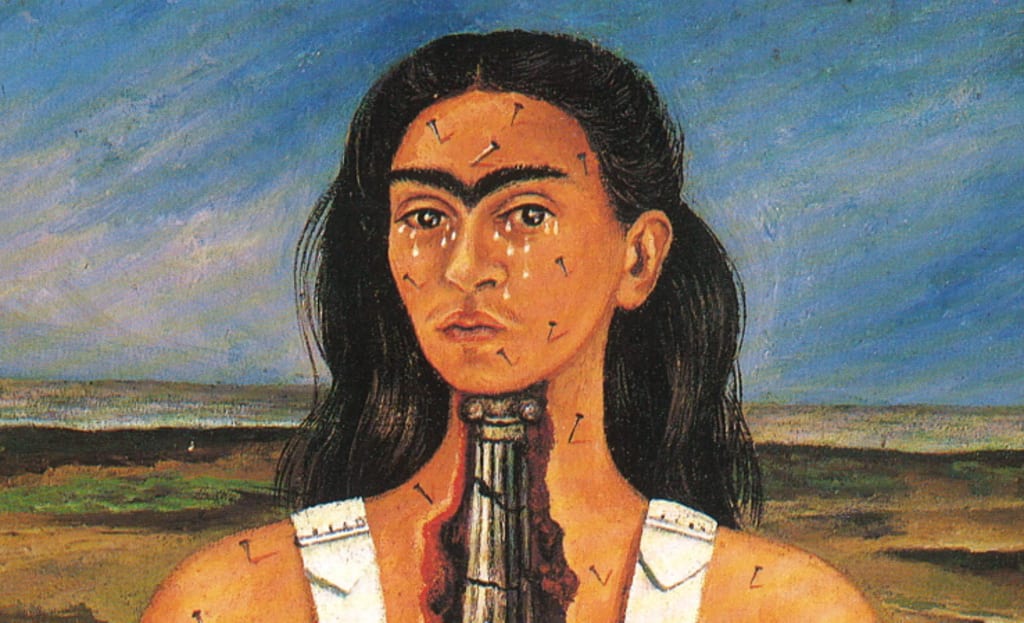
Frida Kahlo celebrated as one of the most influential artists of the 20th century, known for her vibrant and emotionally charged paintings. Beyond her artistic prowess, Kahlo's life story is one of resilience, courage, and perseverance, particularly during her struggle with disability. Afflicted by polio as a child, Kahlo's experiences with illness and disability profoundly shaped both her life and her art.
Born on July 6, 1907, in Coyoacán, Mexico City, Frida Kahlo contracted polio at the age of six. The disease left her with a withered right leg, leading to a noticeable limp throughout her life. This early encounter with disability marked the beginning of Kahlo's journey toward self-discovery and artistic expression.
For Kahlo, the experience of disability was not merely a physical obstacle but also a source of profound emotional and psychological turmoil. She endured not only the physical pain and limitations imposed by her condition but also the psychological impact of feeling different from her peers. Yet, rather than succumbing to despair, Kahlo used her art as a means of confronting and transcending her disability.
Kahlo's paintings often serve as a reflection of her inner struggles and the complex relationship she had with her own body. In her self-portraits, she fearlessly depicted her physical disabilities, presenting herself with unflinching honesty and vulnerability. Through her art, Kahlo transformed her pain into a source of strength and empowerment, challenging societal norms and redefining conventional standards of beauty.
One of Kahlo's most famous works, "The Broken Column" (1944), poignantly captures the artist's experience of chronic pain and disability. In this painting, Kahlo portrays herself with a fractured spine, nails piercing her flesh, and tears streaming down her face. Despite the agony depicted in the painting, Kahlo's expression is one of defiance and resilience, symbolizing her refusal to be defined by her physical limitations.
Throughout her life, Kahlo underwent numerous surgeries and medical treatments in an attempt to alleviate her chronic pain and improve her mobility. Despite these interventions, she continued to struggle with health issues, including complications from a near-fatal bus accident in 1925, which left her with lifelong injuries and chronic pain.
Despite the adversity she faced, Kahlo's disability did not hinder her artistic ambitions; rather, it fueled her creativity and served as a source of inspiration for her work. In her art, she explored themes of identity, mortality, and the human experience, drawing upon her struggles with illness and disability to create deeply personal and emotionally resonant works.
Kahlo's unique artistic vision and unapologetic portrayal of her disability have earned her a revered place in art history as an icon of resilience and empowerment. Her legacy continues to inspire generations of artists and activists around the world, serving as a powerful reminder of the transformative power of art in the face of adversity.
In addition to her artistic contributions, Kahlo's life and work have had a profound impact on the representation of disability in art and popular culture. By openly embracing her disability and incorporating it into her artistic identity, Kahlo challenged prevailing attitudes toward disability and helped to break down barriers of stigma and discrimination.
In recent years, there has been a growing recognition of Kahlo's significance as a disabled artist, with exhibitions and scholarly works exploring the intersection of her disability and her art. Through these efforts, Kahlo's legacy continues to be reexamined and reinterpreted, shedding new light on the profound influence of her disability on her life and work.
Frida Kahlo's story serves as a powerful testament to the resilience of the human spirit and the transformative power of art. Despite facing unimaginable challenges, she refused to be defined by her disability, instead using her art as a means of self-expression and empowerment.
About the Creator
Janie
Passionate about unraveling the intricate tapestry of art history and contemporary artistic expressions. Beyond brushstrokes and colors, into the mental and physical struggles of artists.
Impressive Artwork by Odilon Redon
French symbolist artist Odilon Redon was famous for his drawings in the 1880s. The artist’s artworks were mentioned in the popular 1884 novel “A Rebours,” or “Against the Grain,” by Joris-Karl Hysmans. His later artworks were created in oils and pastels. He developed an interest in Hinduism and Buddhism, and this interest in mysticism is reflected in his works of art.
By Rasma Raisters5 days ago in Art
What Is A5 Service on Mercedes and When Do You Need It?
If you’re a Mercedes‑Benz owner, you’ve likely seen a maintenance message pop up on your dashboard — perhaps showing something like “Service A5 due”. But what exactly is a5 service on Mercedes, why it matters, what it includes, and how much it costs? This complete, easy‑to‑understand guide answers all those questions so you can keep your luxury vehicle running smoothly and avoid costly repairs down the road.
By Vincent Otiri6 days ago in Art
Wild Card Weekend Recap: What Happens Now?
I think I figured out why I love Wild Card Weekend so much. It's because it's the first playoff anything of the calendar year. The NFL season starts in the fall, and once upon a time, the champion was crowned either on or slightly before New Year's. The evolution of the NFL schedule has resulted in the playoffs starting just into the New Year, and currently, the final week of the season falls on the first weekend of the New Year, with Wild Card Weekend coming a week after that. So yes, chronologically, the NFL's Wild Card Weekend serves as the first playoff anything of the calendar year.
By Clyde E. Dawkins5 days ago in Unbalanced



Comments