
The Reasons Behind the War Between Israel and Hamas
Understanding the Historical and Political Roots of the Conflict

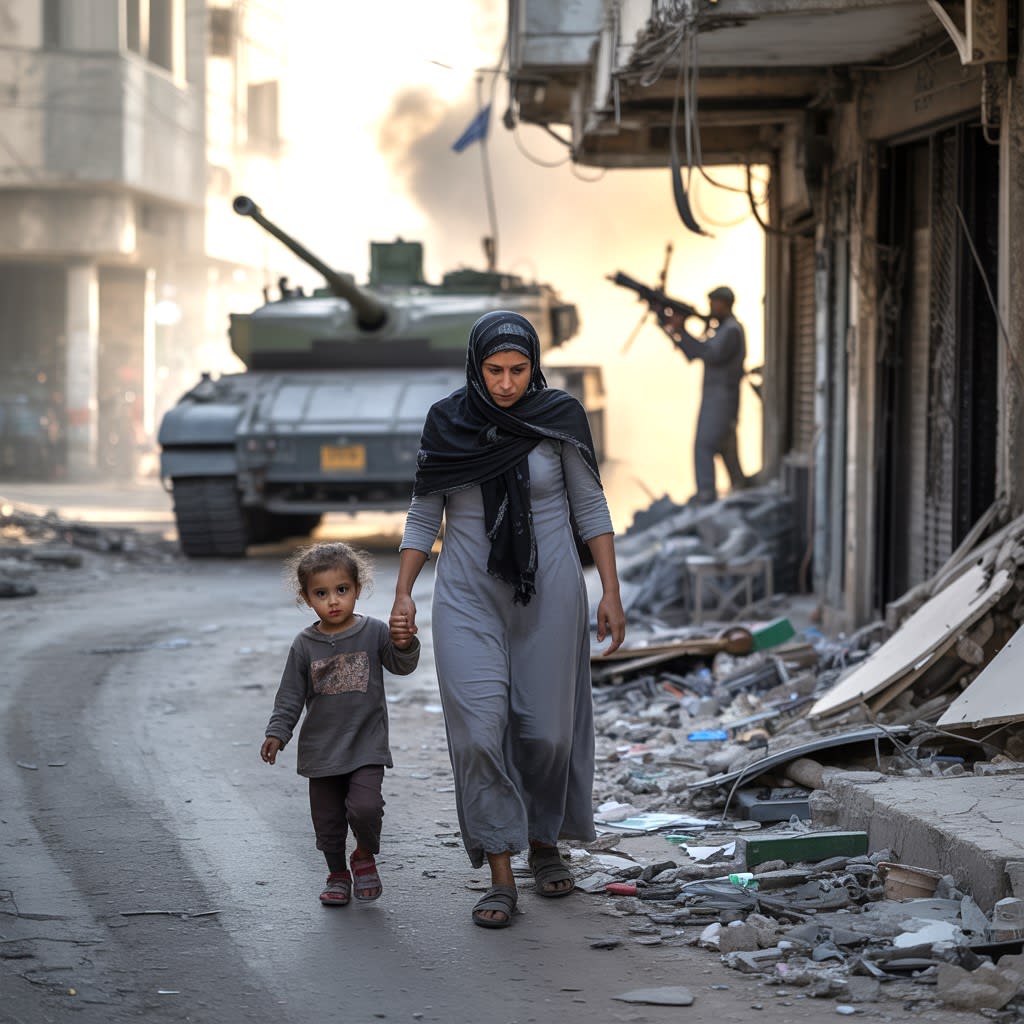
The ongoing conflict between Israel and Hamas is one of the most protracted and complex disputes in modern history. The roots of this war stretch back decades, involving territorial disputes, religious tensions, political ideologies, and failed peace efforts. To understand why these two sides remain locked in a cycle of violence, we must examine the historical background, key grievances, and triggering events that have fueled the hostilities.
1. Historical Context: The Israeli-Palestinian Conflict
The conflict between Israel and Hamas cannot be separated from the broader Israeli-Palestinian struggle, which dates back to the early 20th century. Following World War I, the British Mandate of Palestine was established, and Jewish immigration to the region increased, leading to tensions between Jewish settlers and Arab Palestinians.
In 1947, the United Nations proposed a partition plan to create separate Jewish and Arab states, but Arab leaders rejected it. When Israel declared independence in 1948, neighboring Arab nations invaded, leading to the first Arab-Israeli war. Israel won, but hundreds of thousands of Palestinians were displaced, an event they refer to as the Nakba (Catastrophe).
Subsequent wars in 1967 (Six-Day War) and 1973 (Yom Kippur War) further entrenched Israeli control over Palestinian territories, including the Gaza Strip and West Bank. The Palestinian Liberation Organization (PLO) emerged as a key resistance movement, but over time, more radical factions like Hamas gained influence.
2. The Rise of Hamas and Its Ideology
Hamas (Harakat al-Muqawama al-Islamiyya, or "Islamic Resistance Movement") was founded in 1987 during the First Intifada (Palestinian uprising). Unlike the secular PLO, Hamas is an Islamist militant group with a charter that calls for the destruction of Israel and the establishment of an Islamic state in historic Palestine.
Hamas gained popularity by providing social services in Gaza, where poverty and unemployment were rampant due to Israeli blockades and political instability. In 2006, Hamas won Palestinian legislative elections, defeating the more moderate Fatah party. A violent power struggle followed, leading to Hamas taking full control of Gaza in 2007, while Fatah retained authority in the West Bank.
Since then, Israel has imposed a blockade on Gaza, restricting the movement of goods and people, citing security concerns over Hamas’ militant activities. This blockade has severely impacted Gaza’s economy and humanitarian conditions, fueling resentment and radicalization.
3. Key Issues Fueling the Conflict
A. Territorial Disputes and Settlements
The core issue remains the question of land. Palestinians demand an independent state in the West Bank, Gaza, and East Jerusalem—territories occupied by Israel since 1967. Israel has built settlements in the West Bank, considered illegal under international law, further complicating peace prospects.
B. Jerusalem: A Flashpoint of Tension
Jerusalem is a deeply contested city, sacred to Jews, Muslims, and Christians. Israel claims it as its "undivided capital," while Palestinians seek East Jerusalem as the capital of a future state. Clashes frequently erupt over access to holy sites, such as the Al-Aqsa Mosque compound.
C. Blockade and Humanitarian Crisis in Gaza
The Israeli-Egyptian blockade has crippled Gaza’s economy, leading to high unemployment, electricity shortages, and limited medical supplies. Hamas responds with rocket attacks, while Israel conducts military operations, creating a vicious cycle of retaliation.
D. Failed Peace Processes
Numerous peace initiatives, such as the Oslo Accords (1990s) and the Camp David Summit (2000), have failed due to mutual distrust, political divisions among Palestinians, and Israeli settlement expansions. The lack of a viable two-state solution has left many Palestinians disillusioned, strengthening hardline groups like Hamas.
4. Triggering Events of Recent Wars
While the underlying causes are long-standing, specific incidents often escalate into full-scale wars:
A. 2008-2009 Gaza War (Operation Cast Lead)
After Hamas intensified rocket attacks, Israel launched a major military offensive, resulting in significant Palestinian casualties and destruction in Gaza.
B. 2014 Gaza War (Operation Protective Edge)
The kidnapping and killing of three Israeli teenagers by Hamas militants led to a seven-week war, with heavy casualties on both sides.
C. May 2021 Conflict
Tensions flared over the planned eviction of Palestinian families in East Jerusalem and clashes at Al-Aqsa Mosque. Hamas fired rockets, and Israel responded with airstrikes, leading to an 11-day war.
D. October 2023 Escalation
A surprise attack by Hamas on Israeli towns near Gaza killed over 1,000 Israelis, prompting a massive Israeli military response. The war has caused thousands of Palestinian deaths and a severe humanitarian crisis.
5. Regional and International Involvement
The conflict is not isolated; regional and global powers play significant roles:
Iran & Hezbollah: Support Hamas with weapons and funding, viewing Israel as an enemy.
Egypt & Qatar: Mediate ceasefires but have complex relations with Hamas.
United States: Strongly backs Israel militarily and diplomatically.
United Nations & Human Rights Groups: Criticize both sides but often focus on Israel’s military actions and blockade policies.
Conclusion: A Cycle of Violence with No Easy Solution
The war between Israel and Hamas is driven by deep historical grievances, territorial disputes, ideological extremism, and failed diplomacy. While Israel seeks security from militant attacks, Palestinians demand an end to occupation and blockade. Without meaningful negotiations, humanitarian relief, and international pressure, the cycle of violence is likely to continue.
The path to peace remains uncertain, but any lasting solution must address the legitimate aspirations of both Israelis and Palestinians while ensuring security and dignity for all. Until then, the tragic cycle of war and retaliation will persist, leaving civilians on both sides to bear the heaviest cost.
About the Creator
Keep reading
More stories from Rocky Brahma and writers in Art and other communities.
Seville: The Enchanting Heart of Andalusia
Seville is a city in southern Spain that captivates visitors with its vibrant culture, extensive history, and breathtaking architecture. It is located in the sun-drenched Andalusia region. Known for its passionate flamenco performances, grand Moorish palaces, and lively festivals, Seville effortlessly blends centuries-old traditions with modern energy. Whether strolling through its narrow cobblestone streets, admiring its golden-hued cathedrals, or indulging in its world-famous tapas, travelers are sure to be enchanted by its undeniable charm.
By Rocky Brahma8 months ago in Art
📢 Raise Your Voice Thread: 01/08/2026
Our “Raise Your Voice Threads” are hosted most alternating Thursdays at 12PM ET to offer creators more avenues to uncover exceptional stories on Vocal. As we are continuously searching for fresh creators and inspiring stories, this thread provides an opportunity to exchange and discuss the stories that have moved and motivated us on Vocal.
By Raise Your Voice by Vocal7 days ago in Resources


Comments
There are no comments for this story
Be the first to respond and start the conversation.