
The real reason for Mona Lisa’s insane popularity
The Notorious Heist That Made the Mona Lisa a Global Icon
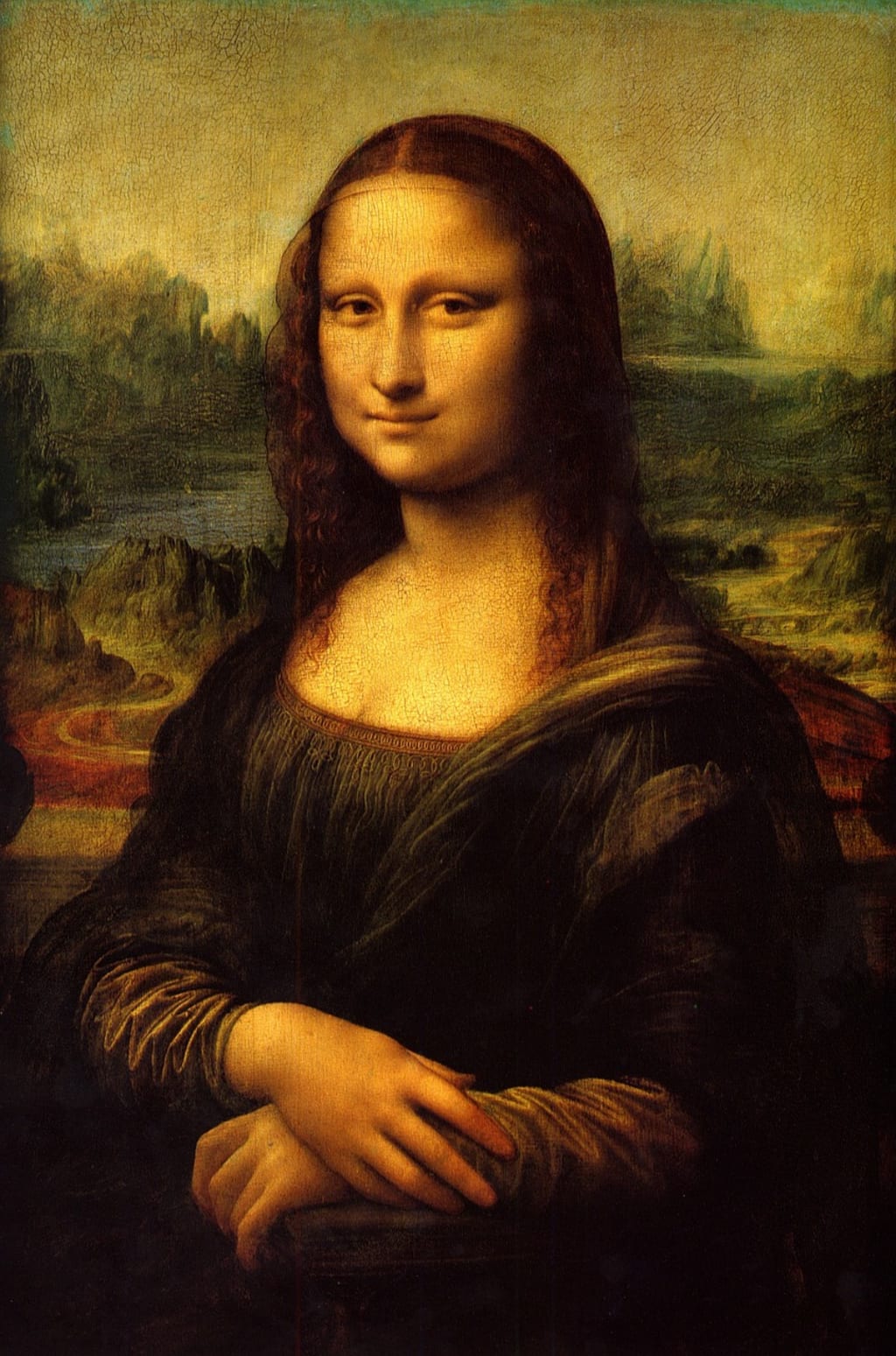
As the first rays of sunlight pierced the Parisian skyline on August 21st, 1911, a man named Vincenzo Peruggia carefully lifted a painting from its place on the wall, concealing it under his arm. With the prized artwork in his grasp, he descended the back stairs of the Louvre. Freedom seemed within reach, but then a two-fold dilemma presented itself: the exit was locked, and approaching footsteps threatened to expose him. Clutched tightly under Peruggia's arm was none other than Leonardo da Vinci's masterpiece, the "Mona Lisa." It is arguably the world's most renowned painting today. But how did this iconic status come to be?
Leonardo da Vinci initiated the creation of the "Mona Lisa" in 1503, fulfilling a request from a Florentine merchant who sought a portrait of his wife, Lisa Gherardini. Leonardo labored on this portrait for over a decade, but it remained unfinished at the time of his death. Throughout his life, Leonardo conducted groundbreaking studies in human optics, leading to innovations in his artistic techniques. The "Mona Lisa" showcases some of these techniques, including "atmospheric perspective," which imparts a sense of depth by making distant images hazier, and "sfumato," creating subtle color gradations to soften the edges of depicted forms. These artistic feats are indeed impressive, but are they enough to catapult the "Mona Lisa" to the status of the world's most famous painting?
Many scholars regard it as an exceptional Renaissance portrait, albeit one among many. Art history is replete with magnificent paintings. The global acclaim of the "Mona Lisa" hinged largely on factors extending beyond the canvas itself. Following Leonardo's death, King François the First of France acquired the painting and exhibited it. In 1550, Italian scholar Giorgio Vasari published a widely translated biography of Italian Renaissance artists, which featured effusive praise for the "Mona Lisa" as a mesmerizing representation of life. Over time, the "Mona Lisa" became a prized possession within the French Royal Collection, adorning the bedroom of Napoleon before becoming a public exhibit at the Louvre Museum. During the 19th century, European scholars further heightened the allure of the "Mona Lisa," placing unusual emphasis on her captivating qualities. In 1854, Alfred Dumesnil attributed a "treacherous attraction" to Mona Lisa's smile. A year later, Théophile Gautier described her "mocking lips" and a "gaze promising unknown pleasures." In 1869, Walter Pater depicted Mona Lisa as the embodiment of timeless feminine beauty. By the 20th century, the portrait had assumed an iconic status within one of the world's most renowned museums. However, it had not yet become a household name.
The turning point arrived in 1911 with Peruggia's audacious heist. Given his role in crafting protective cases for the Louvre, it was not entirely implausible for Peruggia to be locked inside the museum. Remarkably, when a fellow worker encountered him in the stairwell, he assisted Peruggia in unlocking the door, allowing him to step into the morning light. The theft made headlines worldwide, and a curious crowd gathered to witness the vacant space where the "Mona Lisa" once hung. Although Peruggia, due to his association with the Louvre, was questioned by the police, he was never considered a suspect. Meanwhile, another prominent artist, Pablo Picasso, was interrogated due to his connection to a prior Louvre theft but was ultimately released.
For two years, Peruggia concealed the painting within a suitcase with a false bottom. He subsequently smuggled the "Mona Lisa" into Italy, intending to sell it to a Florentine art dealer. Peruggia perceived himself as an Italian patriot, seeking to repatriate a work of an old master. However, instead of being hailed as a hero, he was promptly arrested. With the mystery resolved, the "Mona Lisa" returned to public display, drawing large crowds, and newspapers celebrated the resolution of the captivating heist. In the ensuing decades, this iconic painting endured numerous episodes, including satirical artwork by Marcel Duchamp, pursuit by Nazi art thieves, songs by Nat King Cole, and attacks by individuals wielding stones, paint, acid, and even teacups. Today, more than 500 years since its creation, with features like eyebrows and eyelashes long faded, the "Mona Lisa" resides within a bulletproof, earthquake-resistant case. It stands not only as a masterpiece of Renaissance portraiture but also as a testament to the creation and perpetuation of celebrity.
About the Creator
Keep reading
More stories from Ogbonna David and writers in Art and other communities.
The Enduring Power of Human Innovation
The question of what might be humanity's greatest invention often doesn't get the attention it deserves. It's a topic that can spark captivating discussions with a wide range of potential answers. Some might argue passionately for fire, given its significance in providing warmth, protection, and transforming how we prepare our meals. On the other hand, there are those who champion the wheel, a fundamental innovation that laid the groundwork for trade, commerce, and travel. These are all valid contenders, yet one invention that tends to slip under the radar is money.
By Ogbonna David2 years ago in Art
“What If It Happens?”
Monday, 11 April 2022 Ishrat Jahan One of our friends, Mr. Farooq, is a middle-aged man, yet he has still not been able to free himself from his deeply suspicious and fearful nature. These days, I happened to have some free time, so I thought it would be a good idea to meet him and try to untangle the puzzle of his constant worries. By coincidence, he himself arrived at my humble home, jolting along in a rickshaw.
By Sudais Zakwan2 days ago in Art
Introduction to Organic Solutions
In the realm of fitness, the role of nutrition cannot be overstated, and organic supplements are increasingly recognised as essential components of a well-rounded training regime. Unlike their synthetic counterparts, organic supplements are derived from natural sources, ensuring that fitness trainers can provide their clients with products that are free from harmful additives and chemicals. This not only promotes better health but also supports the body’s natural processes, thereby enhancing overall performance and recovery.
By Organic Products 7 days ago in Art


Comments
There are no comments for this story
Be the first to respond and start the conversation.