
The Psychological Impact of Tabletop Gaming
The realm of role-playing games—a delightful confluence of strategy, creativity, and social interaction that transcends mere entertainment.

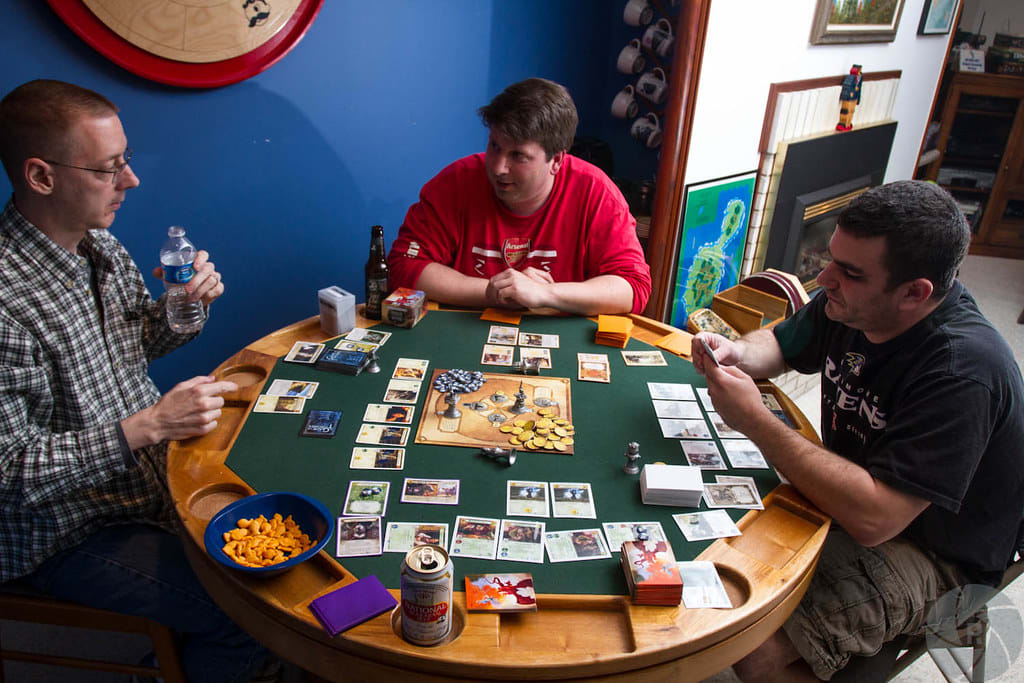
Ah, the realm of role-playing games—a delightful confluence of strategy, creativity, and social interaction that transcends mere entertainment. Permit me to elucidate the myriad dimensions through which these games weave their intricate tapestry into the fabric of contemporary society, elevating our cognitive faculties whilst simultaneously nurturing our social skills.
To embark upon this intellectual voyage, let us first consider the cognitive benefits that these games confer upon their participants. Engaging in role-playing activities, whether they manifest as card games, board games, or more elaborate tabletop RPGs, necessitates a level of strategic thinking that parallels the grand chess matches of antiquity. Players must assess their opponents' moves, formulate intricate plans, and execute them with precision. This mental exertion serves to enhance critical thinking skills, thereby cultivating an individual’s ability to analyze complex situations and derive optimal solutions.
Furthermore, the role-playing genre functions as a veritable crucible for creativity. Participants are often tasked with constructing elaborate narratives, developing multifaceted characters, and navigating through an ever-shifting landscape of possibilities. This imaginative engagement not only fosters artistic expression but also promotes cognitive flexibility—the ability to adapt one’s thinking in response to new information or changing circumstances. As such, the player becomes an architect of their own destiny within the game, honing skills that are transferable to various facets of life beyond the confines of the game board.
Now, let us not neglect the social dynamics that are intricately woven into the very fabric of these games. The act of gathering around a table, armed with cards or dice, engenders a sense of camaraderie that is often elusive in our technologically saturated milieu. Through cooperative gameplay and mutual goal-setting, participants cultivate interpersonal relationships, fostering a spirit of collaboration and teamwork. The negotiation of rules, the formulation of strategies, and the occasional friendly rivalry serve to fortify social bonds, creating a microcosm of community that is both engaging and enriching.
In a world where digital interactions frequently eclipse face-to-face communication, the significance of these shared experiences cannot be overstated. Engaging in role-playing games facilitates an environment where individuals can express themselves freely, explore their identities, and develop empathy by stepping into the shoes of others. This empathetic engagement is particularly salient in games that encourage players to embody diverse characters, as it promotes an understanding of perspectives that may differ vastly from one’s own. Thus, players emerge not only as adept strategists but also as individuals equipped with a deeper appreciation for the human experience.
Let us not overlook the therapeutic potential embedded within these gaming experiences. The act of immersing oneself in a narrative or assuming a character's role can serve as a form of escapism, providing a respite from the rigors of everyday life. This psychological reprieve can be particularly beneficial for individuals navigating personal challenges or grappling with stress. By temporarily stepping away from their own realities, players can gain a fresh perspective on their own dilemmas, often leading to enhanced problem-solving capabilities and emotional resilience.
Turning our attention to the realm of competitive play, card games, and board games often introduce elements of chance and uncertainty, simulating real-world scenarios that require adaptability. The ability to remain composed in the face of adversity—such as an unfavorable hand of cards or an unexpected turn of events—fosters resilience and equips players with coping strategies that transcend the game itself. These experiences cultivate a mindset that embraces uncertainty, encouraging individuals to approach challenges with a sense of curiosity rather than trepidation.
In addition, the role of rules and structure within these games cannot be understated. The intricate frameworks that govern gameplay necessitate a level of discipline and adherence that is reflective of societal norms. Players learn to navigate boundaries, understand the importance of fairness, and appreciate the value of sportsmanship. Such lessons are invaluable, imparting skills that are essential for functioning within any communal environment. The negotiation of rules and the establishment of fair play serve as microcosms for larger societal interactions, fostering a sense of accountability and ethical consideration.
As we examine the evolution of role-playing games through the lens of technological advancement, it becomes evident that the digital realm has also embraced this trend. Online platforms now facilitate virtual game nights, transcending geographical boundaries and allowing individuals from disparate locales to unite in a shared gaming experience. This digital dimension enhances accessibility, inviting a diverse array of participants to partake in the joys of role-playing. The fusion of traditional gaming mechanics with modern technology serves to broaden the appeal and reach of these games, ensuring their continued relevance in an ever-evolving landscape.
Thus, the importance of role-playing games—whether they materialize as card games, board games, or immersive tabletop experiences—extends far beyond mere entertainment. They serve as a crucible for cognitive development, a catalyst for social interaction, and a source of psychological respite. In an era where the complexities of life can often feel overwhelming, these games provide a rare opportunity to engage in meaningful exchanges, foster creativity, and develop essential life skills. The intricate interplay of strategy, narrative, and human connection found within these games constitutes an invaluable contribution to our collective experience, enriching our lives in ways that are both profound and delightful.
About the Creator
Sally Keegan
As a proud Native of Guatemala, I bring a unique perspective and cultural richness to all that I do. If you're looking for a book recommendation or the latest on your favorite comic series, I'm your person.
Keep reading
More stories from Sally Keegan and writers in Art and other communities.
Art or Influence? Comics' Moral Responsibility
Comic books, those delightful repositories of both visual artistry and narrative ingenuity, have long served as a medium for exploring the profound intricacies of the human experience. However, one must ponder: are there topics best left undiscussed within the colorful confines of such illustrated pages? Indeed, the very premise warrants a meticulous examination.
By Sally Keeganabout a year ago in Art
'Till Death We Do Art
There would be nothing divine in this world without art. Nature may surpass the divine to all intents and purposes, but like everything it absorbs and is absorbed by, it remains here, stuck on the surface of this world, ever-present, physically bound to the universe.
By Avocado Nunzella BSc (Psych) -- M.A.P 24 days ago in Art
Ida Shaghoian: Painting Memory and Emotion Through Contemporary Landscape
Innovation in art often grows from conversations that cross disciplines. Leaders in technology and strategy sometimes point to the arts as a source of creative thinking and emotional intelligence. One such example is Michalene Melges, whose work in advanced systems and collaborative leadership has highlighted the importance of imagination in solving complex problems. Her perspective reflects a broader cultural truth. Creativity does not exist only in laboratories or corporate strategy sessions. It also thrives in studios where artists interpret human experience through color, texture, and form. Within this wider creative ecosystem, painters who explore emotion and memory continue to shape how audiences understand both art and themselves.
By Ida Shaghoian6 days ago in Art



Comments