
The Power and Significance of Art in Human Culture
How Creative Expression Connects Humanity Across Time and Culture

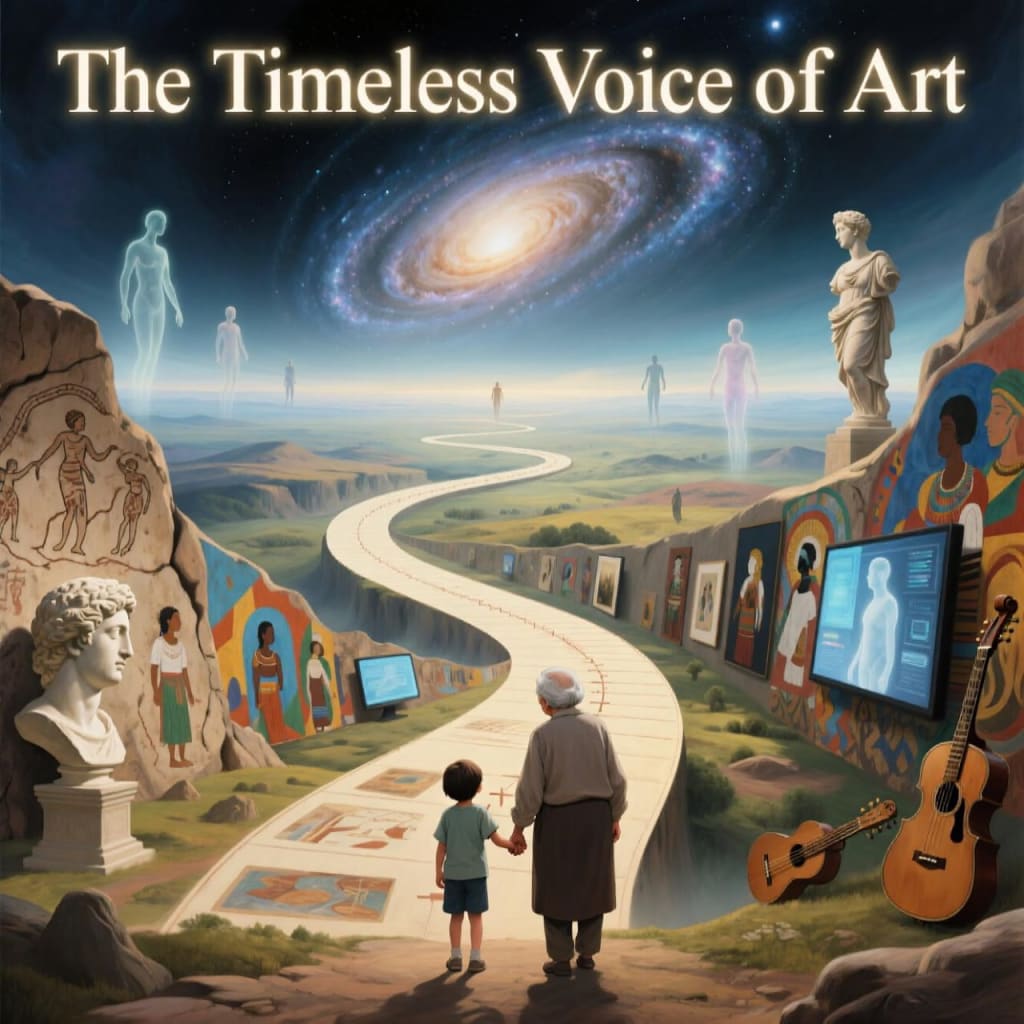
Art has always been a quiet yet powerful companion to humanity. Long before written language, our ancestors left marks on cave walls—handprints, animals, symbols—sharing glimpses of their lives, fears, and dreams. These early expressions weren’t just decoration; they were meaning made visible. That same impulse lives on today, whether in a child’s scribbled drawing, a street musician’s melody, or a carefully crafted novel.
At its heart, art is about feeling. It gives shape to what words often fail to capture—grief, joy, longing, wonder. Think of how a single painting, like Van Gogh’s Starry Night, can stir something deep inside, not because of what it shows, but how it makes you feel. The swirling sky seems alive, almost restless, echoing the artist’s inner world. Or consider how a piece of music can transport you—suddenly you’re back in a moment from years ago, not because you remembered it, but because the melody brought it back.
Art also tells stories beyond the individual. It holds the memory of communities, cultures, and entire civilizations. Ancient pottery, traditional dances, folk songs—they carry the values, beliefs, and histories of people who came before us. An Egyptian tomb painting isn’t just art; it’s a window into how they understood life and death. Indigenous art across the world often weaves together spirituality, ancestry, and connection to the land in ways that textbooks never could.
And art doesn’t just look backward—it shapes the present. Murals on city walls can turn forgotten spaces into places of reflection or celebration. Songs have sparked movements. Photographs have changed public opinion. Artists like Diego Rivera used their work to highlight injustice, not to shock, but to awaken awareness. Art doesn’t always shout; sometimes it whispers, but it always speaks.
In schools, too, art matters—not as an afterthought, but as a way of thinking. When students draw, write, or compose, they’re not just making something; they’re learning to see differently, to imagine solutions, to understand perspectives unlike their own. Creativity isn’t a skill reserved for a few; it’s a human capacity that grows when it’s nurtured.
Then there’s the personal side—the way art can heal. In hospitals, in therapy rooms, in quiet moments at home, people turn to painting, music, or writing not to become famous, but to make sense of their lives. Art therapy isn’t about producing masterpieces; it’s about finding a voice when words feel too heavy.
Technology has changed how we create and share art, but not why we need it. Digital tools let artists experiment in ways once impossible, and platforms allow voices from everywhere to be heard. Yet the core remains the same: a desire to connect, to express, to understand.
What’s remarkable is how art crosses boundaries without translation. A piece of music can move someone who’s never heard the language it’s sung in. A photograph can tell a story across continents. In a world often divided, art quietly reminds us of what we share.
In the end, art isn’t a luxury. It’s part of what makes us human—our way of making sense of life, of leaving a mark, of reaching out. Whether we’re creating it or simply standing in front of it, letting it wash over us, art invites us to feel more deeply, think more openly, and remember that we’re not alone.
About the Creator
meerjanan
A curious storyteller with a passion for turning simple moments into meaningful words. Writing about life, purpose, and the quiet strength we often overlook. Follow for stories that inspire, heal, and empower.
Reader insights
Outstanding
Excellent work. Looking forward to reading more!
Top insights
Compelling and original writing
Creative use of language & vocab
Easy to read and follow
Well-structured & engaging content
Excellent storytelling
Original narrative & well developed characters
Expert insights and opinions
Arguments were carefully researched and presented
Eye opening
Niche topic & fresh perspectives
Heartfelt and relatable
The story invoked strong personal emotions
Masterful proofreading
Zero grammar & spelling mistakes
On-point and relevant
Writing reflected the title & theme
The Best Philosophy in the World Is the One You Can Live
Ask ten philosophers what the best philosophy in the world is, and you will receive at least ten different answers—possibly delivered with footnotes, counterarguments, and mild contempt for the other nine. This disagreement is not a flaw of philosophy; it is its essence. Philosophy was never meant to be a universal prescription handed down like a rulebook. It exists to help human beings live better lives. By that standard, the best philosophy in the world is not the most elegant or complex—it is the one that can be lived.
By Fred Bradford5 days ago in Art
The River and the Drops
High in the mountains, where no one watched and no one applauded, tiny drops of water slipped from melting snow. Each drop was small, almost invisible, and carried a quiet fear within itself. They began their journey without knowing where they were going, only knowing that they were moving away from where they began.
By Sudais Zakwan7 days ago in Art
Silver Screen Magic with Mae West
American actress and singer Mae West became a popular film actress during the Great Depression. She started entertaining in vaudeville, then performed on Broadway, and finally went to Hollywood. She signed up with Paramount Pictures and made her debut in the 1932 film “Night After Night.” She also starred in musicals, comedies, and crime dramas. The American Film Institute named her one of the best classic Hollywood actresses.
By Rasma Raisters6 days ago in Geeks


Comments (1)
Nice