
The New Language of Contemporary Art in the Age of Fragmentation
Contemporary art no longer speaks a single language. It murmurs, it screams, it dissolves into silence — and then reappears in another medium, another body, another digital echo.
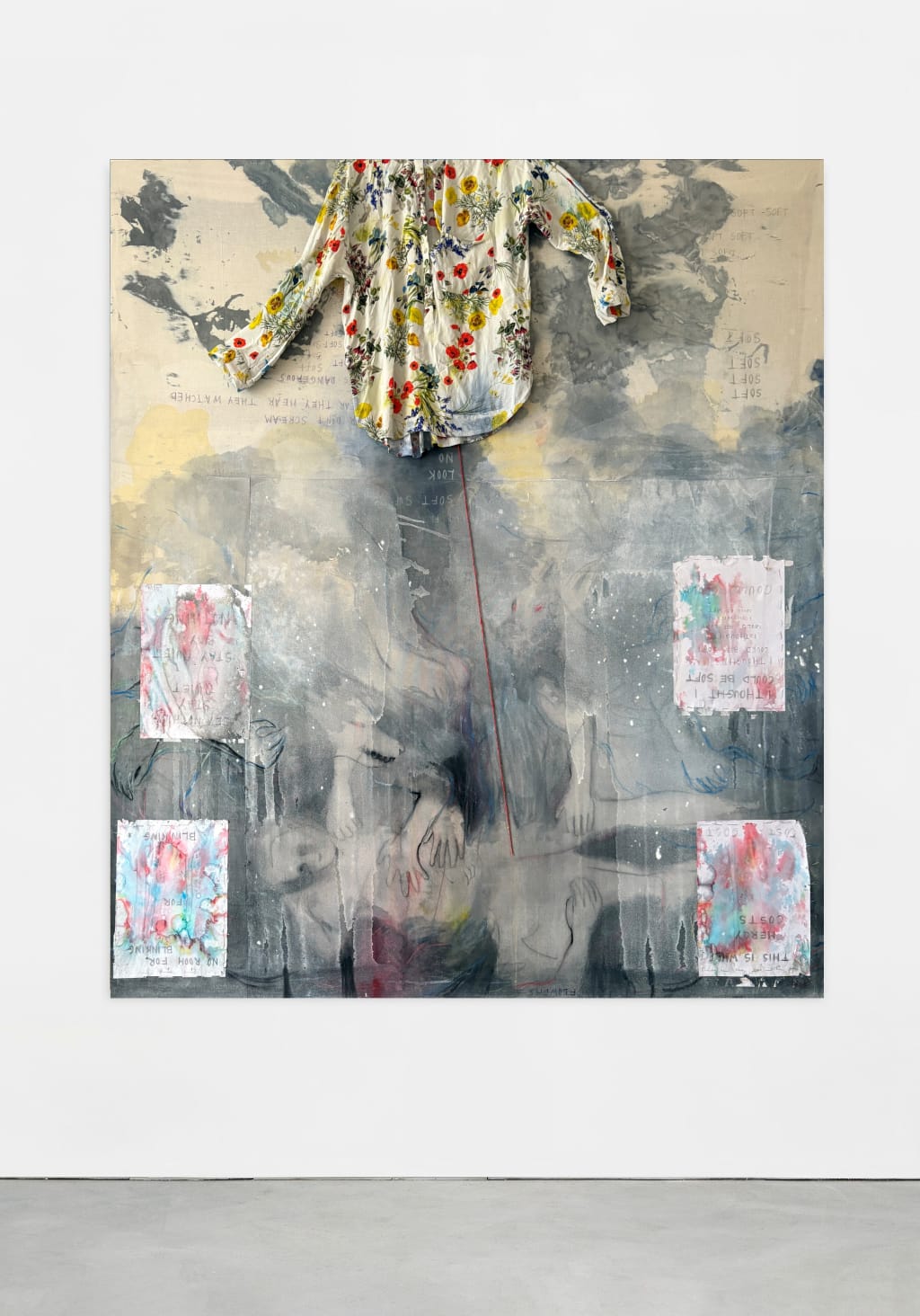
Contemporary art no longer speaks a single language. It murmurs, it screams, it dissolves into silence — and then reappears in another medium, another body, another digital echo. To speak about art today is to navigate a landscape where painting, performance, technology, and politics collide in ways that constantly reconfigure what we call “the aesthetic.”
The question is not whether art is still relevant, but rather: what language does it now speak, and to whom?
From the White Cube to the Infinite Scroll
For much of the 20th century, the gallery and the museum — the so-called “white cube” — dictated how art was seen. Works were framed, isolated, and sanctified as autonomous objects. But today, art refuses such containment. It seeps into Instagram feeds, appears in NFT marketplaces, materializes on protest banners, or exists only as a fleeting performance in the street.
The “white cube” has not disappeared, but it has been challenged by a new arena: the infinite scroll, where images endlessly appear and vanish. The digital realm has transformed the way we experience art: no longer as a singular object demanding slow contemplation, but as a fragment among countless others. Yet paradoxically, this fragmentation has forced artists to invent new strategies of visibility, intimacy, and resistance.
Fragmentation as Aesthetic
Contemporary art is marked by fragmentation — not only of media, but of identity, geography, and memory. The collapse of grand narratives in culture has opened space for multiplicity.
Artists such as Ambera Wellmann, with her fluid, dissolving bodies, or Julie Mehretu, whose vast canvases resemble cartographies of dislocation, speak directly to this condition. Their works do not offer clarity; they embrace instability. Fragmentation becomes a form of truth: a mirror to our fractured societies and our own fractured selves.
The Political Pulse
In this fractured language, politics is never far away. The resurgence of activist art — whether in the form of climate protests inside museums, or artists documenting migration, war, and gender struggles — signals that art cannot retreat into pure form. The aesthetic has become inseparable from the political.
Yet the danger lies in art becoming mere illustration of ideology. The most powerful works are those that transform politics into experience, into affect. Consider the haunting installations of Tania Bruguera, where the weight of power is felt physically by the audience, or the delicate portraits of Zanele Muholi, which resist invisibility through radical beauty. These works are not propaganda; they are transformations of perception.
Beauty After the Internet
What, then, of beauty? For a time, the art world seemed suspicious of the word, dismissing it as conservative, outdated. But in the post-Internet era, beauty has returned in strange new forms.
Artists today often engage beauty not as harmony but as excess, distortion, even glitch. Digital art embraces the aesthetics of error; painting flirts with vulgarity and seduction; sculpture incorporates detritus and waste. Beauty is no longer about perfection — it is about intensity, about the shock of recognition in an age saturated with images.
Toward a New Language
The new language of contemporary art is not a universal grammar but a polyphony. It thrives in tension: between the digital and the material, the political and the personal, the beautiful and the grotesque.
To write about art today is to accept this instability, to resist the temptation of a final definition. Art speaks in fragments, but these fragments form a constellation. Each work is a star — and the critic’s task is not to reduce them into a single light, but to reveal the patterns they form in the vast darkness.
The age of fragmentation is not the death of art. It is its expansion. Art does not ask us for certainty; it asks us to listen closely to its fractured, plural voice — and in doing so, to discover new ways of seeing ourselves.
About the Creator
Art News
International magazine dedicated to covering the latest developments in the field of visual arts.
Keep reading
More stories from writers in Art and other communities.
'Till Death We Do Art
There would be nothing divine in this world without art. Nature may surpass the divine to all intents and purposes, but like everything it absorbs and is absorbed by, it remains here, stuck on the surface of this world, ever-present, physically bound to the universe.
By Avocado Nunzella BSc (Psych) -- M.A.P 28 days ago in Art
The Great Museum Scandal: Half of the Artworks in French Museums Found to Be Fake
France is home to some of the most famous museums in the world, attracting millions of visitors each year who come to admire priceless works of art and historical artifacts. However, a recent investigation has sent shockwaves through the art world after suggesting that a significant number of artworks displayed in certain French museums may actually be fake.
By Irshad Abbasi 6 days ago in Art



Comments
There are no comments for this story
Be the first to respond and start the conversation.