
The Mysterious Kui in "Shanhaijing"
Record of Strange Beasts in the Classic of Mountains and Seas
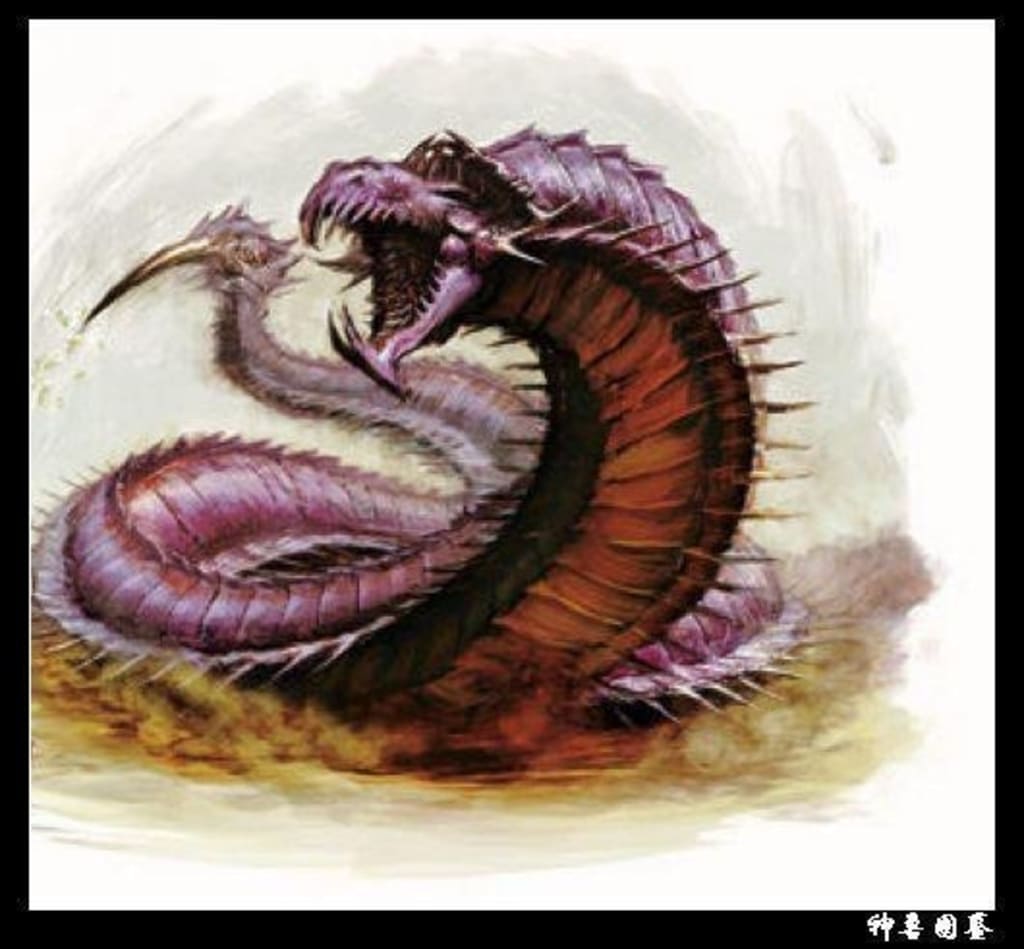
In the realm of Chinese mythology as chronicled by the "Shanhaijing," the creature known as Kui emerges as a symbol of mystery and power. This unique being has captivated the imagination of people for centuries with its extraordinary characteristics and the tales associated with it.
Appearance and Physical Traits
Kui is described as a rather peculiar creature. It has a body similar to that of an ox, but with a distinct difference. It has only one leg, which it uses to hop or balance in a seemingly impossible yet stable manner. Its body is large and muscular, covered in a thick, rough hide that may be colored in earthy tones, blending in with the natural landscapes it inhabits.
The head of Kui is broad, with a pair of large, intimidating eyes that seem to hold ancient wisdom. Its mouth is wide, with strong jaws and teeth that suggest it is a powerful and potentially fearsome creature. Some accounts also mention that it has a long, flowing mane, adding to its wild and untamed appearance.
Mysterious Abilities
One of the most remarkable aspects of Kui is its connection to sound and music. It is said that when Kui moves, the ground trembles, and the sound it creates is like thunder rumbling through the earth. This powerful sound is not just a result of its physical movement but is also an inherent part of its being.
Kui's hide is so special that when it is made into a drum, the sound produced by the drum is incredibly loud and resonant. In ancient times, the sound of a drum made from Kui's hide was believed to have the power to inspire soldiers in battle, filling them with courage and strength. It could also be used in religious ceremonies, where the loud, echoing sound was thought to communicate with the gods and spirits.
Mythological Stories
In one well - known mythological story, Kui was a rare and powerful creature that lived in a remote and mysterious land. The Yellow Emperor, in his quest for powerful tools and symbols to aid in his battles, heard of Kui. He sent his warriors to capture Kui, not to harm it but to use its unique qualities for the greater good. Once captured, the hide of Kui was used to make a magical drum. This drum was then used in the battles against the forces of evil, and its powerful sound was a key factor in the Yellow Emperor's victories.
Another story tells of how Kui was a guardian of a hidden realm. It used its one - legged stance to stand watch over a sacred place, and any who dared to approach without permission would be met with the terrifying sound and power of Kui. Only those who were pure of heart and had a noble purpose were allowed to pass.
Cultural Significance
In Chinese culture, Kui represents the power of nature and the supernatural. Its connection to sound and the earth makes it a symbol of the primal forces at work in the world. The story of the Yellow Emperor using Kui's hide to make a drum is often seen as a way of harnessing the power of nature for human purposes, while still respecting its origin.
Kui also symbolizes uniqueness and individuality. Despite having only one leg, it is a powerful and respected creature, showing that being different does not necessarily mean being inferior. In fact, its uniqueness is what makes it so special and valuable.
Influence on Art and Literature
Kui's image has had a significant impact on Chinese art and literature. In traditional Chinese paintings, Kui is often depicted in a dynamic pose, either hopping across the landscape or standing guard. Artists use bold lines and earthy colors to capture its strength and wild nature. In sculptures, Kui is rendered with attention to detail, emphasizing its one - legged form and its muscular body.
In literature, Kui appears in many ancient texts, where it is described in vivid detail. Poets and storytellers have used Kui to create exciting and mysterious narratives, exploring themes of power, nature, and the supernatural. In modern literature, especially in fantasy and historical fiction, Kui continues to inspire authors, who may reimagine it in new and creative ways, introducing this ancient and fascinating creature to a new generation of readers.
In conclusion, Kui in the "Shanhaijing" is a creature that embodies the rich and diverse mythology of ancient China. Its appearance, abilities, and the stories associated with it have made it an enduring symbol of power, uniqueness, and the connection between the natural and the supernatural. Whether in art, literature, or cultural traditions, Kui continues to fascinate and inspire, reminding us of the depth and complexity of Chinese mythology.
About the Creator
hello-word
As a Chinese person, love for the culture of my own country. Nowadays, the global exchange of information is becoming increasingly rapid. I also hope that more people can gain a deeper and more detailed understanding of Chinese culture.
Keep reading
More stories from hello-word and writers in Art and other communities.
The Sinister Qiongqi in "Shanhaijing"
Amidst the rich tapestry of mythical creatures in the "Shanhaijing," Qiongqi stands out as a symbol of malevolence and chaos. This fearsome being has intrigued and horrified people for centuries with its unique characteristics and dark deeds.
By hello-word11 months ago in Art
The Best Philosophy in the World Is the One You Can Live
Ask ten philosophers what the best philosophy in the world is, and you will receive at least ten different answers—possibly delivered with footnotes, counterarguments, and mild contempt for the other nine. This disagreement is not a flaw of philosophy; it is its essence. Philosophy was never meant to be a universal prescription handed down like a rulebook. It exists to help human beings live better lives. By that standard, the best philosophy in the world is not the most elegant or complex—it is the one that can be lived.
By Fred Bradford2 days ago in Art



Comments (1)
Kui in "Shanhaijing" Is amazing’! Fantastic