
The History of Photography and Its Problems
Before we condemn AI art completely, it may be worth it to look at another controversial art: Photography.


It's being predicted by many that generative artificial intelligence is the death knell of art. Given the number of so-called "apocalypses" that the art world has had to deal with in the last century alone, it may be worth looking at one particular art to get a good feel for how likely it is that this technology is likely to cause the death of art. Yes, we're looking at photography.
Let's Take a Picture
Photography is one of the weirder arts: It's based on the highest tech, requires some great math to do well, and it helps if you're not afraid of chemicals. Well, at least in some cases. Photography has been the basis of at least three different crises in the art world, with the first right when it left the starting gate. Drawing and painting were two of the most important ways to record history; they could record what people encountered in the field as well as moments of personal history, such as family portraits.
When photography was first introduced, people wondered at its ability to record the moment with dead-on accuracy with no exaggeration; what you saw was what it actually looked like. With painting and drawing, there were always small details wrong, with even the most life-like portraits being limited by the skill and patience of those involved. There were also timing issues: You had to choose between speed and detail. With photography, it may take a few minutes, but you can capture every detail.
It was no wonder that painters and illustrators were worried about their jobs. However, this ended up being less of a worry than they thought: The equipment was expensive, the glass plates needed were fragile, and the chemicals were hard to deal with.
Verdict: Painting and illustration are still around, so maybe this one was more drama than anything else…
Watch for Shopping
In 1987, Adobe Software released Photoshop. While originally released as a subset of Illustrator and expected to do modest sales at best, the software exploded on the scene. While photographers loved the software as it allowed them to correct issues as well as take their art to new levels, other groups quickly found a wide variety of uses for the software. However, it did have its detractors: It was seen as devaluing photography, especially in its use of documenting social communication (it could add or subtract people from pictures, making them appear to have been or not), as well as ethical issues with the software, some of which parallel the DeepFake issues of today. There was also the potential of modifying evidence.
Verdict: While some of the fears were well founded, the software has become a vital tool in many industries and even spawned a few, such as forensic digital photography. It's even been recognized as an art form.
Fun With Cameras
Even before the invention of the smartphone digital photography was seen as a problem. Prior to the digital camera, there was just as much science to taking a picture as there was art; you needed to know what kind of picture you wanted so you could make the necessary adjustments. This led some photographers to carry around different cameras with different settings. The original digital cameras were pretty simple but soon became as sophisticated as their analog version.
The perceived threat is that they simplified photography and thus made it more available to the masses, and this was seen as potentially devaluing photographers: The better pictures the average person could take, the more likely they wouldn't need someone with skills and experience. Thus, professional photography would fall as amateurs took on the roles that professional photographers traditionally had, from family pictures to model shoots.
Verdict: We still have professional photographers; their experience just can't be beat, and their equipment and skill make for some great pictures. By the same token, the amateurs have gotten better, as they've actually studied photography and got the basics (composition, lighting, depth of field) down pat.
With the advent of generated AI art, it's important to remember that while there may be issues at the beginning and that artists are going to lose jobs, this could be not only the beginning of a new art but that artists are not only likely to survive the new technology but actually thrive. There's no way to tell what the future may bring, but it's not as dark as some assume.
About the Creator
Jamais Jochim
I'm the guy who knows every last fact about Spider-man and if I don't I'll track it down. I love bad movies, enjoy table-top gaming, and probably would drive you crazy if you weren't ready for it.
Keep reading
More stories from Jamais Jochim and writers in Art and other communities.
AI ArtL: How It Does What It Does
Interestingly, one of the major issues with AI art is that the technology has advanced to such a point that some of those most affected by it don't know how it works. Too many artists are a little behind the curve when it comes to the technology and it shows in the discussion regarding AI art; as such, it puts them at a disadvantage when it comes to discussing the potential effects of the technology as well as its legal ramifications. In order to get up to speed, it may not be a bad idea to take a step back and look at what it does.
By Jamais Jochimabout a year ago in Art
Catherine: The Unshakable Heart of the Monarchy
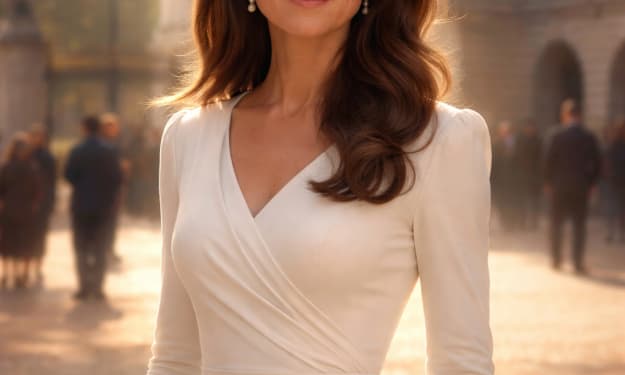
The House of Windsor is facing a subtle but undeniable shift. Tension runs high, and the once-clear lines of loyalty and influence are now blurred. At the center of it all stands Catherine, Princess of Wales—a figure who has long been admired for her grace, calm, and unwavering dignity. But recent events have brought a storm to the palace doors, one that threatens to test the very foundation of royal stability. For years, Catherine served as the quiet anchor of the monarchy. She carried her role with elegance, weathering constant scrutiny from the public and press alike. Then came a serious health challenge, a period of uncertainty and silence that left many wondering if she would step back permanently. But she did not. Instead, she returned stronger, her poise and presence commanding renewed attention and respect. Public admiration for her soared, culminating in headlines that celebrated her as more than a royal figure—they crowned her a symbol of strength. This rising public affection, however, has created ripples behind palace walls. Reports suggest that King Charles feels overshadowed, and Queen Camilla may be aligning with palace traditionalists in response to Catherine’s prominence. What was once a harmonious center of royal life now shows signs of friction. Influences are shifting, whispers and press narratives become tools of subtle power struggles, and Catherine, the stabilizing force, is suddenly cast as a threat. This isn’t about Catherine versus Meghan Markle, though the comparison is inevitable. Meghan, once seen as the disruptor, now observes the palace from outside. Her era of controversy shaped her influence, but today’s narrative highlights endurance over disruption. Catherine doesn’t need confrontation to command attention—her consistency, humility, and resilience naturally draw public support. This quiet power is precisely what unsettles those who rely on control and manipulation. Catherine’s return demonstrates a fundamental truth: legacy outlasts noise. She embodies a rare combination of grace under pressure, emotional intelligence, and unshakable composure. Her strength is evident not in headlines or controversy but in her ability to maintain dignity amid chaos. People don’t just admire her; they trust her. They feel her presence, and in her, they see continuity, reliability, and hope for the monarchy’s future. The palace may attempt to manage narratives, deploy commentators, or subtly influence the media, but they cannot manufacture the connection Catherine shares with the public. Her influence is organic. It is the result of years of consistent, visible dedication, and it resonates far beyond the confines of Buckingham Palace. While power struggles may unfold within, the world watches, and the audience has already chosen a champion. Meanwhile, Meghan’s story, once loud and all-encompassing, fades into the background. Her brand of influence—rooted in challenge and controversy—cannot compete with Catherine’s enduring presence. The public craves stability, someone who embodies calm, resilience, and authenticity. Catherine provides that in abundance, and the contrast is unmistakable. Enduring legacy outshines transient disruption. Ultimately, Catherine’s rise is not a threat to the monarchy—it is its lifeline. She is the bridge between tradition and relevance, connecting generations with quiet confidence. The very qualities that some may perceive as challenging palace control—her popularity, her grace, her resilience—are precisely what sustain public trust. This isn’t a story of rivalry; it’s a lesson in the power of character, the influence of consistency, and the enduring appeal of authenticity. History has a way of remembering who strengthens institutions and who allows petty conflicts to erode them. Catherine stands as a testament to steadfast leadership, quiet courage, and the enduring bond between a royal and her people. Those who underestimate her do so at their peril, for her strength is both visible and deeply felt. The narrative is clear: Catherine isn’t merely surviving; she is thriving. She faces pressure, criticism, and palace politics with unflinching dignity, reinforcing her role as an indispensable figure in the monarchy’s future. Her story reminds the world that true influence is built on resilience, authenticity, and the unwavering commitment to serve, rather than to command attention. As the palace navigates shifting alliances and personal insecurities, the public stands with Catherine. Her legacy, already forming, will outlast the temporary noise of gossip and speculation. She is the embodiment of stability, grace, and leadership—a woman whose presence strengthens the monarchy and whose endurance inspires the world. The House of Windsor may grapple with internal tension, but Catherine has already secured her place in the hearts of those she serves. In a world of fleeting attention and manufactured drama, Catherine proves that true influence is quiet, steady, and lasting. She faces life’s storms not with theatrics, but with poise and resilience, leaving a legacy that no palace intrigue can diminish. The world watches, admiration grows, and history quietly notes who stood firm, who served with dignity, and who became a true icon of endurance. Image Creation Format for This Story: Subject: Catherine, Princess of Wales, standing gracefully in a sunlit palace courtyard, with subtle shadows representing tension behind palace doors. Mood: Elegant, dignified, serene, yet powerful—contrast of calm versus tension. Style: Realistic digital painting, slightly cinematic, focus on light and expression.
By Behind the Curtain7 days ago in Art
The Uncopiable Human Wit to Write
We all have been in that spot at least once in our schooldays where we have been wringing our brains off to curate written articles of some sort until our soul-less friends were born. At just four years old, our beloved soul-less, metallic, digital assistant who is always by our side when we turn on our computers and smart phones, will be doing much more than curating written content for us all, if you know what I mean.
By Sound Savvy3 days ago in Art



Comments
There are no comments for this story
Be the first to respond and start the conversation.