
The hijab: A Symbol of Tradition, Religion, and Politics Through History
Origins and Development of the Veil Across Civilizations

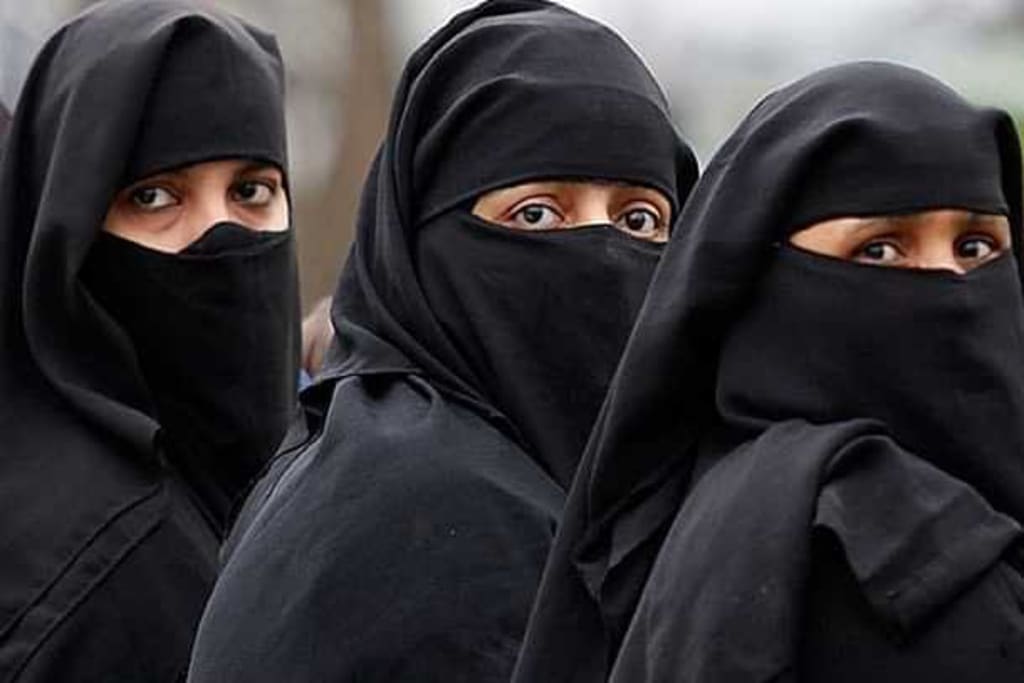
The Historical Context of the Veil: From Social Tradition to Political Use
In 1953, President Gamal Abdel Nasser met with Hassan al-Hudaybi, the Supreme Guide of the Muslim Brotherhood, who demanded that all Egyptian women wear the veil as a condition for implementing Islamic law. However, ironically, al-Hudaybi’s wife and daughter did not wear the veil, raising questions about whether it was a religious obligation or a political tool to expand the group’s influence. This event reflects how the veil has undergone historical transformations, from a social symbol to a religious and political tool. This article reviews the origins and evolution of the veil.
The veil has never been a simple piece of clothing; it has evolved over the centuries to represent a variety of concepts depending on the political, social, and religious context of the time. Originally, the veil symbolized modesty and class, with its meanings and implications varying greatly across different cultures and historical periods.
---
Origins and Development of the Veil
The veil was not an Islamic invention but appeared in many civilizations before Islam:
Babylonian and Persian civilizations: The veil symbolized social class, worn only by free women. In these ancient societies, the veil was a status symbol, used to distinguish free women from slaves and to maintain social order.
Ancient Greece and Rome: The veil symbolized respect and dignity, but not a religious obligation. In these societies, veiling was associated with virtue and the moral status of women. Women of high social standing would wear veils as a mark of respectability and modesty, though it was not tied to any specific religious tradition.
Pre-Islamic Arab societies: Some women covered their heads for cultural reasons, but it was not mandatory. The practice varied widely across different tribes, with some Arab women using the veil as a sign of respect, but it was not universally practiced. It was more of a social custom than a religious requirement.
With the advent of Islam, the term "hijab" in the Qur'an referred to a barrier or curtain, not specifically a head covering, often used to separate men and women in public and private spaces. The Islamic concept of hijab introduced a new dimension to modesty, but its interpretation has varied greatly across time and space.
---
Hijab in Religious Texts: Religion or Social Tradition?
1. The Qur'an does not explicitly define hijab as a head covering. Rather, it focuses on the principle of modesty and concealment. The concept of modesty in the Qur'an is broad, applying to both men and women, and the specific details of how this modesty should be expressed are open to interpretation.
2. Some hadiths used to support the hijab's imposition are influenced by the cultural context of the time. Many hadiths that refer to women’s clothing and modesty were written during specific historical periods, and they reflect the customs and social norms of those times.
3. The wearing of the hijab spread gradually based on cultural norms rather than clear religious mandates. Over the centuries, the practice of wearing the hijab became more associated with cultural identity, personal choice, and social expectations rather than a strict religious rule.
---
The Hijab as a Political and Social Tool
In the 20th century, the hijab evolved into a political symbol:
Egypt (1950s-1980s): The rise of the Muslim Brotherhood led to the hijab being used as a symbol of Islamic identity. For many Egyptians, the hijab became a way of expressing opposition to Western cultural influences and asserting Islamic values in the face of secularism.
Iranian Revolution (1979): The new government made the hijab mandatory for all women, reinforcing its control over society. The imposition of the hijab in Iran was a clear statement of the regime’s authority and its desire to reshape society according to Islamic principles.
Gulf States: The veil became a tool for strengthening religious authority and state control. In countries like Saudi Arabia and Iran, the hijab was enforced as part of the broader political agenda to consolidate power and define national identity through religious symbols.
---
Contemporary Issues and Criticism of the Veil
The veil remains controversial, viewed from various perspectives:
Religious: Worn by some out of faith, while others see it as a social obligation. For many women, wearing the veil is an expression of their devotion to God and their commitment to modesty. However, there are also women who feel pressured to wear the veil due to societal or familial expectations.
Feminist: Some see it as a tool of oppression, particularly when enforced. Critics argue that the hijab, when imposed by law or social pressure, restricts women's freedom and autonomy, forcing them to conform to patriarchal expectations.
Human Rights: Western countries focus on the veil as an issue of personal freedom, with some banning it in public spaces. These bans have sparked significant debate about the limits of personal freedom, with some arguing that such laws violate individuals’ rights to express their religious or cultural identity.
---
Conclusion
The veil is more than just a piece of cloth; it is a symbol that reflects social, political, and religious transformations. While some women choose to wear it out of faith, its political and social implications continue to make it a controversial issue. The question remains: can an individual wear the veil freely, or will it always be influenced by religion, culture, and politics?
In modern times, the veil is a deeply personal choice for many women, but it continues to carry significant cultural and political weight. Whether as a religious symbol or a political tool, the veil will remain a complex and divisive issue for years to come.
About the Creator
Keep reading
More stories from wail Djerou and writers in Art and other communities.
Gaza is not Hamas: It is time to reject terrorism in the name of resistance
I feel deep shame and pain when I see the brutality practiced by Hamas and several terrorist organizations in Gaza. The moral degradation that leads armed men to believe that parading the bodies of infants and their mother as if they were trophies of victory is heroic illustrates the level of evil and ignorance that has consumed them. How can a sane mind accept such a horrific scene? What kind of humanity allows carrying a closed coffin of an 85-year-old peace activist, who had done so much for Gaza, as if this somehow serves the Palestinian cause? Instead of organizing a procession for these innocent bodies, they should have been handled by medical teams without any armed presence. This could have been done differently, but the jihadist fascists chose the ugliest spectacle.
By wail Djerou11 months ago in Humans
A Matter of Coincidence
Tuesday, 3 September 2024 Ayesha Fareed Ahmed, Mirpur Khas Sheeda was a simple and innocent man. One day, he was going to his wife’s village to bring her back. On the way, he saw some donkeys grazing on grass at a certain place. Eventually, he reached his in-laws’ house. His wife’s brother asked him to sit in the guest room.
By Sudais Zakwana day ago in Art
What Fine Line Tattoo Excellence Looks Like in Professional Practice
When you sit in the chair of one of the best fine line tattoo artists, you feel it straight away. The calm, the care, the way they handle your skin and your nerves at the same time. Fine line work looks light and effortless from the outside, but real excellence is anything but casual.
By Tools of Trade Studios6 days ago in Art




Comments
There are no comments for this story
Be the first to respond and start the conversation.