
The Hidden Language of Frida Kahlo: Symbolism, Pain, and Power
What Frida’s Art Really Means (And Why It Still Hurts So Good)

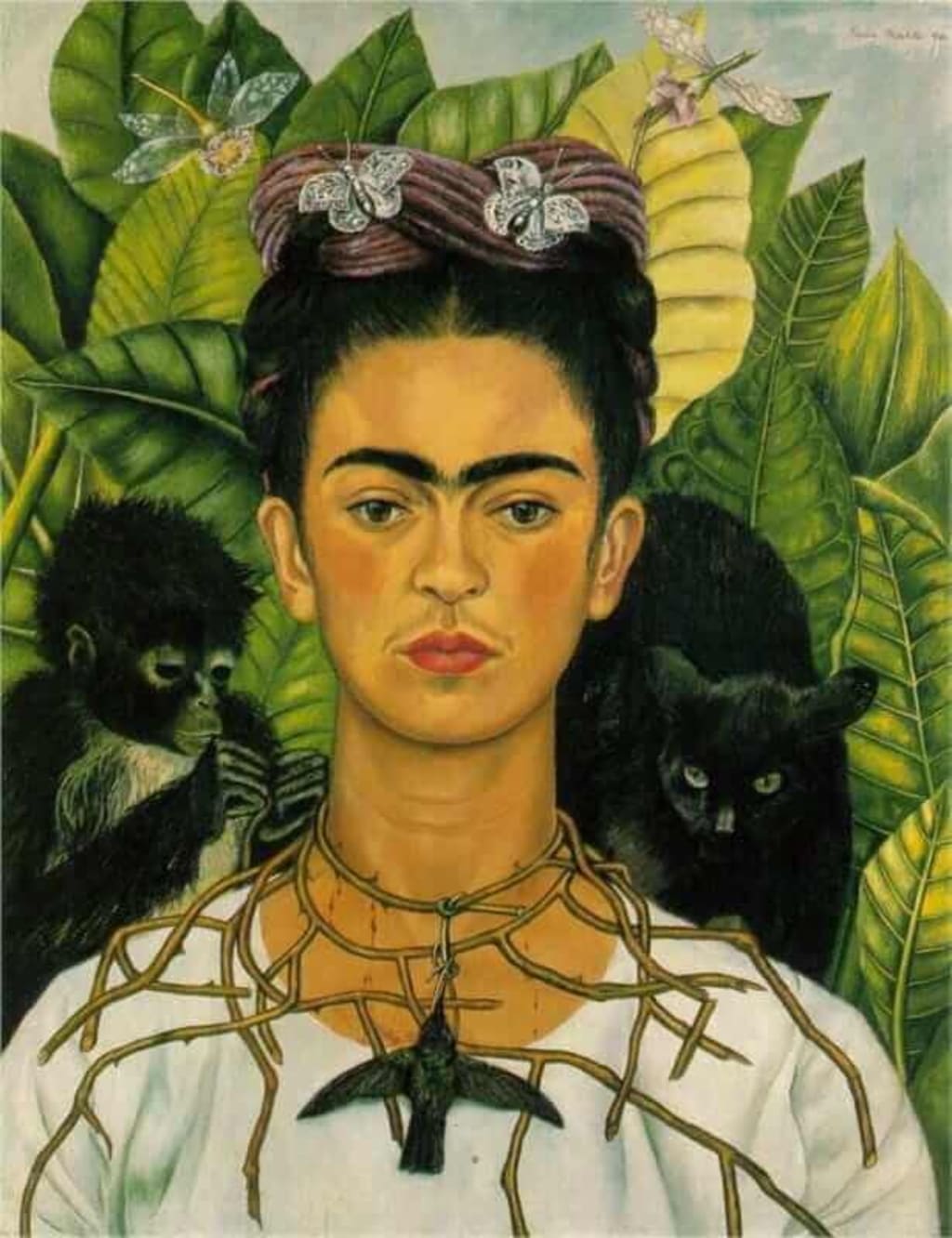
Frida Kahlo didn’t just paint pictures. She painted pain, politics, passion — and every stroke was a cry from the soul. Her self-portraits are among the most emotionally raw and visually iconic works in 20th-century art. But beyond the bold eyebrows and surreal backdrops, Kahlo embedded coded messages that speak volumes about identity, feminism, colonialism, and resilience.
This isn’t just self-expression. It’s self-mythology.
I. The Self as Sacred Territory
Kahlo painted herself more than 50 times — often because she was physically isolated for long periods due to her lifelong medical issues. But these weren’t just vanity portraits. She once said, “I paint myself because I am so often alone and because I am the subject I know best.”
Yet the subject wasn’t just “Frida.” It was what Frida meant — as a woman, as Mexican, as broken, as defiant.
II. Decoding the Symbols
Let’s break down just a few:
1. “The Two Fridas” (1939)
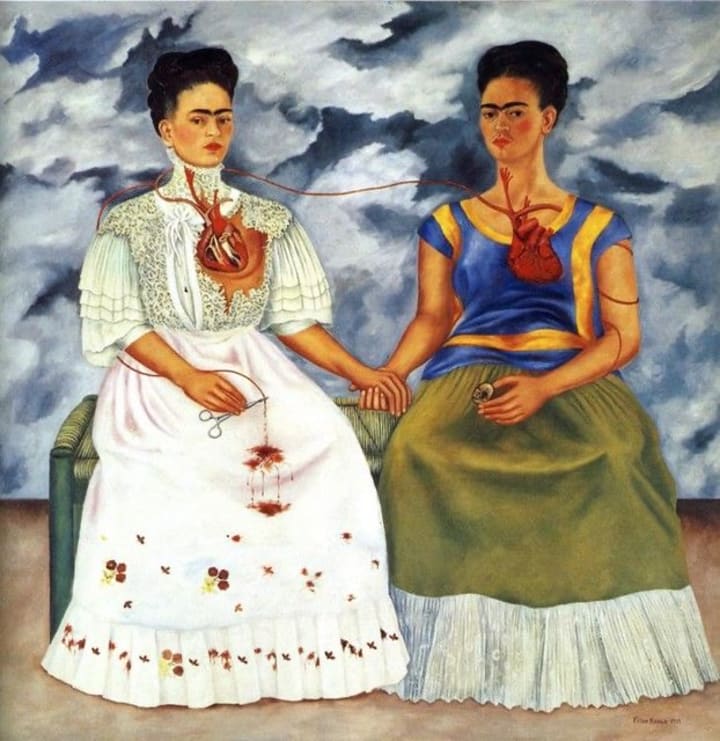
Two versions of Kahlo sit side by side: one in traditional Tehuana dress (her heritage), the other in European attire. One heart is torn open. The other is whole. Between them, a vein connects and bleeds.
This painting came after her divorce from Diego Rivera. But it’s more than heartbreak. It’s a metaphor for cultural duality, internal conflict, and the violence of colonial erasure.
2. “Self-Portrait with Thorn Necklace and Hummingbird” (1940)
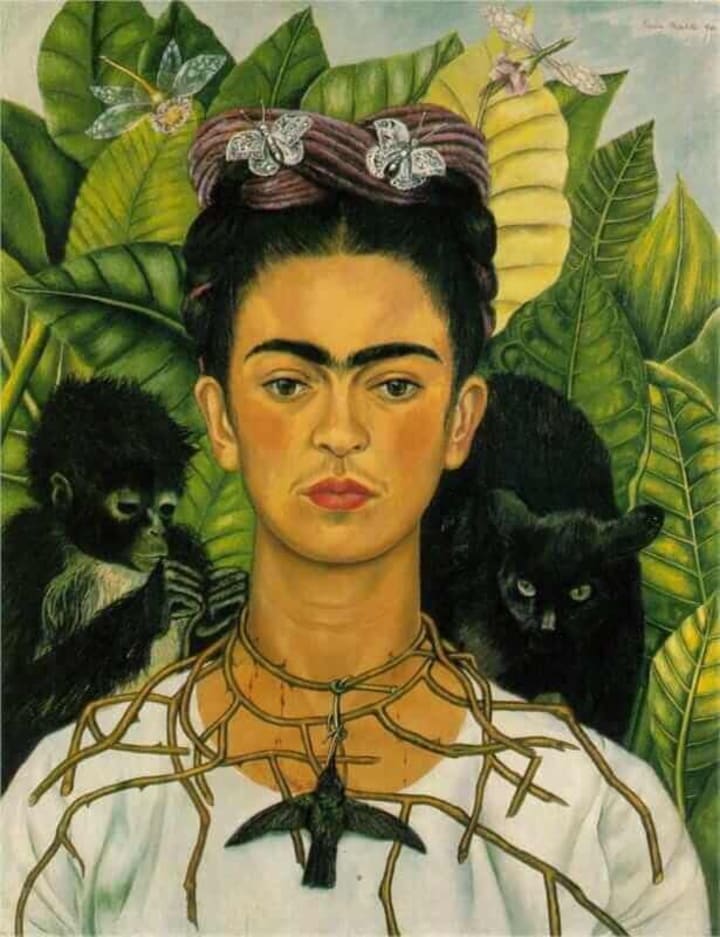
A black monkey (often symbolizing Diego) tugs her thorn necklace, drawing blood. A dead hummingbird — traditionally a symbol of hope or love — hangs like a pendant. Surrounding her: jungle leaves, butterflies, a black cat.
It’s a battle between life and death, passion and pain — all on a face that remains calm, staring straight into the viewer.
3. “Broken Column” (1944)
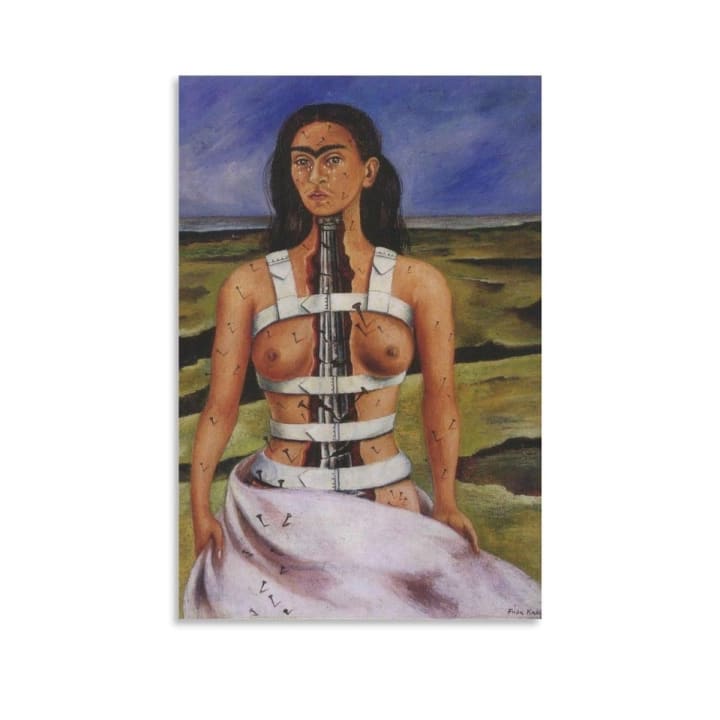
Here, Kahlo’s torso is split open, replaced with a crumbling ionic column. Her skin is pierced with nails. Tears stream down her face.
After yet another spinal surgery, this image is both literal and mythic — pain turned into architecture. She becomes a ruin, and in doing so, she also becomes a temple.
III. Frida and Feminism (Before It Had a Name)
Frida Kahlo never used the word “feminist.” But her work is steeped in it. She painted female suffering not as something to pity, but as something sacred, powerful, worthy of rage and reverence. She made her unibrow iconic. She portrayed miscarriage and menstruation. She refused to make herself small, even when broken.
And she dared to say: this pain is mine, and I will make it beautiful.
IV. Why Frida Still Feels So Relevant
In an age of curated identities, Kahlo reminds us that self-representation can be both radical and vulnerable. Her work wasn’t made for Instagram — but it thrives there — because it’s truth. Unfiltered, stylized, painful truth. And it’s addictive.
Conclusion:
Frida Kahlo’s art isn’t easy. It’s not meant to be. It’s meant to wound, to whisper, to warn — and above all, to witness. Through blood, vines, broken spines, and burning hearts, Kahlo created a language only the soul understands.
We don’t just look at her portraits. We feel them.
About the Creator
Zohre Hoseini
Freelance writer specializing in art analysis & design. Decoding the stories behind masterpieces & trends. Available for commissions.
Keep reading
More stories from Zohre Hoseini and writers in Art and other communities.
The Hidden Meaning of The Scream: Why It Still Haunts Us
It’s not just a scream—it’s your scream. The sky burns orange. The bridge twists beneath your feet. And there in the center, a figure contorts in silent terror, hands clutched to its face, mouth wide open in a voiceless cry.
By Zohre Hoseini11 months ago in Art
'Till Death We Do Art
There would be nothing divine in this world without art. Nature may surpass the divine to all intents and purposes, but like everything it absorbs and is absorbed by, it remains here, stuck on the surface of this world, ever-present, physically bound to the universe.
By Avocado Nunzella BSc (Psych) -- M.A.P 28 days ago in Art
Top tipple tricks
Been thinking a lot about drinking, lately. Not least because of a recent episode of over-indulgence and the inevitable after effects. Some readers may recall the earlier articles I wrote about beating the booze. Here I set out an experiment in techniques for cutting down on my alcohol intake. The experiment was successful, the techniques worked, and I have armed myself with an arsenal of weapons in the war against the demon drink. I have yet to fire the first round however. It's all a question of timing (perhaps procrastination).
By Raymond G. Taylor7 days ago in Psyche




Comments
There are no comments for this story
Be the first to respond and start the conversation.