
The Hidden Codes of Michelangelo
Secrets Lurking in the Sistine Chapel
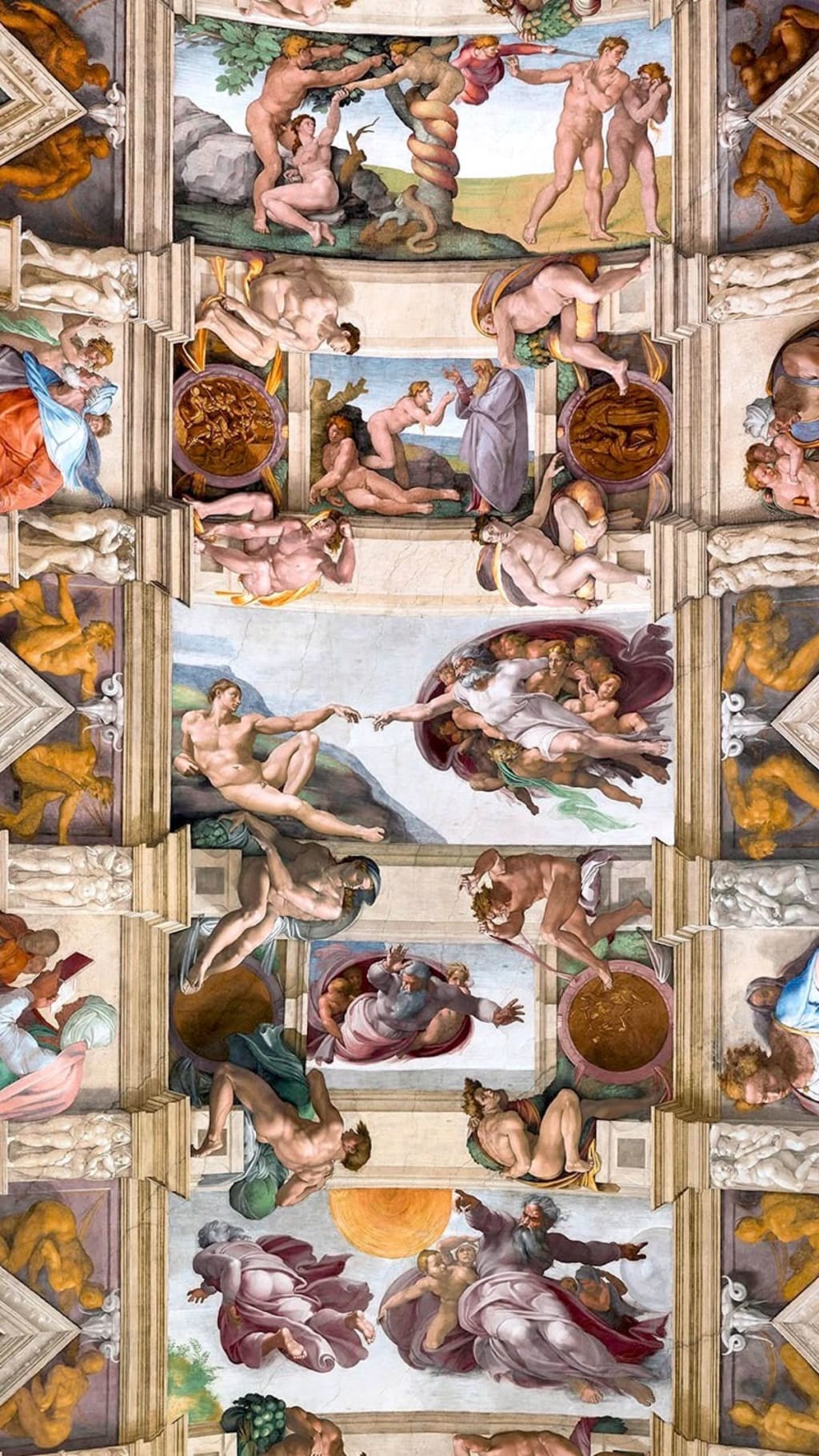
At first glance, the Sistine Chapel ceiling appears as a stunning celebration of biblical stories, godly forms, and divine craftsmanship. But look closer, and you begin to notice something strange. Beneath the brushstrokes and beauty lies a network of hidden symbols, anatomical secrets, and intellectual rebellion that Michelangelo may have deliberately encoded into one of the most revered religious spaces in the world.
This isn’t just sacred art. It’s a visual manifesto.
The Mind Behind the Masterpiece
By 1508, Michelangelo was already one of the most respected sculptors in Italy. When Pope Julius II commissioned him to paint the ceiling of the Sistine Chapel, Michelangelo resisted at first—he considered himself a sculptor, not a painter. What followed was four years of physical torment, spiritual exploration, and sheer artistic genius.
But Michelangelo wasn’t just an artist. He was a deeply philosophical thinker, obsessed with the human form, with classical knowledge, and with the tension between science and faith. The Sistine Chapel became his ultimate canvas—not only to showcase his technique, but to slip in messages for those with eyes sharp enough to see them.
The God-Brain Connection
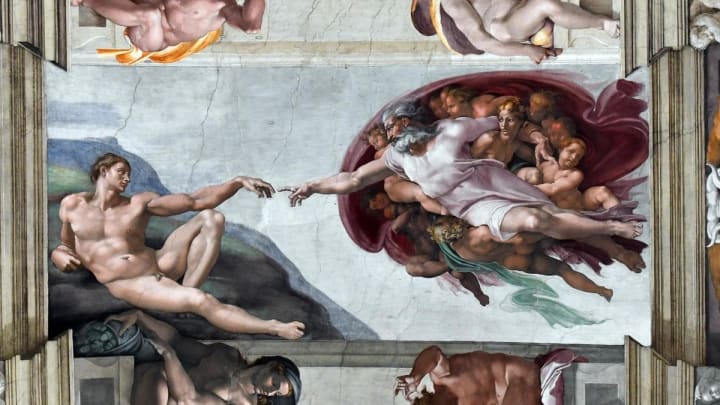
One of the most widely debated secrets in the Sistine Chapel is found in the iconic Creation of Adam. It’s the image everyone knows: God reaches out to touch Adam’s hand, giving him life. But in 1990, a neurosurgeon named Frank Meshberger pointed out something startling—the shape behind God looks exactly like a cross-section of the human brain.
You can see the brainstem, the frontal lobe, even the vertebral artery. It’s not random. Michelangelo had dissected dozens of corpses in his lifetime. He knew human anatomy intimately.
Was Michelangelo suggesting that divine creation originates in the mind? Was he blending science and religion in a subtle act of rebellion? Or was it an homage to human intelligence as a spark of the divine?
The Hidden Kidney in The Separation of Land and Water
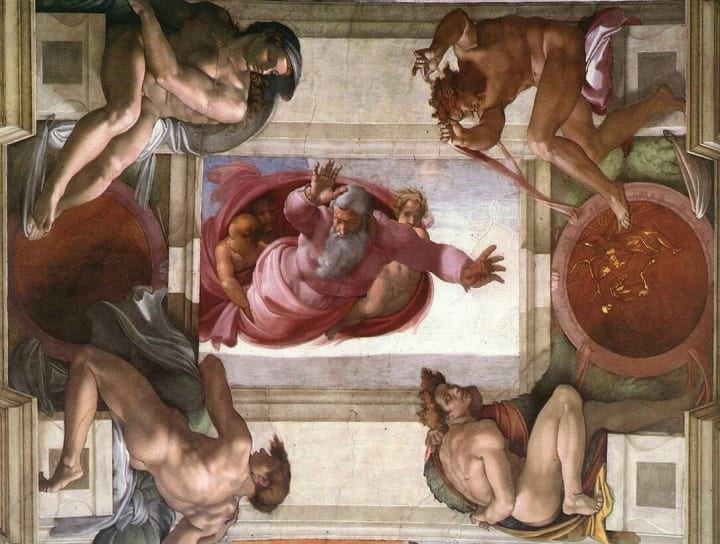
In another panel, The Separation of Land and Water, scholars have identified what appears to be a kidney embedded in the folds of God’s cloak. Why a kidney? At the time, kidneys were believed to be the seat of conscience and desire—a symbol of divine judgment and human emotion.
Here again, Michelangelo uses the human body not only for aesthetic power but as symbolic language. These are not arbitrary anatomical easter eggs; they are layered codes speaking to the body as a divine blueprint.
Michelangelo vs. the Church?
It’s no secret that Michelangelo had a complicated relationship with the Catholic Church. He was deeply spiritual but disillusioned with Church politics and extravagance. Many of the figures on the ceiling express powerful physicality and nudity—a stark contrast to traditional portrayals of religious modesty.
Some art historians believe the muscular, almost defiant depiction of prophets and sibyls reflects Michelangelo’s reverence for ancient Greek and Roman ideals over the Church’s orthodoxy. He may have been making a quiet statement: that divine truth lies in human experience and reason, not just in dogma.
Why These Hidden Messages Matter Now
In a time when we scroll past images in seconds, Michelangelo reminds us to look again.
His hidden messages are not just puzzles for scholars. They reflect a timeless artistic bravery: the willingness to challenge authority, to elevate science, and to express the divine through human intellect and form.
The Sistine Chapel is not just a ceiling. It is a conversation between past and future, between body and soul, between faith and curiosity. And in every fold of cloth, every outstretched hand, there is more than beauty. There is a message for those who dare to see.
About the Creator
Zohre Hoseini
Freelance writer specializing in art analysis & design. Decoding the stories behind masterpieces & trends. Available for commissions.
Keep reading
More stories from Zohre Hoseini and writers in Art and other communities.
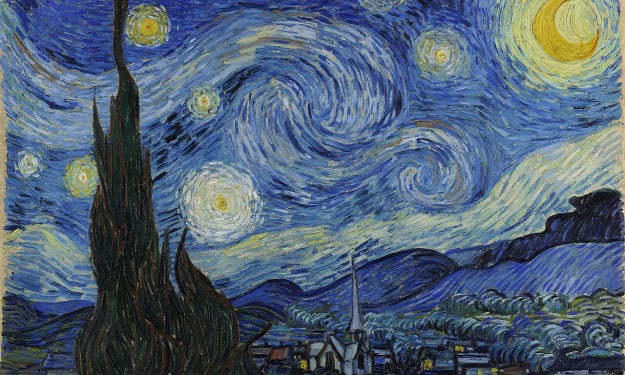
The Enigma of Van Gogh’s The Starry Night
Imagine stepping into a world where the sky comes alive—a swirling cosmos of vibrant blues, pulsating stars, and a luminous crescent moon that seems to whisper secrets of the universe. Vincent van Gogh’s The Starry Night is not merely a painting; it’s an immersive experience that captures the raw energy of nature and the tumult of the human spirit. In this journey, we’ll explore the mysteries woven into every brushstroke, the scientific intrigue behind its swirling patterns, and the emotional resonance that has captivated millions for over a century.
By Zohre Hoseiniabout a year ago in Art
'Till Death We Do Art
There would be nothing divine in this world without art. Nature may surpass the divine to all intents and purposes, but like everything it absorbs and is absorbed by, it remains here, stuck on the surface of this world, ever-present, physically bound to the universe.
By Avocado Nunzella BSc (Psych) -- M.A.P 26 days ago in Art
Where Courage Meets the Sunrise
In a small village called Alara, nestled between rolling hills and vast fields, the sun rose each day bringing light to the world. But today was different. Today was the day of the Great Awakening, when the villagers learned of new depths of courage within themselves.
By Hamad Afridi a day ago in Art



Comments
There are no comments for this story
Be the first to respond and start the conversation.