
The Future of Artificial Intelligence
The Future of Artificial Intelligence
g
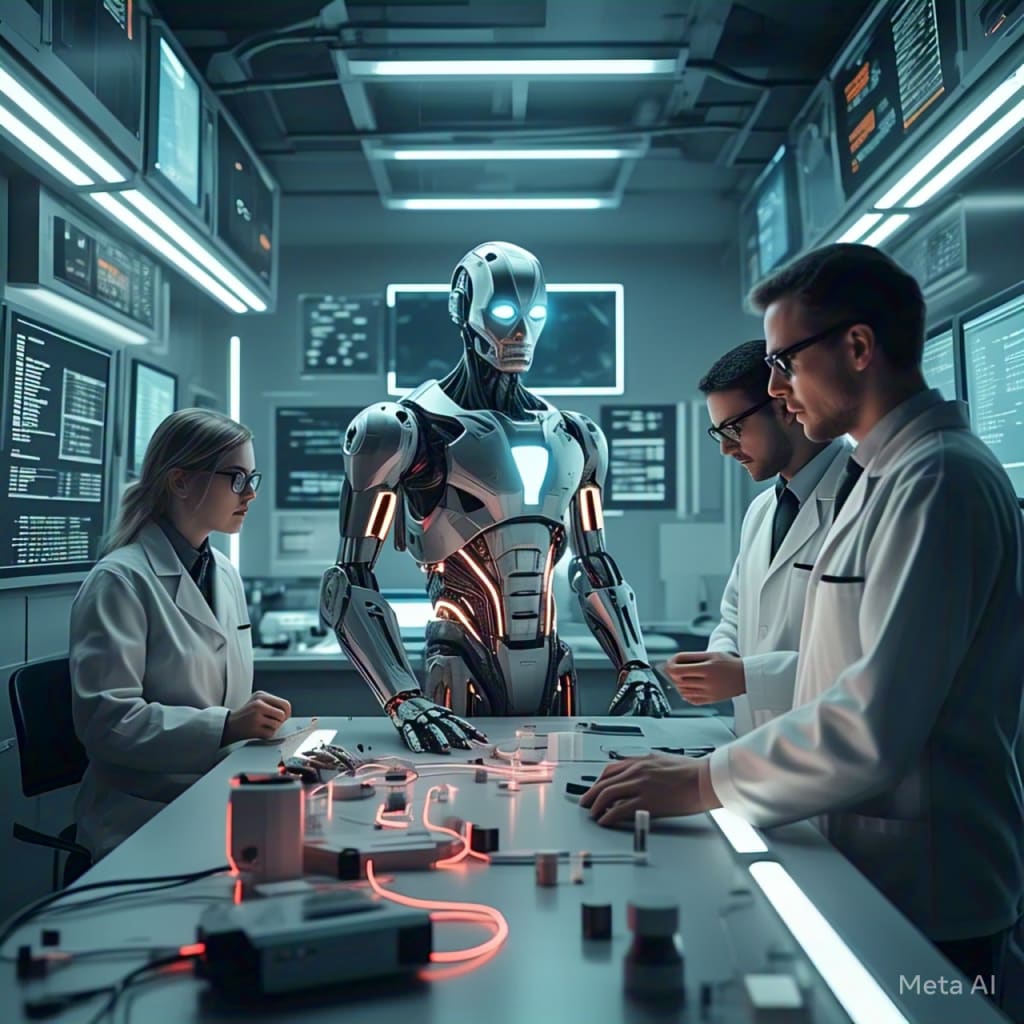
Artificial intelligence has come a long way since its inception. From simple machines that could only perform basic tasks, to complex systems that can learn and adapt, AI has revolutionized the way we live and work.
One of the most significant advancements in AI is its ability to learn from data. This has enabled machines to improve their performance over time, making them more accurate and efficient. For instance, AI-powered chatbots can learn from customer interactions, enabling them to provide more personalized and effective support.
Another area where AI has made significant strides is in natural language processing. Machines can now understand and generate human-like language, enabling them to communicate more effectively with humans. This has opened up new possibilities for applications such as language translation, sentiment analysis, and text summarization.
The future of AI holds much promise. As machines become increasingly sophisticated, we can expect to see even more innovative applications of AI. From healthcare and education to finance and transportation, AI has the potential to transform every aspect of our lives.
However, as AI becomes more pervasive, there are also concerns about its impact on society. For instance, there are worries about job displacement, bias in decision-making, and the potential for AI to be used for malicious purposes.
To mitigate these risks, it is essential to develop AI in a responsible and transparent manner. This includes ensuring that AI systems are fair, explainable, and accountable, as well as investing in education and retraining programs to help workers adapt to an AI-driven economy.
In conclusion, the future of AI is exciting and full of possibilities. As we continue to develop and apply AI in various domains, we must also be mindful of its potential risks and take steps to mitigate them. By doing so, we can ensure that AI benefits society as a whole.
About the Creator
Keep reading
More stories from Joshua Happiness and writers in Art and other communities.
The Future of Content Creation: Trends to Watch
.. The world of content creation is constantly evolving, and staying ahead of the curve is crucial for success. From the rise of AI-generated content to the growing importance of sustainability, here are the top trends to watch in the future of content creation.
By Joshua Happiness11 months ago in Art
Valentino Garavani
In the golden age of couture, when fashion was less about speed and more about soul, one name quietly rose to become synonymous with timeless elegance: Valentino Garavani. To speak of Valentino is to speak of romance, discipline, beauty, and a lifelong devotion to the art of dressing the world’s most admired women.
By S.A Charles2 days ago in Art
Affection and Healing for Yourself
During the night of the last quarter moon, I gathered my ritual supplies. I carefully handled the chunk of black tourmaline that would protect me from your overall negative and narcissistic energy. I carefully walked the house with my stick of selenite in hand, asking the universe to cleanse our working space.
By Alisha Wilkins ✒️🦋🖋️2 days ago in Fiction



Comments
There are no comments for this story
Be the first to respond and start the conversation.