
The Exile of an Instrument: Musical Representation
Musical Representation of Exile and Hope through the Rubab

The Exile of an Instrument: Musical Representation
Abstract
The Rubab, the ancient instrument of Afghanistan, is not merely a musical tool; it is the voice of a nation, a repository of collective memory, and a storyteller of the sufferings and hopes shaped throughout the history of this land. Today, amid waves of migration and exile, the Rubab wanders alongside its owners across distant lands. Every sound that emanates from its strings narrates a tale of longing and exile, yet simultaneously conveys a message of hope and cultural resilience. This paper is a journey into the world of the Rubab: an instrument that continues to play in exile, revealing silent wounds.
Keywords: Afghanistan, Music, Rubab, Migration, Cultural Heritage
Introduction
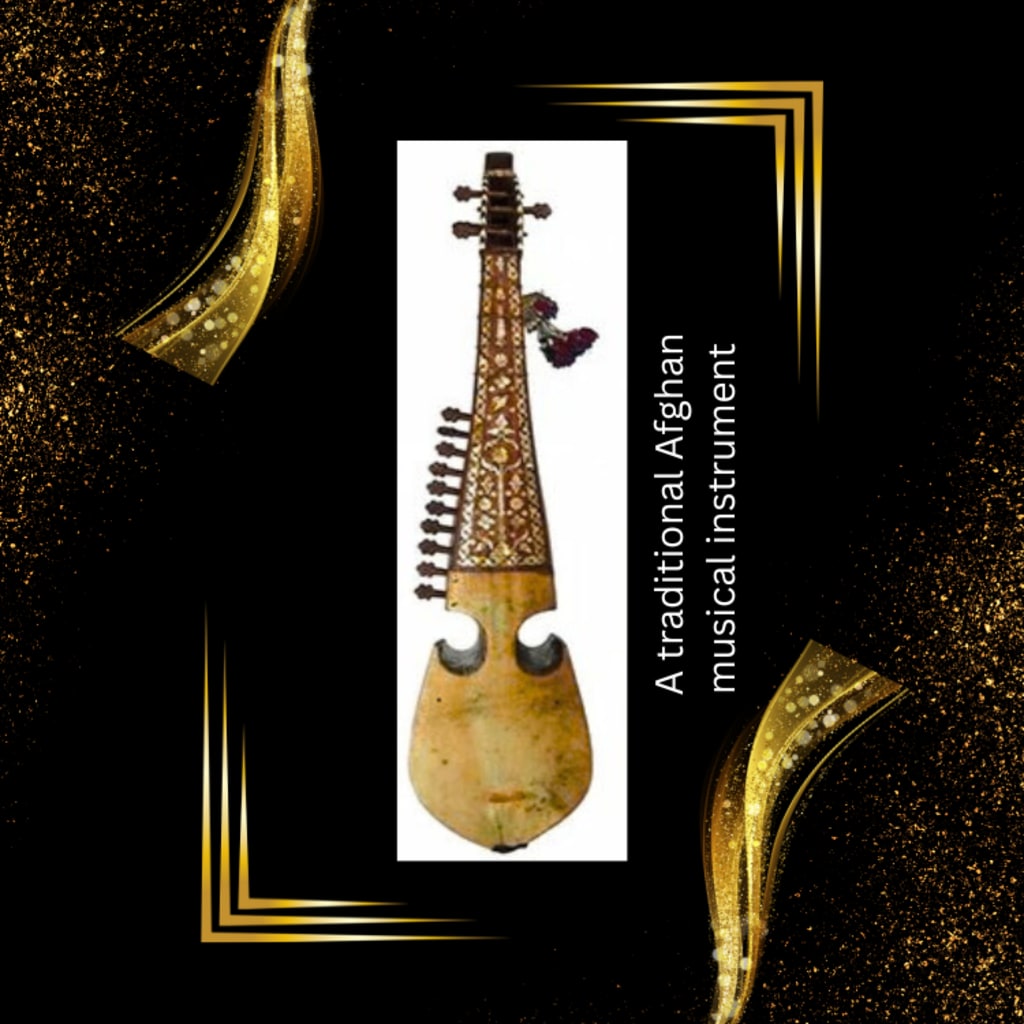
Music is a wordless language with the unparalleled ability to convey emotion. Every nation has instruments and sounds woven into the fabric of its life. For Afghanistan, this sound is the Rubab: an instrument born from the plains and foothills of the country. A wooden instrument with resonant strings that has been played for centuries in celebrations, mourning ceremonies, coffee houses, and homes across the land. Its body is made of mulberry wood, featuring three main nylon strings, two metal strings, and several sympathetic strings.
When a musician’s fingers glide over the Rubab’s strings, a sound emerges that carries both sorrow and joy. This sound revives memories of the soil, the homes, and the joyful gatherings of people from Kabul, Nangarhar, Balkh, Zabul, and Herat. Yet years of war and displacement have left the Rubab, like its people, wandering in exile. Today, this instrument can be heard in the hands of musicians in Europe, America, Iran, Pakistan, and Tajikistan, where migrants keep the voice of the past alive.
The Rubab and Migration
Migration is not merely crossing borders or changing geography; it is a severing from roots, from collective memory, and from the sounds that constitute a nation’s identity. In such separation, music becomes not just art, but a bridge between a lost past and a chaotic present. For many Afghan migrants, the Rubab is more than an instrument; it embodies the homeland, an auditory memory that revives soil and home with each note.
In small migrant concerts in Europe and America or in cultural gatherings of Afghan communities in Pakistan, Iran, and Tajikistan, the Rubab is not merely a musical instrument; it becomes a collective symbol. When its first notes resonate, a respectful, emotional silence envelops the audience. This silence is not solely due to musical enjoyment but is an unconscious response to shared cultural memory; listeners are collectively transported back to their distant, dust-laden homes. For younger generations who know Afghanistan not through lived experience but through the stories of parents, the Rubab assumes an identity-forming role. For them, the instrument functions as a “cultural gateway,” providing the first profound, tangible encounter with a heritage previously known only through tales or memories. Thus, hearing the Rubab also carries an educational and identity-reinforcing dimension, serving as a bridge between the historical memory of preceding generations and the emerging identity of migrant youth.
The sound of the Rubab is joyful, beautiful, and enchanting. Within its strings flows a world of love and hope. This hope is what makes music eternal. Perhaps this is why the Rubab assumes even greater significance in exile: it mourns sorrows while heralding the promise of return. Every piece played on the Rubab tells a different story—sometimes of a girl who left her homeland in childhood and now weeps upon hearing it, sometimes of a man who teaches the Rubab to non-Afghan students abroad, introducing the culture of his homeland to the world.
Cultural Heritage
The Rubab is not merely a local instrument; it is part of the world’s cultural heritage. Historically, it is said to be one of the oldest string instruments in Greater Khorasan and has even inspired instruments such as the Indian sarod. Yet in Afghanistan, the Rubab holds an elevated status: it symbolizes national music and the spirit of the people.
Maintaining and playing the Rubab in exile is not only an expression of individual emotion but also a cultural duty. Every time an Afghan musician in the diaspora brings its strings to life, they keep the torch of identity burning.
Personal and Collective Experience
Many Afghan migrants, even if they are not musicians, carry memories of the Rubab’s sound—the melodies their mothers listened to in childhood or tunes played at traditional weddings. In exile, merely hearing this sound can bring tears and revive memories. This collective experience makes exile more bearable. Music, especially the Rubab, acts as an invisible thread, connecting scattered hearts.
Conclusion
The Exile of an Instrument is, in essence, the narrative of a nation’s exile. The Rubab, with its simple strings and profound sound, tells a story held in the hearts of millions of Afghans: the story of a lost home, the story of enduring hope.
The Rubab may not silence war or return the homeland to its people, but it reminds us that identity, culture, and music persist even in the most distant lands of exile. Wherever the Rubab is played today, the voice of Afghanistan is heard—the voice of exile, yet simultaneously the voice of hope.
About the Creator
Prof. Islamuddin Feroz
Greetings and welcome to all friends and enthusiasts of Afghan culture, arts, and music!
I am Islamuddin Feroz, former Head and Professor of the Department of Music at the Faculty of Fine Arts, University of Kabul.
Keep reading
More stories from Prof. Islamuddin Feroz and writers in Art and other communities.
'Till Death We Do Art
There would be nothing divine in this world without art. Nature may surpass the divine to all intents and purposes, but like everything it absorbs and is absorbed by, it remains here, stuck on the surface of this world, ever-present, physically bound to the universe.
By Avocado Nunzella BSc (Psych) -- M.A.P 26 days ago in Art
The Rise of Decentralized Social Media and What It Means for Content Creators
For most of the past two decades, a small number of centralized platforms have dominated the social media landscape. Companies like Facebook, Instagram, X (formerly Twitter), and TikTok built massive ecosystems that attracted billions of users, but they did so under a model where the platform holds ultimate control over content, data, and revenue distribution. Creators who poured time and energy into building audiences on these platforms often found themselves at the mercy of opaque algorithms, sudden policy changes, and revenue-sharing structures that heavily favored the platform itself.
By Chaturbateme4 days ago in Art




Comments
There are no comments for this story
Be the first to respond and start the conversation.