
Musical Theatre and Traditional Plays of Afghanistan
A Glance at Indigenous and Musical Performances in Afghanistan’s Cultural Heritage
Musical Theatre and Traditional Plays of Afghanistan
Author: Islamuddin Feroz, Former Professor, Department of Music,
Faculty of Fine Arts, Kabul University
Abstract
There is ample evidence showing that the people of Afghanistan have long been familiar with music, theatre, face painting, masks, and the use of animal skins. In traditional Afghan culture, there is no clear distinction between dance and theatre, as both are performed during festivals, mourning ceremonies, and local gatherings by skilled artists accompanied by music. The people of Afghanistan are naturally fond of joy, music, and performance. Elements such as stage entrances, dramatic action, and certain local scenes have always been accompanied by music. Despite a long history of war, Afghans have managed to keep these performances alive up to the present day; however, the continuation of conflicts has placed their ancient art and culture at serious risk. The findings also indicate that many of these theatrical traditions are being forgotten, and some have even disappeared over time. Overall, the author of this article has sought to study and analyze these local musical theatres and to present them as part of Afghanistan’s indigenous art and culture.
Keywords: music, theater, plays, dance, art and culture.
Introduction
Indigenous musical theatre forms an important and valuable part of the performing arts in Afghanistan, spread across different regions and among various ethnic groups, and deeply connected to society and people’s lives. These musical performances can be observed on numerous occasions, including national festivals, prayer and blessing ceremonies, holidays, weddings, and other joyful gatherings. Scholars who have studied the origins of these performances believe that their roots are linked to religious and social ceremonies. For centuries, music and performance have held a prominent place in the life, history, and culture of the Afghan people, and despite the influence of foreign cultures and ideas, the art and culture of this land have maintained their authenticity and identity. Today, due to civil wars in Afghanistan, one of the most important issues concerning folk musical performances is their preservation, as this heritage is increasingly threatened and at risk of being lost. Indigenous musical theatre, often associated with myths, legends, and ancient stories, serves as a means to preserve the history and culture of the nation and is considered an important part of the cultural heritage. The purpose of this article is to provide information about these indigenous performances of Afghanistan, which are rooted in the past and its diverse cultures. Therefore, this research focuses on Afghan indigenous musical theatre and traditional plays, which still survive in the country and can contribute to enriching our understanding of its traditional performing arts.
Historical Background
Among all the arts, theatre is the closest art to life, as it reflects human experiences and adventures. In ancient times, theatrical performances included a wide range of rituals that, in addition to poetry and music, also encompassed other types of performances, such as circus acts, as well as heroic, martial, and fictional plays (Amid, 2006, p. 1221). In ancient Ariana, performances were conducted in the form of narrative stories or Patwaj goie (rhythmic two-person dialogues). Examples of this include the pre-Islamic Gosani tradition (poets and itinerant musicians) and narrative performances during the Islamic period (Dehkhoda, 1998, p. 5437). In Patwaj goie, the poem was adapted to music and then presented through dramatic movements, combining melody, voice, and artistic expression (Anasori, 1993, p. 170).
Most of these love and epic stories in Afghanistan have a very long history, many of which date back to the Vedic and Avesta periods, and even prehistorical times. One example is the love story of Zaryadris and Odatis. Many of these stories were collected and turned into poetry in the 4th century AH by Daqiqi Balkhi and Ferdowsi (Kohzad, 1389, p. 51). During the Vedic period, ceremonies and celebrations were held in open squares, such as Samana bars, which were public spaces for participation by all social classes, both men and women, where various forms of theatre, dance, and music were performed. Religious performances, such as fire rituals, mourning ceremonies, and sacrifices, were held in stupas, Buddhist temples, and monasteries (Kohzad, 2012, pp. 89–597). During the Greek and Bakhtar periods, theatres and plays based on Greek principles were performed in the courts of Greek and Bakhtar kings. For instance, in Ai Khanum (a ruined city from the Greek period) in northern Afghanistan, large halls existed for theatre and musical performances (Kohzad, 2012, p. 375). In the Kushan period, the sculptures of Heda Jalalabad and the colorful paintings of musicians in Bamyan depict the music and performances of that era (Ghobar, 1978, p. 52). Similarly, Afghan dramatic literature includes a wide range of festive, martial, love, and epic performances, such as Ferdowsi’s Shahnameh, which remains an important part of Afghanistan’s dramatic heritage today (Moradi, 2011, p. 62). The stories in the Shahnameh are derived from the legends of Zabulistan and the southern and southwestern regions of Afghanistan, with settings including Zabul, Kabul, Balkh, and Sistan (Jobal, 2004, p. 70). During the Islamic periods, theatre, music, and dance continued to coexist, especially during the Samanid, Ghaznavid, and Timurid eras. Storytellers, musicians, heroes, and magicians often sought to reach the royal courts (Kargar, 2005, p. 12). Babur, in the Babarnama, wrote about Herat in the Timurid period: “In Herat, there were Tarab houses where, in addition to music, performances such as traditional dances were held. He mentioned the Tarab houses of Muzaffar Mirza” (Babur, 2009, p. 134).
Today, some cultural performances continue as entertainment, such as fencing, heroism, shooting, archery, Buzkashi, and circus-like shows in public spaces, including imitation, magic, and sorcery (Azimi, 2012, p. 692). Especially in mountainous regions, local lifestyles and customs have shaped a particular type of music and theatre, performed with dramatic movements, singing, music, and dance. Examples include the epic of Goroghli, the love stories of Layla and Majnun, Wameq and Ozra, Shirin and Farhad, and local musical performances such as Direh Majles (Nangarhar), Shari (Paktia), Qarsak, Shelik, Pashpuk dance (women, Panjshir), Gowati and Shamshir dance (Baluchi music), Ghombur dance and Fire Dance (Hazaraghi music) (Feroz, 2020, p. 226). In contemporary times, in central areas such as Kabul, performances like imitators, magicians, snake catchers, and circus shows accompanied by music were common. In the south and southwest, such as Kandahar, Helmand, and Nimroz, performances such as Pahlavani and Aten Dance were still performed with dohol and surna. In the western regions, Tarab houses provided spaces for music and local performances. People in northern Afghanistan also had diverse performances, including snake-catching, witchcraft, and public shows like war camel, horse racing, war chicken, and partridge plays. In the east and southeast, activities such as javelin throwing, shooting, and fencing remain popular. However, local musical theatres are usually performed during ethnic festivals and folk celebrations, with non-professional actors and no entrance fee. These performances are closely linked to the religious and cultural beliefs of the people and depend on the type of festival. Rural celebrations provided opportunities for villagers to meet and collaborate with neighboring villages, strengthening inter-village relations. Elphinstone, in his book on Afghan culture, described a local game called Khusi, in which a man holds his left foot with his right hand and tries to unbalance his similarly handicapped rival; this game can also be played as a team sport. Other common games include Dozd wa Padshah (Thief and King), Lissbazy (a form of hopscotch), and Kolabazy (hat game) (Alphinstone, 2000, p. 565). Finally, this article introduces some local musical performances from different parts of Afghanistan that have continued from the past to the present.
Indigenous Musical Theatre in Nuristan
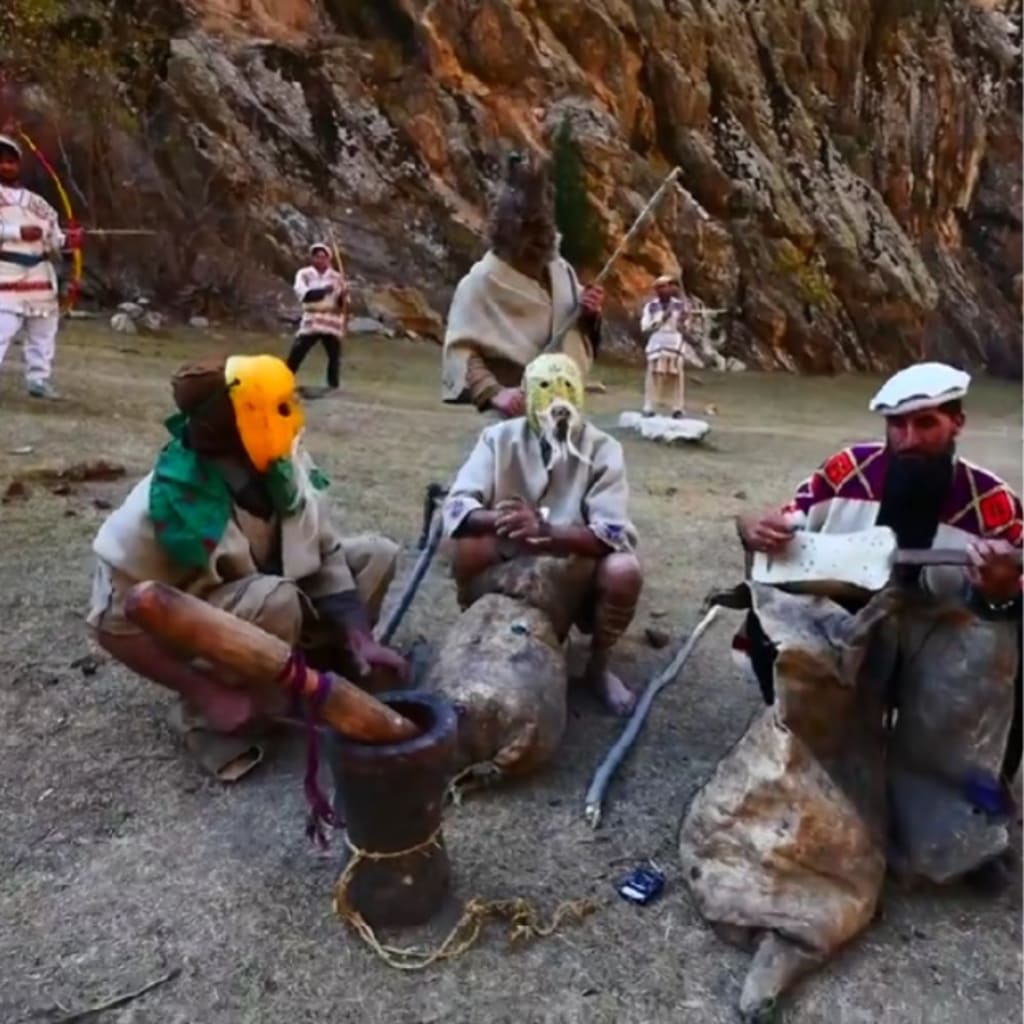
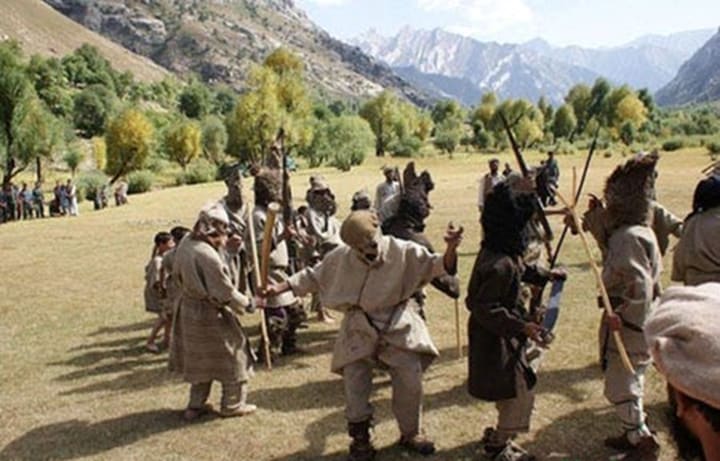
The people of Nuristan also have a form of theatre performed with the orbeh stringed instrument and the secho percussion, known as Shatri Pala Nat. Tazeh, quoting George Robert Sen, writes: “This theatre is one of the best musical performances I have seen in Nuristan. These performances often begin with sports and end with staged battles. Women participate in these battles alongside their husbands and brothers, demonstrating remarkable strength and skill. They also have other shows, such as: Chrome, with dance and music; Diran, with singing and dancing; Sprinkling and Sacrifice; Duban, with dance and music; Taska, featuring mock fights; and Gishi theatres, performed to celebrate Nowruz or the New Year” (Tazeh, 1988, p. 193). Alphinstone writes about Nuristani performances in his book: “When someone dies, the body is dressed, placed on a bed, and the person’s weapons are put beside them. Others dance, sing, and perform staged fights” (Alphinstone, 2000, p. 565). Based on available evidence, the musical theatre of Nuristan has a very long history and has been passed down through generations. These performances not only reflect the artistry and skill of the local people but also showcase the cultural beauty, ethnic diversity, and rich heritage of music and dance in Nuristan. Each performance, combining sound, movement, and music, provides a vivid representation of the life and traditions of the people and contributes to the preservation of their cultural identity.
Folk Musical Theatre of Badakhshan
In northern Afghanistan, various forms of musical theatre can be observed. One of them is Aspak, which is performed with the daf (frame drum), ghaychak (bowed string instrument), ney (flute), and singing. Aspak theatre represents an important part of the local culture of the people of Badakhshan, a vast region stretching from Badakhshan in Afghanistan to the Pamir Plateau in Tajikistan. This tradition, rooted in the earliest Aryan peoples, is celebrated annually during the New Year festival and is found not only in Wakhan (the eastern handle of Afghanistan extending to China) but also in the Pamir region, including Ashkashem, Zebak, and other areas such as Manjan, Shighnan, Shivayeh, and most parts of Badakhshan. In recent years, these traditions have been performed annually by the people of Wakhan in a horse race called Piga-e Aspha, meaning “horse competition.” Some of these fast and victorious horses maintain their champion status for several years, reflecting the skill and talent of their trainers. In the past, when a horse became a champion, its owner felt proud among the people and was awarded the title of Gashtasp, meaning the owner of the fastest horse in the region. “Gashtasp” was the title of the great king of the Aspa family, who owned fast horses. Accordingly, the name Gashtaspa literally means “owner of fast-running horses” (Feroz, 2020, p. 192). Aspak musical theatre is not merely a form of entertainment or horse racing; it is an integral part of the cultural and historical heritage of the people of Badakhshan. These performances reflect the skill, artistry, and creativity of the local people, combining music, dance, and storytelling. Each performance portrays the ancient traditions, social values, and natural beauty of the region, contributing to the preservation of the cultural and historical identity of the people of Badakhshan.
Musical Theatre in Daykundi
Daykundi also has a type of entertaining musical theatre called Lupatak, performed with the Dambora. In this performance, a doll is attached to the Dambora with a string or yarn, and it “dances” as the musician plays. This type of theatre is considered one of the oldest forms of entertainment in the western and southwestern provinces of Afghanistan, including Daykundi, Nimroz, and Herat. Unfortunately, today this type of performance is less frequently held and requires attention and support to preserve this cultural heritage. Another type of musical theatre, more common in Daykundi, is called Diw and Peri. The characters in this performance include Diw (Ghoul), Shir (Lion), and Peri (Fairy). These plays are usually performed outdoors on flat grounds, accompanied by the Dambora. Sometimes other instruments, such as the Ghichak, Daria (Daf), or Zirbaghali, are also used. Hazaragi music is distinguished by its rich treble and bass tones. All Hazaragi folk songs originate from local traditions, and when the melodies are combined, they create a unique musical identity. Additionally, rural accents and expressions found in Hazaragi music contribute to its aesthetic qualities (Sakata, 1983, pp. 33–88).
The historical significance of these performances is considerable, as they reflect the life, beliefs, and culture of the people of the region from the distant past to the present. These theatres are not only forms of entertainment and music but also serve as tools for transmitting social, moral, and artistic values across generations. Preserving and continuing this cultural heritage requires the attention of the community, researchers, and cultural institutions so that future generations can become familiar with this art and historical identity and experience it firsthand.
Conclusion
Native musical performances typically showcase skills, techniques, games, and simple instruments in local and national theatres. Beyond entertainment, these types of theatre and plays reflect the realities of social life, which are simple, genuine, and far from artificiality. In local performances, the primary purpose of music is to create excitement and engage the audience. The instruments used are simple and traditional, while melodies and rhythms are closely tied to the play, shaping the mood and enhancing the overall experience. Dance and music play a central role in these performances, as they are essential elements of folk culture. Some plays also feature unique costumes and masks that add a visual dimension to the performance. The origins of these performances often lie in rituals, festivals, religious ceremonies, and traditional competitions. In Afghanistan, such plays are historically rooted and frequently connected to historical events, legends, and life stories of the people, reflecting the ancient culture of the region. Unfortunately, prolonged wars and conflicts have severely impacted these traditions, putting many aspects of Afghanistan’s cultural heritage at risk. Ancient songs, folk and national dances, traditional musical instruments, and local theatrical performances are all endangered. The loss of these cultural elements would not only harm the stability of Afghanistan’s history, art, and culture but could also have negative consequences for the tourism industry and the preservation of national identity.
References
Alfenston, Mount Stewart. (2000). Afghans, a place of culture and race. Translated by Mohammad Asef Fekrat. Mashhad: Islamic Research Foundation Publishing.
Amid, Hassan. (2006) Farhang Amid. Tehran: Amirkabir Publications.
Anasori, Jaber. (1372). Simulating the treasure trove of religious ritual performances. Tehran: University Publishing.
Azimi, Mohammad Azim (2012). Tourist Geography of Afghanistan. Kabul: Khorasan Publications.
Babur, Zahiruddin Mohamad. (2009). Baburnama. Translated by Shafiqa Yarqin. Kabul: Diplomacy Institute of Foreign Ministry Publications.
Dehkhoda, Ali Akbar. (1377) Dehkhoda Dictionary. Tehran: University Publishing.
Feroz, Islamuddin. (2020). Ethnomusicology of Afghanistan. Kabul: Kabul University Press.
Ghobar, Ghulam Mohammad (1987). Afghanistan on the path of history. Tehran: Enghelab Publishing Center.
Jubal, Mohammad Haidar (2004). History of Afghan Literature. Kabul: Maiwand Publications.
Kargar, Abdullah (2005). Timurians. Peshawar: Al-Azhar Publishing.
Kohzad, Ahmad Ali (2010). Afghanistan in the light of history. Tehran: Book World Publications.
Kohzad, Ahmad Ali (2012). Afghanistan’s History. Volumes one, two and three. Kabul: Maiwand Publications.
Moradi, Sahebnazar. (2011). Kabul in Kianian mythology. Milad Kabul. Researches. Kabul: Kabul Municipality Publishing.
Sakata, Lorraine. (1983). Music in the Mind. Network: publisher the Kent State University.
Tazeh, Samiullah. (1988). Historical and cultural roots of Nuristan. Kabul: Government Press Publications.
https://hambastagi.org/new/fa/article/530-nuristan-land-of-combatants-and-freedom-12976074.html
https://www.youtube.com/watch?v=lwc8pI2TKNM
About the Creator
Prof. Islamuddin Feroz
Greetings and welcome to all friends and enthusiasts of Afghan culture, arts, and music!
I am Islamuddin Feroz, former Head and Professor of the Department of Music at the Faculty of Fine Arts, University of Kabul.
Keep reading
More stories from Prof. Islamuddin Feroz and writers in Art and other communities.
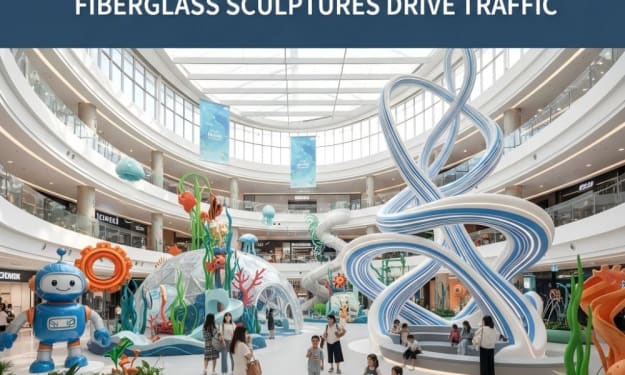
2026 Commercial Space Design:How Fbierglass Sculpture Drives Traffic
Today, offline commercial spaces are facing continuous pressure. With e-commerce offering convenient and fast services, physical stores must showcase unique features to attract customers. In this context, fiberglass sculptures are no longer merely decorative items; they have become visual focal points in shopping malls, brand stores, pop-up shops, and mixed-use commercial projects, playing a crucial role in increasing foot traffic.
By Shenzhen Ruiheng Crafts3 days ago in Art
Why Strategic Branding Is Essential for Long-Term Business Growth
In today’s fast-paced digital environment, businesses face constant pressure to stand out. Consumers are exposed to endless choices every day, making attention harder to earn and trust harder to keep. While quality products and services are important, they are no longer the only factors that determine success. Strategic branding plays a key role in helping businesses grow steadily and remain relevant over time.
By Ayush Bagwari3 days ago in Art


Comments
There are no comments for this story
Be the first to respond and start the conversation.