
The Evolution of Digital Art: From Early Graphics to AI-Generated Masterpieces
Exploring the transformation of art through technology and the rise of AI tools in creative expression

Introduction
Digital art has come a long way since its humble beginnings. From pixelated graphics of early computer screens to the breathtaking AI-generated works we see today, digital art has continuously evolved, reshaping the art world and expanding the boundaries of creativity. In this article, we’ll explore the fascinating journey of digital art, tracing its origins, key milestones, and how artificial intelligence is taking creativity to new heights.
The Birth of Digital Art
The First Digital Artists
The early days of digital art were shaped by pioneering artists and innovators who sought to experiment with new technologies. In the 1950s and 1960s, artists began using computers to create images, although the tools were rudimentary. One of the first recognized pieces of digital art was created by Ben Laposky in 1950, who used an oscilloscope to generate geometric patterns.
During the 1960s, artists like Harold Cohen developed algorithms to generate drawings, and pioneers such as Frieder Nake and Vera Molnar were some of the first to integrate computer-generated imagery (CGI) into their work. However, the technology available at the time was limited, and digital art was mostly confined to academic and experimental circles.
Early Graphic Software
In the 1980s, the development of graphic software like Adobe Photoshop, CorelDRAW, and Illustrator revolutionized the digital art world. These programs allowed artists to manipulate images in ways that were previously impossible, opening up new creative possibilities. The rise of personal computers meant that digital tools were more accessible, enabling artists to experiment with digital brushstrokes, pixel art, and early computer animation.
The Rise of Digital Art in the 1990s and 2000s
The Internet and Online Communities
As the internet began to gain popularity in the late 1990s, digital artists found new ways to share their work. Online communities and platforms like DeviantArt, established in 2000, allowed digital artists to showcase their creations and connect with others around the world. The internet also played a crucial role in the growth of digital art markets, with e-commerce platforms emerging to sell digital prints and designs.
The 1990s and early 2000s also saw the emergence of 3D modeling software like Blender, which allowed artists to create more complex and detailed digital sculptures, environments, and animations. This era marked a turning point where digital art gained broader recognition in both commercial and artistic circles, including advertising, video games, and film.
Digital Art in Video Games and Film
Video games and films have long been intertwined with digital art. The late 1990s saw the rise of highly stylized, computer-generated visuals in video games, from the early 3D environments of games like Quake and Final Fantasy VII to the groundbreaking CGI used in films like Jurassic Park and Toy Story. Digital artists played an essential role in crafting the visual effects and environments that defined these entertainment mediums.
AI-Generated Art: The Next Frontier
What is AI Art?
In recent years, artificial intelligence (AI) has taken the digital art world by storm. AI-generated art refers to works created by algorithms that can analyze and replicate artistic styles or even generate entirely new compositions. Machine learning models, such as GANs (Generative Adversarial Networks), allow AI to create images by learning from vast datasets of existing artwork. This has led to a new wave of creativity, with AI acting as both a tool and a collaborator for artists.
The Impact of AI Art on the Art World
The rise of AI in art has sparked debates about authorship, creativity, and the role of technology in human expression. Some critics argue that AI art lacks the emotional depth and intentionality of human-made art, while others see it as a fascinating tool that can push the boundaries of traditional art forms. AI has allowed artists to create surreal and abstract pieces that might never have been possible with human hands alone.
AI tools like DALL·E 2 and MidJourney, which generate art based on text prompts, have taken the digital art world by storm. These tools have democratized the creation of digital art, allowing anyone with an idea to create stunning, high-quality visual pieces without needing extensive technical skill.

The Future of Digital Art and AI
The Role of AI in Artistic Expression
As AI continues to evolve, so too will its role in the creative process. While AI may never fully replace human artists, it is likely to become an increasingly important collaborator. Artists can use AI to generate initial ideas, experiment with different styles, and explore new visual concepts. Additionally, AI can help streamline tedious tasks such as coloring, shading, or resizing, allowing artists to focus on the more conceptual aspects of their work.
Blurring the Lines Between Human and Machine
As AI-generated art becomes more sophisticated, the lines between human-created and machine-created art are becoming increasingly blurred. Artists are beginning to collaborate with AI to co-create unique pieces that neither the machine nor the human could produce alone. This shift is leading to a redefinition of what constitutes "art" and who can be considered an artist.
Conclusion
Digital art has come a long way since its inception, evolving from basic graphics and experimental pieces to the stunning AI-generated masterpieces of today. The combination of digital tools and artificial intelligence has expanded the possibilities for creative expression, giving artists new ways to explore and push the boundaries of their craft. As we look to the future, it’s clear that the digital art landscape will continue to evolve, with AI playing an ever-increasing role in shaping the art world of tomorrow.
Whether you’re an artist experimenting with digital tools or simply an admirer of art, the rise of AI-generated art signals an exciting new chapter in the history of creative expression.
About the Creator
Keep reading
More stories from writers in Art and other communities.
'Till Death We Do Art
There would be nothing divine in this world without art. Nature may surpass the divine to all intents and purposes, but like everything it absorbs and is absorbed by, it remains here, stuck on the surface of this world, ever-present, physically bound to the universe.
By Avocado Nunzella BSc (Psych) -- M.A.P 27 days ago in Art
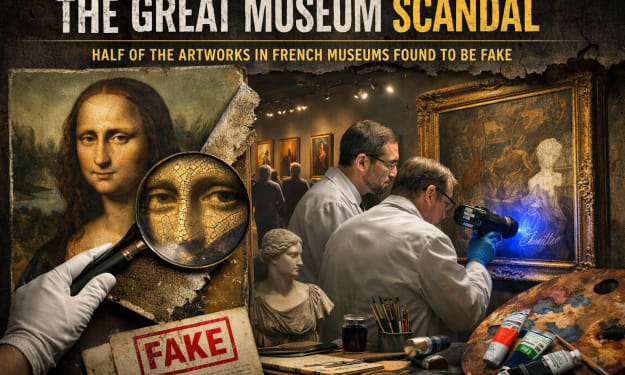
The Great Museum Scandal: Half of the Artworks in French Museums Found to Be Fake
France is home to some of the most famous museums in the world, attracting millions of visitors each year who come to admire priceless works of art and historical artifacts. However, a recent investigation has sent shockwaves through the art world after suggesting that a significant number of artworks displayed in certain French museums may actually be fake.
By Irshad Abbasi 6 days ago in Art
A Transparent Look at Vocal Challenges and Top Stories
Almost three years ago, we shared a resource article that served as a place for people to suggest new challenge prompts. We thought it would be a good idea to refresh that thread, and take the opportunity to answer a few common questions about top stories, how challenges are judged and how submissions are reviewed.
By Vocal Curation Team4 days ago in Resources



Comments
There are no comments for this story
Be the first to respond and start the conversation.