
The Difference Between Decorative Sculptures and Landmark Sculptures
Five difference
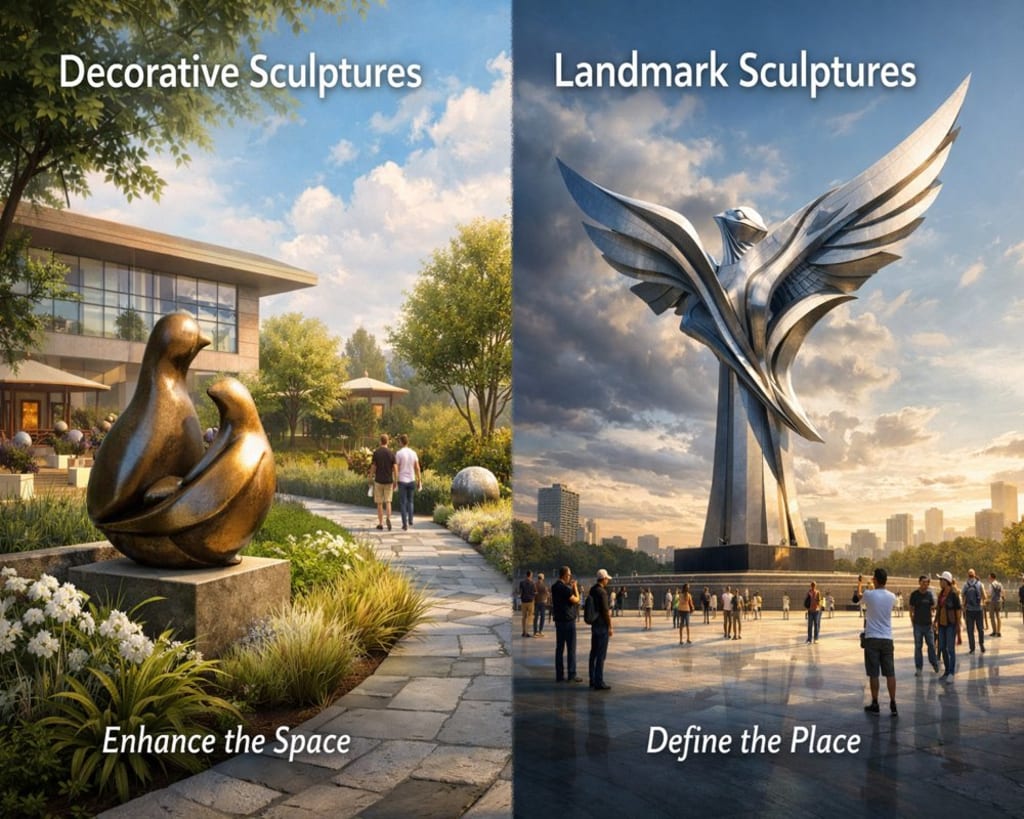
In many outdoor projects, sculptures are often grouped under a single category. However, in real-world applications, decorative sculptures and landmark sculptures serve very different purposes. Treating them as interchangeable elements can result in design conflicts, inefficient use of budget, and weakened spatial impact. For anyone involved in outdoor space planning, understanding the distinction between these two types of sculptures is essential.
Different roles in a space
The fundamental difference between decorative sculptures and landmark sculptures lies in their intended role. Decorative sculptures are designed to complement a space rather than define it. They enhance atmosphere, soften architectural lines, and create visual continuity without demanding attention. These sculptures are commonly used in gardens, walkways, hotel courtyards, and transitional areas between indoor and outdoor environments.
Landmark sculptures serve a contrasting purpose. They are meant to be noticed and remembered. Acting as visual anchors, they help people orient themselves within a space. In many cases, the identity of a location becomes closely tied to its landmark sculpture, with the sculpture functioning as a symbolic reference point rather than a background element.
Scale and visual impact
Scale clearly separates decorative sculptures from landmark sculptures. Decorative sculptures are usually designed at or near human scale. They encourage close viewing and subtle interaction, allowing visitors to move naturally through a space without interruption.
Landmark sculptures operate on a larger visual plane. Their dimensions are carefully calculated to remain legible from a distance, whether across plazas, streets, or open landscapes. Proportion is critical. A landmark sculpture that is too small may fail to establish presence, while one that is oversized without intent can disrupt spatial balance.

Relationship with architecture
Decorative sculptures generally follow architecture rather than challenge it. Their forms, materials, and placement are chosen to align with the existing design language. In many projects, these sculptures intentionally remain understated so that buildings, landscaping, and lighting retain visual priority.
Landmark sculptures often take the opposite approach. They engage in a direct dialogue with surrounding architecture and may even become the primary visual focus. In such cases, the built environment is organized around the sculpture, framing it rather than competing with it. This architectural relationship is a key consideration during early planning stages.
Functional expectations
From a functional standpoint, decorative sculptures are expected to be durable, visually consistent, and easy to integrate. Maintenance requirements are usually manageable, and relocation or replacement is often possible without major disruption.
Landmark sculptures carry more demanding functional expectations. They must endure constant exposure, frequent photography, and high levels of public interaction. Structural engineering, internal frameworks, and installation methods play a central role in their design. Once installed, landmark sculptures are rarely moved, making accuracy in planning especially important.
Budget and long-term value
Decorative sculptures are typically flexible in budget and application. Their value lies in enhancing spatial quality without dominating attention.
Landmark sculptures represent long-term commitments. Their significance is not limited to material or fabrication cost, but to their ability to establish identity, attract attention, and shape how a place is perceived over time. Confusing these roles can lead to mismatched expectations—either under-designing a landmark element or overcomplicating a decorative one.
Choosing the right approach
Selecting between decorative and landmark sculptures should begin with a clear understanding of intent. When the goal is balance, continuity, and atmosphere, decorative sculptures are often the appropriate choice. When memorability, orientation, and symbolic meaning are required, landmark sculptures become necessary.
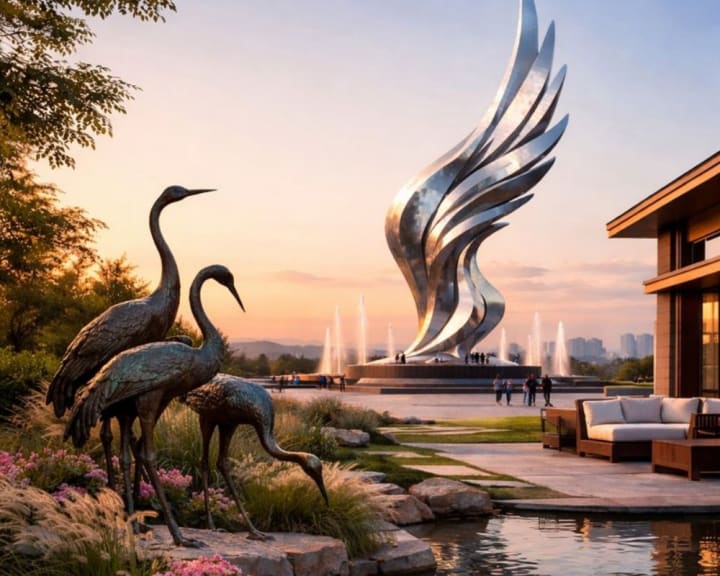
Many well-designed environments incorporate both. Decorative sculptures guide movement and enrich detail, while landmark sculptures define destinations. When used together thoughtfully, they create layered spaces with clarity, structure, and visual depth rather than isolated sculptural statements.
About the Creator
Shenzhen Ruiheng Crafts
https://www.craftsornaments.com/
Keep reading
More stories from Shenzhen Ruiheng Crafts and writers in Art and other communities.
Why Fiberglass Sculpture are Ideal for Custom Projects
Why Fiberglass Sculptures Are Ideal for Custom Projects When creating a distinctive space—whether for a public park, commercial plaza, or private garden—the choice of material plays a decisive role. Among the many options available, fiberglass has become a widely used material for custom sculptures due to its balance of strength, flexibility, and long-term performance.
By Shenzhen Ruiheng Crafts2 months ago in Art
'Till Death We Do Art
There would be nothing divine in this world without art. Nature may surpass the divine to all intents and purposes, but like everything it absorbs and is absorbed by, it remains here, stuck on the surface of this world, ever-present, physically bound to the universe.
By Avocado Nunzella BSc (Psych) -- M.A.P 17 days ago in Art
Guard Your Battery
Why are some people so attractive just by standing there? It’s not because they are "likable," but because they don’t need everyone to like them. I realized later that truly charismatic people allow themselves to be criticized, but they never criticize themselves. They never try to please the world; instead, the world stops to watch them.
By Emily Chan - Life and love sharinga day ago in Poets




Comments
There are no comments for this story
Be the first to respond and start the conversation.