
The Day I Painted My Pain—And People Saw Themselves in It
When vulnerability became my most powerful brushstroke

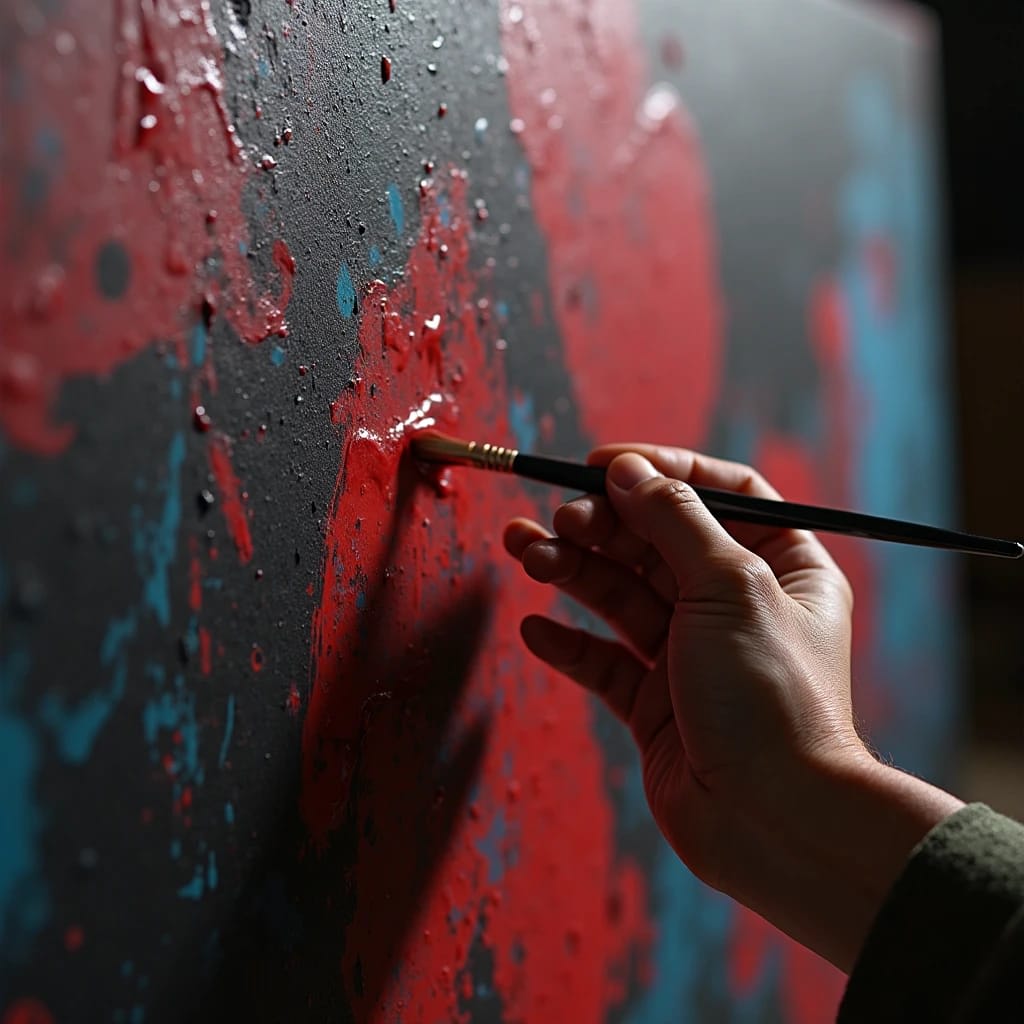
The Canvas Was Empty—But I Was Full
I didn’t intend to create anything that day. It started like most weekends: coffee, silence, and the soft shuffle of light through my living room blinds. The canvas leaned against the far wall, still wrapped in plastic, untouched for weeks. I had bought it in a moment of ambition, thinking I was ready to create again. But when you're carrying something heavy inside you, even the thought of starting can feel like a betrayal to your emotions.
Yet that morning, something shifted. It wasn’t clarity or inspiration. It was something closer to surrender. I was tired of holding it all in—the breakup, the loss of my father, the creeping fear that maybe I had nothing left to offer. I pulled the plastic off the canvas, laid out my paints, and stood there.
I didn’t have a plan. Just pain.
Painting Without Pretending
The first stroke was black. Then red. Then something in between. I wasn’t aiming for beauty or technique. I wasn’t thinking about composition or balance. It was primal. Fingers smeared paint, not just brushes. I cried into it. I whispered names into it. I gave it everything I had been trying to hide.
Colors layered over colors, not to conceal but to reveal. Sharp edges bled into soft ones. The canvas became a battlefield, a diary, a scream. It looked like chaos. But to me, it was a kind of truth.
By evening, I sat on the floor, exhausted. I stared at what I had created, unsure if it was art or madness.
And then something strange happened: I posted it online.
"This Looks Like My Story Too"
I almost didn’t share it. Vulnerability feels like standing naked in a room full of mirrors. But I posted it to a small artist group on social media with a one-line caption: "I painted what I couldn’t say."
Within minutes, the comments started.
"This looks like my divorce."
"This reminds me of my anxiety attacks."
"I feel this so deeply it hurts."
"Thank you for painting this. I didn’t know how to describe how I’ve felt."
I sat there stunned. This wasn’t just my pain. Somehow, in bleeding onto the canvas, I had tapped into something collective.
That painting, born in a day of darkness, suddenly became a mirror for dozens of strangers.
The Gallery That Wasn't Meant to Be
Weeks later, a local art gallery messaged me. They had seen the piece online and wanted to feature it in a small group exhibition titled "Voices Unheard." My first instinct was to say no. That painting felt too raw, too personal.
But then I thought: maybe that’s the point.
The night of the opening, I stood awkwardly beside my work. A woman in her 50s stopped in front of it, eyes glassy. "I lost my son two years ago. I… I see him in this," she whispered.
A teenage boy walked by and said, "This reminds me of the panic attacks I get at school."
Another man simply stood there for ten minutes, not saying a word.
It was the most profound connection I’d ever experienced.
Not because they saw me in the painting, but because they saw themselves.
The Power of Unfiltered Emotion
I had spent years trying to be a "proper" artist. Attending workshops. Mimicking greats. Learning rules of form, contrast, and structure. But it was only when I let all that go—when I painted from the raw, hurting parts of myself—that I finally created something that mattered.
That painting didn’t win any awards. It didn’t hang in a museum. But it changed the way I thought about art. About connection. About honesty.
In a world so obsessed with curation and control, vulnerability is a radical act.
The Aftermath: Creating Without Armor
Since that day, I’ve painted dozens of pieces. Not all of them stem from pain—some come from healing, from love, from curiosity. But none of them are filtered. I don’t create to impress anymore. I create to connect.
People often ask me what inspired that first piece. I tell them the truth:
It wasn’t inspiration. It was desperation. It was honesty. It was the last thing I could do before breaking.
Now, when someone asks for advice on creating meaningful art, I say this:
Stop performing. Start confessing.
Art As Collective Memory
Since that gallery show, I’ve hosted community workshops called "Canvas Confessions," where people come and paint whatever they can’t say aloud. No critiques. No rules. Just honesty.
A mother who lost her daughter created a soft swirl of purples and blues. A veteran painted jagged lines of gray and rust. A young man with autism used dots—thousands of them—to express his inner world.
And each time, someone watching would say, "I feel this. I don’t know why, but I do."
Art doesn’t need translation. Pain doesn’t need permission.
Closing Reflections: More Than Just a Painting
I still have that original painting. It hangs in my studio. People often ask me why I don’t sell it.
"Because it saved me," I say.
And because it reminds me that the best art I will ever make won’t come from skill or planning. It will come from the moments when I’m brave enough to let others see me—not the polished, curated version, but the honest one.
That painting showed me that pain can be shared. That silence can be broken. That even in our darkest moments, there’s a possibility of light.
We don't always paint to be understood. Sometimes, we paint so others feel less alone.
And that—that’s the most powerful brushstroke of all.
About the Creator
Muhammad Sabeel
I write not for silence, but for the echo—where mystery lingers, hearts awaken, and every story dares to leave a mark
Keep reading
More stories from Muhammad Sabeel and writers in Art and other communities.
I Published a Story Online and Thought No One Would Read It
I still remember the moment I clicked “Publish.” It was 2:16 a.m., and my cursor hovered over that button for what felt like forever. My heart raced—not from fear exactly, but from the kind of vulnerability that comes when you bare a piece of your soul to a silent crowd.
By Muhammad Sabeel8 months ago in Art
Dog Shoes for Small Dogs and Puppy Shoes A Practical, Paw-Friendly Guide
Small dogs and puppies may look tough, but their paws often need more protection than people realize. Their bodies are lighter, their paws are smaller, and many of them spend a lot of time on surfaces that were never designed for delicate paw pads. Add cold sidewalks, hot pavement, rough gravel, wet grass, or even slippery indoor floors, and you start to see why dog footwear has become more than just a cute trend.
By aliyashahzadi2 days ago in Art
So You Decided To Become a Nurse Practitioner:
So you decided to become an "Advanced Practice" nurse. Congratulations!... is what I would say if this was a good idea. Grad school? In this economy? What were you thinking? Likely it was something along the lines of either 1) “I've seen these other chucklefucks do it— Why can't I?” or even 2) “I've got a nice career, I should shake it up. I miss feeling like I have no clue what I'm doing.”
By Sandor Szabo2 days ago in Fiction




Comments
There are no comments for this story
Be the first to respond and start the conversation.