
The Brutal Beauty of Caravaggio: How a Killer Changed Religious Art Forever
Caravaggio’s Shadows: How Light Became a Weapon in Baroque Art
When you first see a Caravaggio painting, it doesn’t whisper. It grabs you by the throat.
His figures aren’t floating angels or marble-skinned saints. They’re gritty men with dirt under their nails, women with haunted eyes, and blood that actually looks wet. And more than anything — there is light. Blazing, theatrical, confrontational light. Light that exposes more than just form. It exposes truth.
This isn’t religious art. It’s revolution in oil and pigment.
The Man Who Lit the Darkness
Michelangelo Merisi da Caravaggio (1571–1610) was as notorious as he was brilliant. A street fighter. A fugitive. A murderer. He lived fast, died young, and changed art forever.
In an era when saints were painted with halos and decorum, Caravaggio dragged them down to Earth. His models were prostitutes, beggars, commoners — sinners standing in for the sacred. And his tool of choice? Chiaroscuro: the violent contrast between light and shadow.
But this wasn’t just a technique. It was a philosophy.
Light as Drama. Light as Judgment.
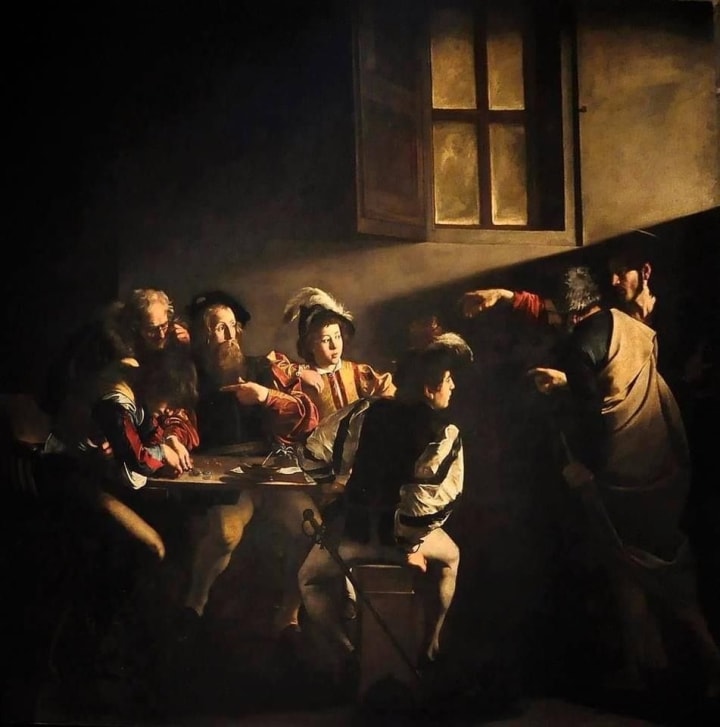
In “The Calling of Saint Matthew”, the divine doesn’t arrive on clouds. It enters like a sniper beam of light. A mundane tax office is interrupted by Jesus pointing, almost like an accusation, as the light cuts across the scene with ruthless clarity.
Matthew doesn’t look ready to be a saint. He looks confused, skeptical. This is not spiritual serenity — it’s spiritual shock. Caravaggio’s light acts as a divine force, choosing, dividing, exposing.
It asks: What if God walks into your bar and ruins your afternoon?
The Blood and the Body
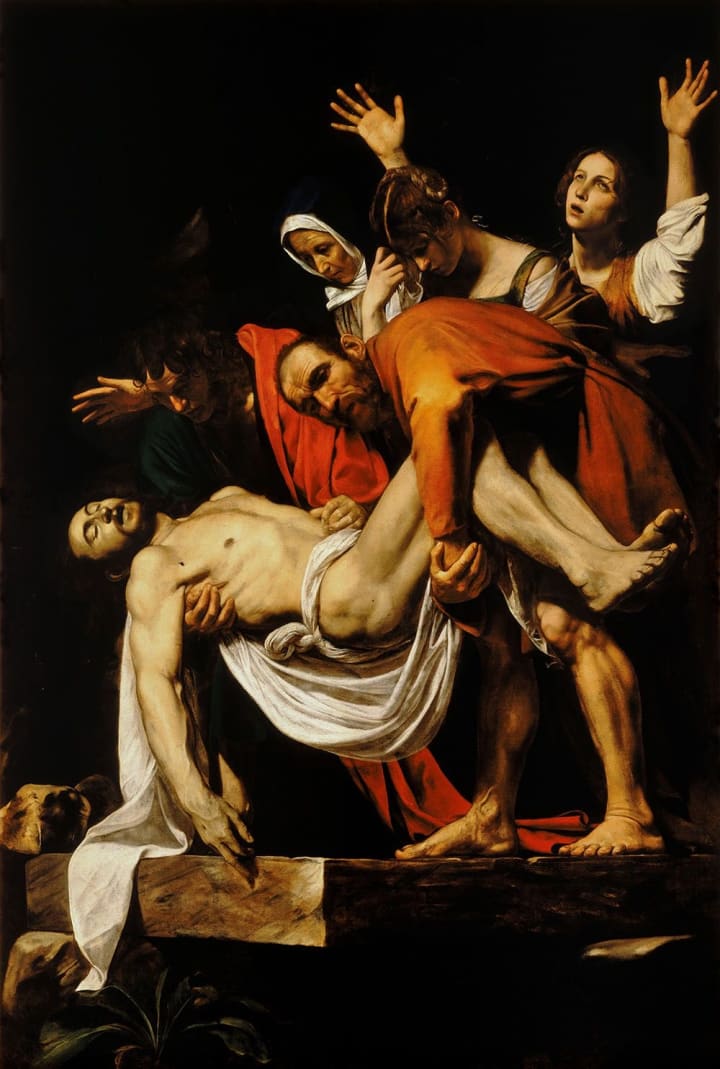
Caravaggio’s paintings obsess over the body — vulnerable, wounded, trembling. In “The Entombment of Christ”, the flesh is pale, heavy, real. You can feel the gravity of the body being lowered into the tomb. The grief isn’t stylized. It’s unbearable.
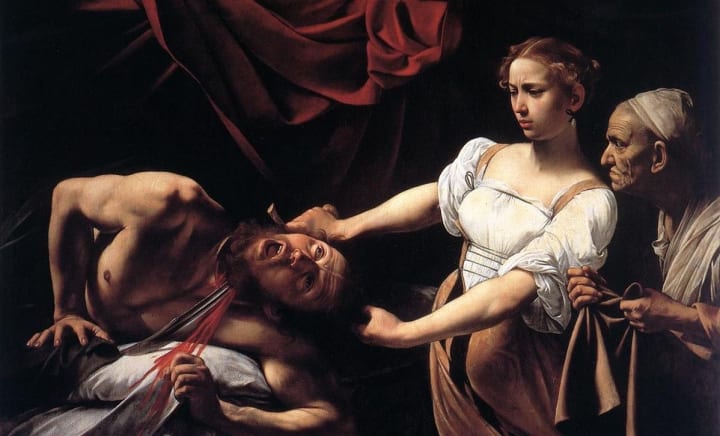
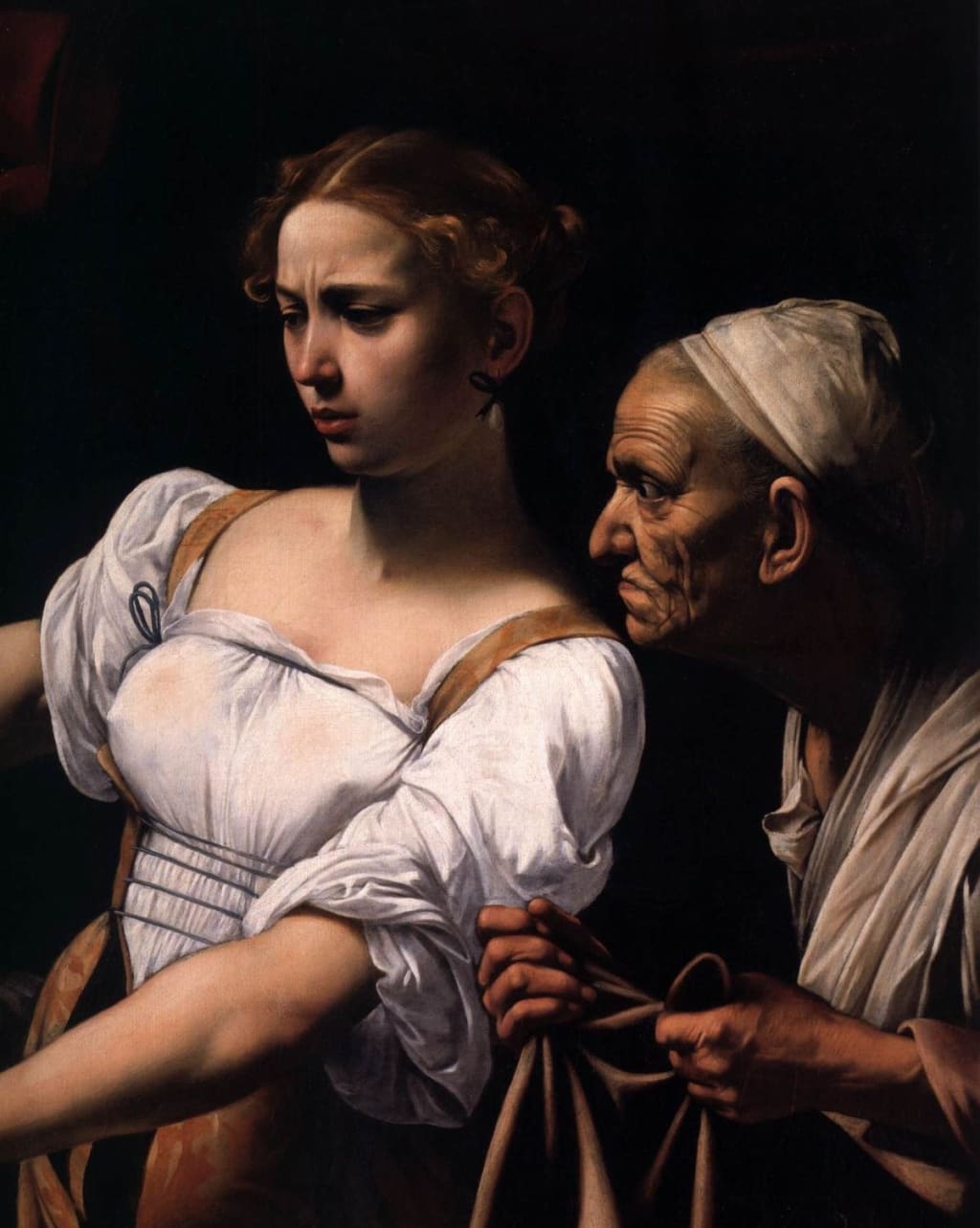
In “Judith Beheading Holofernes,” Judith’s face is tense and alive as she slices through Holofernes’ throat. The blood spurts across the canvas with horrifying precision. This isn’t a symbolic act — it’s raw survival.
Caravaggio forces us to witness. There’s no escape.
The Baroque Breaker of Rules
The Church initially hired Caravaggio to bring life to religious scenes. Instead, he brought truth. Ugly, uncomfortable truth. His saints had scars. His Madonnas looked exhausted. His Jesus bled.
And yet… they were more holy because of it.
His work was so revolutionary that it launched a movement — the Baroque — where emotion, realism, and drama took center stage.
Why Caravaggio Still Matters
In today’s world of filters and perfection, Caravaggio’s work is a punch to the face. He reminds us that:
• Beauty can be brutal.
• Faith doesn’t always look pure.
• And light only matters when there’s darkness around it.
Caravaggio didn’t just paint scenes — he orchestrated moral theater. Every canvas is a judgment call, every beam of light a spotlight on human weakness.
His legacy is more than technique. It’s vision — daring to say what others won’t, to illuminate the parts we’d rather hide.
Next time you’re standing before a Caravaggio, don’t just admire the beauty. Ask yourself: What is this light trying to reveal — in them, and in me?
About the Creator
Zohre Hoseini
Freelance writer specializing in art analysis & design. Decoding the stories behind masterpieces & trends. Available for commissions.
Keep reading
More stories from Zohre Hoseini and writers in Art and other communities.
The Hidden Language of Frida Kahlo: Symbolism, Pain, and Power
Frida Kahlo didn’t just paint pictures. She painted pain, politics, passion — and every stroke was a cry from the soul. Her self-portraits are among the most emotionally raw and visually iconic works in 20th-century art. But beyond the bold eyebrows and surreal backdrops, Kahlo embedded coded messages that speak volumes about identity, feminism, colonialism, and resilience.
By Zohre Hoseini11 months ago in Art
'Till Death We Do Art
There would be nothing divine in this world without art. Nature may surpass the divine to all intents and purposes, but like everything it absorbs and is absorbed by, it remains here, stuck on the surface of this world, ever-present, physically bound to the universe.
By Avocado Nunzella BSc (Psych) -- M.A.P 27 days ago in Art
The Rise of Decentralized Social Media and What It Means for Content Creators
For most of the past two decades, a small number of centralized platforms have dominated the social media landscape. Companies like Facebook, Instagram, X (formerly Twitter), and TikTok built massive ecosystems that attracted billions of users, but they did so under a model where the platform holds ultimate control over content, data, and revenue distribution. Creators who poured time and energy into building audiences on these platforms often found themselves at the mercy of opaque algorithms, sudden policy changes, and revenue-sharing structures that heavily favored the platform itself.
By Chaturbateme5 days ago in Art



Comments
There are no comments for this story
Be the first to respond and start the conversation.