
The Beijing Code
How I Stopped "Visiting" and Started to Flow
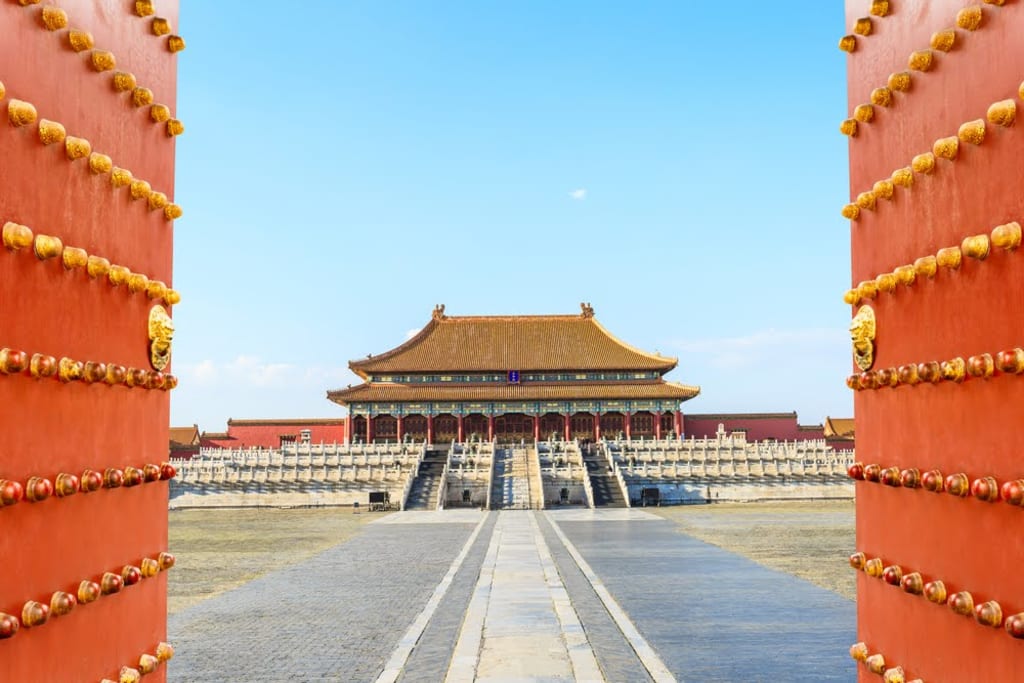
I arrived in Beijing loaded with apps and apprehension, ready to tick off a list of ancient marvels. What I ended up checking off was a list of my own assumptions. The city’s true wonder isn’t the Forbidden City—it’s an invisible operating system the Chinese call 符合 (fúhé), and learning its code rewired my way of being.
My First Lesson Was a Flop
My awakening didn’t happen on the Great Wall. It happened in a hutong alley at breakfast. My rehearsed “Nǐ hǎo” earned only a patient, blank stare. The vendor simply served the local ahead of me, who had ordered with a quiet fluency I clearly lacked. I was speaking, but not communicating. Fúhé signifies harmony through alignment—and I was entirely out of tune. So I paused. I observed. I mimicked the slight nod, the exact coins placed on the counter. My next “Nǐ hǎo” was met with a faint smile. The exchange felt effortless. I hadn’t mastered a phrase; I’d tuned into a frequency.
Order Without Instructions
Within the Forbidden City, I sensed it again. The crowd moved with a fluid, collective rhythm that seemed chaotic until I stopped resisting it. No one gave orders; there was only a shared current. To fight it was to swim upstream. To flow with it was to be carried. This was fúhé in motion: social synchrony as silent choreography. I saw it in the seamless way people merged into subway cars and heard it in the deliberate pauses between sips of tea in a quiet shop. The city hums on this quiet protocol.
From Onlooker to Insider—Briefly
Everything shifted when I swapped objectives for awareness. Rushing to photograph the Summer Palace, I remained a spectator. But sitting in a neighborhood square at dusk, watching grandparents move through tai chi and children chase soap bubbles, I became present. I wasn’t in Beijing to extract from it—I was there to exist within it. I began to sense the rhythm of the jianbing cart, the pulse of the crosswalk countdown. The city ceased to be a museum and began to feel like a living organism—and for a short while, I learned to move as part of it.
The True Souvenir
I left Beijing with more than photographs. I carried back a lens. Back in New York, I suddenly perceived the noise—not just sound, but the visual clutter of signs dictating every rule, the friction of constant explanation. I missed the quiet competence of fúhé, the elegance of the unspoken.
Beijing taught me that true respect is not distant admiration. It is the deliberate choice to align—to move with the grain of a culture, not against it. For a handful of days, I ceased to be a tourist passing through and became a current flowing within. That, more than any temple or tower, is what reshaped me.
Visit Beijing for its history. But stay for the lesson in how to belong—even temporarily—to something vast and alive. Just know this: the key isn’t in your guidebook. It’s in the silence between words, in the beauty of the pattern.
About the Creator
'Till Death We Do Art
There would be nothing divine in this world without art. Nature may surpass the divine to all intents and purposes, but like everything it absorbs and is absorbed by, it remains here, stuck on the surface of this world, ever-present, physically bound to the universe.
By Avocado Nunzella BSc (Psych) -- M.A.P 13 days ago in Art
THE MYSTICAL RELATIONSHIP BETWEEN BACH AND BEETHOVEN - ALEXIS KARPOUZOS
THE SECRET OF THE DIALECTICAL RELATIONSHIP BETWEEN BACH AND BEETHOVEN Music, as an art of time, constitutes the deepest field where consciousness meets the universe in its primordial ontological dimension, in its uninterpretable form. In this ontological dimension, the forms of music are not mere aesthetic expressions but ways of revealing Being. Two of the most pivotal ways of this revelation emerge through the music of Johann Sebastian Bach and Ludwig van Beethoven. Their comparison cannot be external; it constitutes a comparison of two anthropological and cosmological principles, two forms of relationship between Humanity and the World, two primordial possibilities of existence: necessity and freedom, cosmic order and human transformation.
By alexis karpouzos2 days ago in Art
Pearl
1980 something. we all hung out at Pearl and you and i were nothing special, or so i thought. i mean we all danced, drenched in our own sweat, our own saline solution of fear, too many beers, shots, laughter, tears, fucks in the bathroom and i don't know when we began to be afraid. do you?
By ROCK aka Andrea Polla (Simmons)4 days ago in Fiction



Comments
There are no comments for this story
Be the first to respond and start the conversation.