
The Analog Renaissance: How Offline Hobbies Are Reclaiming Our Time and Minds
Rediscovering the Joy of Hands-On Living in a Digital Age

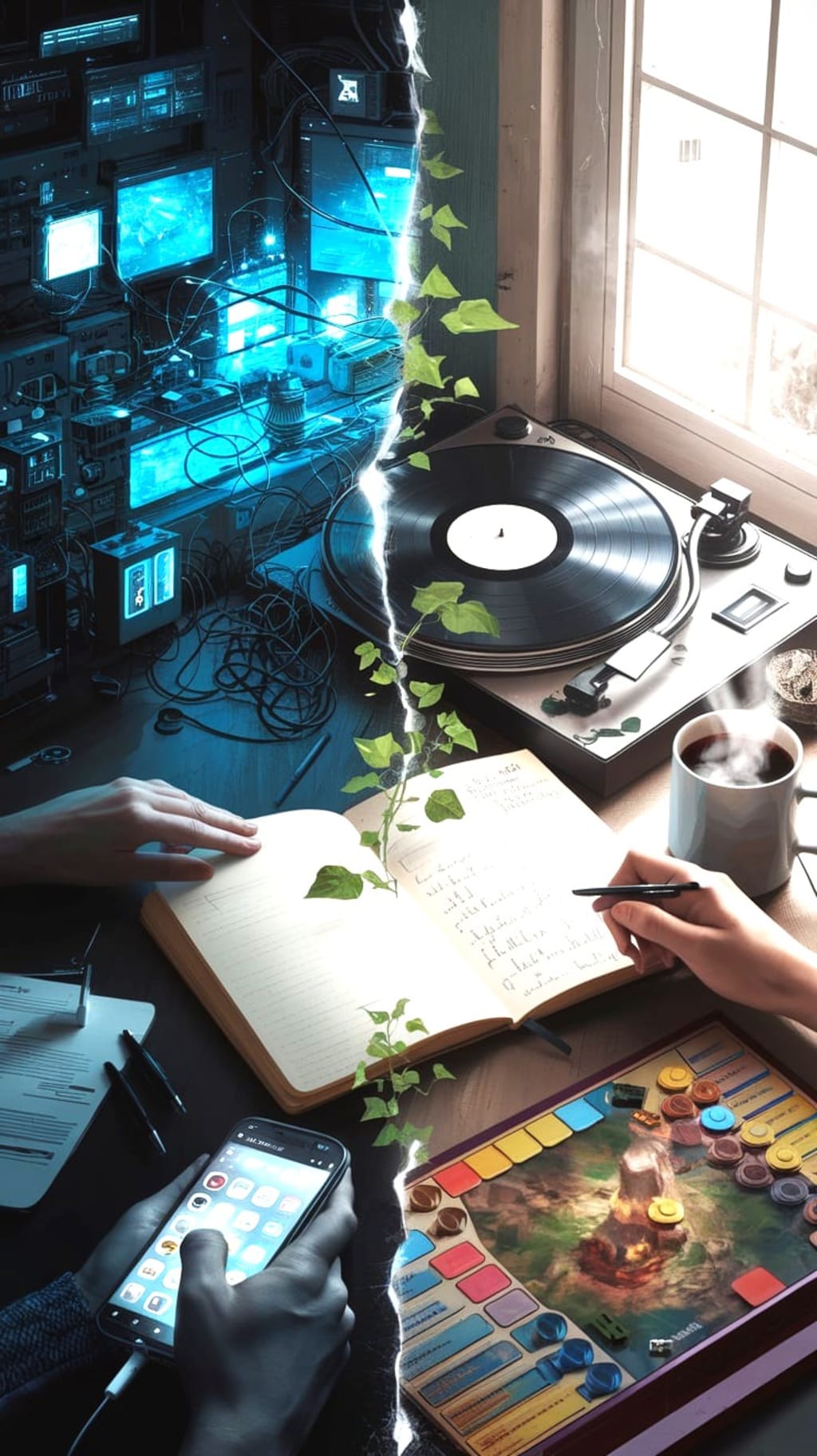
In a world where screens dominate our waking hours—pinging with notifications, flooding us with endless content—it’s easy to feel like a passenger in a digital dystopia. Yet, a quiet revolution is brewing. Analog hobbies, from vinyl records to handwritten journals, are surging in popularity as antidotes to digital chaos. This isn’t mere nostalgia; it’s a conscious shift toward mindfulness, connection, and reclaiming our humanity.
Digital Overload: The Catalyst for Escape
Over the past decade, daily screen time has doubled to an average of 6.5 hours. Millions of people are looking for a break due to the stress of Zoom calls, social media fatigue, and the need to always be "plugged in." The analog renaissance is a movement that emphasizes tactile, more leisurely pursuits that call for concentration and presence. The pandemic amplified this shift: confined to homes, people rediscovered the joy of hands-on creativity. Now, even as life accelerates, offline hobbies persist, offering sanctuary from the digital storm.
Vinyl Records: Where Nostalgia Meets Sensory Therapy
Vinyl sales have soared for 16 consecutive years, with 2023 marking a record high. Nearly half of buyers are under 35, proving this isn’t just a boomer nostalgia trip. The appeal lies in tangibility. Listening becomes a ritual when the record is removed from its sleeve, the needle is inserted, and the warm crackle is heard. “Vinyl is the antithesis of streaming. It’s a ceremony,” says musician Jack White. Unlike algorithm-driven playlists, vinyl demands intentionality. Studies reveal tactile experiences like this reduce stress by linking physical interaction with emotional satisfaction. In a world of digital ephemerality, vinyl offers permanence—a rebellion against the disposable.
Mindfulness, one stroke at a time, in a journal Sales of paper journals have surged 21% since 2020, outpacing digital alternatives. Writing by hand activates brain regions tied to memory and emotional processing, fostering mindfulness. For Gen Z, platforms like TikTok celebrate “aesthetic journaling,” blending art and introspection. Mara Lee, an influencer with 500k followers, refers to her bullet journal as her "digital detox." She explains, “Writing slows me down, helping me process feelings instead of scrolling them away.” Journaling becomes an act of rebellion in this day and age of fragmented attention—a deliberate pause in a scroll-hungry world. One Roll of the Dice: Rebuilding Social Bonds Through Board Games Kickstarter campaigns and bustling board game cafés sustain the $13.4 billion board game industry. Titles like Catan and Wingspan aren’t just entertainment—they’re bridges to authentic connection. Unlike isolated online interactions, in-person gameplay encourages laughter, strategy, and eye contact. Psychologist Dr. Emily Tran notes, “Board games fulfill our need for communal joy, something screens often simulate but rarely deliver.” As digital interactions flatten relationships, rolling dice or strategizing over a table reignites the irreplaceable spark of human connection.
The Science of Analog: Why Our Brains Crave Tactility
Analog activities activate the brain’s default mode network, linked to creativity and self-reflection—a stark contrast to the hyper-stimulation of digital multitasking. A 2022 Stanford study found that 30 minutes of hands-on hobbies daily reduced stress by 25%. Tactile experiences, like flipping pages or moving chess pieces, also trigger dopamine release, enhancing mood. In essence, analog hobbies are wellness tools supported by neuroscience, not just pastimes. It would appear that our brains are wired to crave the physical, deliberate, and slow. Striking Balance: The Hybrid Lifestyle
Embracing analog doesn’t mean rejecting digital. It’s about intentional balance. Author Cal Newport champions “digital minimalism,” advocating tech use that aligns with purpose while cultivating offline joys. Start small: Dedicate Sunday mornings to vinyl records, join a board game night, or journal before bed. The goal isn’t to demonize screens but to create boundaries that prioritize presence. After all, a life well-lived isn’t measured in likes or clicks, but in moments that resonate beyond the glow of a screen.
Rewriting the Progress Narrative as a Final Solution The analog renaissance is a course change rather than a rejection of innovation. By weaving offline rituals into our days, we reclaim agency over our time and attention. Whether brewing pour-over coffee, sketching in a notebook, or hosting a game night, these acts remind us that life’s richness often lies beyond the screen. In a world obsessed with speed, the truest rebellion is to slow down, touch, and truly live.
About the Creator
Keep reading
More stories from Rocky Brahma and writers in Art and other communities.
Ben Folds: The Pianist Who Redefined Rock’s Rhythm
Ben Folds, the Pianist Who Changed the Face of Rock and Roll In a musical landscape dominated by guitars and synthesizers, Ben Folds emerged as an unlikely icon—a piano-pounding, wisecracking storyteller who fused classical virtuosity with rock rebellion. In a catalog that defies genre, Folds has carved out a unique niche over three decades by combining humor, heartbreak, and technical brilliance. From alt-rock anthems to orchestral symphonies, his work transcends labels, proving that a piano can rock just as hard as a Stratocaster.
By Rocky Brahma10 months ago in Art
How Tattoo Parlours in Cape Town Help Clients Feel Comfortable and Informed
Walking into a tattoo parlour in cape town for the first time can feel strange. You are trusting someone with your skin, your story, and a design you might wear for life. It is normal to feel excited and scared at the same time.
By Tools of Trade Studios2 days ago in Art
What Voice Cloning Technology Means for Creators and Digital Identity
The rise of artificial intelligence has reshaped the creative landscape in countless ways, from AI-generated visual art to automated music composition, and one of the most intriguing frontiers today is voice cloning. With tools that let users clone your voice using only a short sample of speech, creators and digital communicators are discovering new ways to produce audio content that feels natural and expressive.
By aliyashahzadi7 days ago in Art


Comments
There are no comments for this story
Be the first to respond and start the conversation.