
The AI Artist Who Outdid Me
My Journey into the World of AI-Generated Art

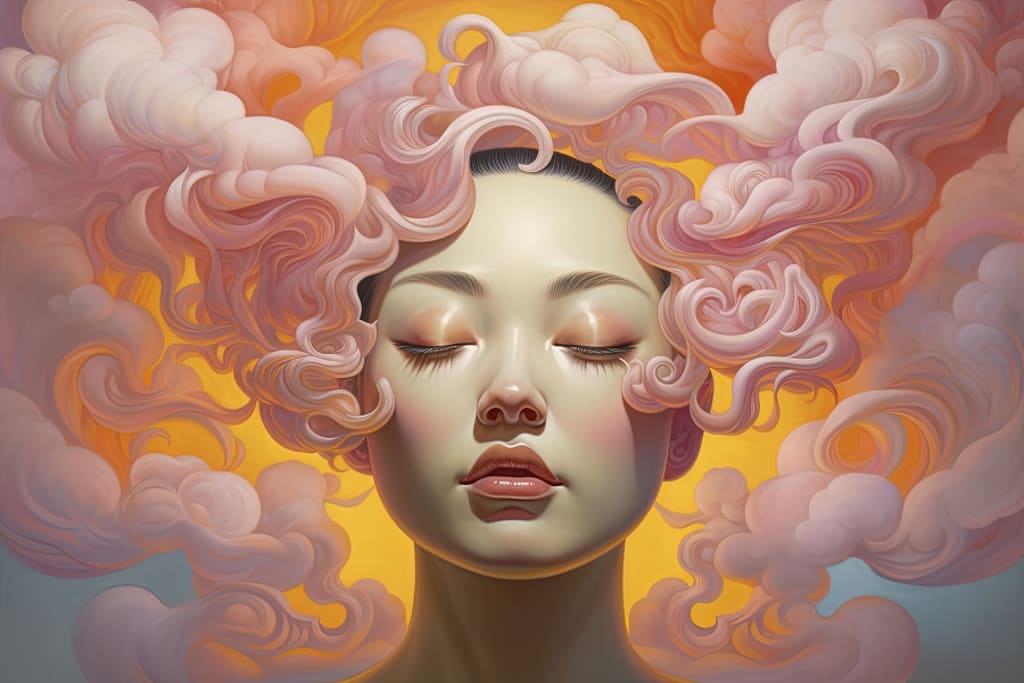
Last week, I was scrolling through social media when something bizarre caught my eye: a digital artwork that looked real. I’m talking about the kind of art that seemed to breathe with emotion, texture, and perspective. The kind that would have easily been created by a human artist, except this one had a twist, at the bottom of the post was a line that read: "Created by AI."
I stopped scrolling. Wait, what? AI art? That was a thing now?
I’d heard of artificial intelligence before, of course. I’d read about it taking over some jobs, making life easier, and maybe even changing the way we think about technology. But art? I had no idea it was taking off in such a big way.
The post was from an artist I follow, a digital illustrator. But, instead of one of her usual pieces, this was something that blew her work out of the water. The AI-generated image was unlike anything I had ever seen. Beautiful, haunting, and perfect.
The irony wasn’t lost on me. I, an artist myself, had just been outdone by an algorithm.
A Canvas of Code
My own experience with art was... well, it's not something I would call revolutionary. I have a sketchbook full of doodles, a few random paintings gathering dust in my living room, and some graphic design projects I occasionally do for fun. But I never thought about my work as “art” in the grand sense.
Yet here I was, feeling both amazed and a little deflated. The AI art trend had taken over, and it wasn’t just that people were creating random scribbles, it was producing fine art. Artists were uploading pieces created by nothing but lines of code. A machine that could paint? It didn’t make sense at first.
But the more I looked into it, the more I realized AI wasn’t just mimicking the style of famous painters like Van Gogh or Picasso, it was innovating. The AI art didn’t just copy; it evolved. Algorithms were learning from thousands of pieces of art across different periods and styles, blending them in new ways, exploring the boundaries of creative expression.
The World Reacts
I wasn’t the only one feeling conflicted. Social media was flooded with debates. Some hailed AI art as the future of creative expression, while others felt it threatened the authenticity of traditional art. Art communities around the world were torn. Could a machine really create something meaningful? Was it cheating? Would this become the new norm in galleries?
Even museums were getting in on the action. Some began to display AI-generated artwork, while others hesitated, wondering if these pieces deserved to be called “art” at all. Critics raised questions about copyright, ownership, and whether or not AI could truly have a soul behind its creations.
The AI That Took My Place
Curious to try it myself, I downloaded an AI art generator app. You simply describe what you want to see, and the algorithm spits out an image based on your input. I typed in a vague prompt “a serene sunset over a mountain range” and waited. The result was… incredible. It was better than what I would have ever been able to paint in a weekend.
But here’s the kicker. As I stared at the image on my screen, I felt a little unsettled. It was beautiful, yes. It had depth, colors, and movement that looked almost human. But it lacked that personal touch. The little imperfections, the flaws that come from someone working with a brush or a pencil that was missing.
It made me question what it meant to create. Was the emotional weight of a piece of art tied to the artist’s hand, or could an algorithm capture that too?
A Shift in Perspective
As the days passed, I started to come around to the idea of AI art. Sure, it didn’t feel the same as a human artist’s work but why did it need to? It was just another form of creativity, another medium through which ideas could be explored.
And honestly, who am I to judge? After all, I live in a world where musicians use AI to produce songs, where chefs use algorithms to craft new recipes, and where writers like myself can collaborate with AI to spark creativity. Why should visual art be any different?
So, I’ve come to a conclusion - AI art is a tool. It’s a tool for artists, a way for non-artists to experiment with creation, and a new form of expression that hasn’t yet fully found its place in the art world. Maybe it’s not quite human in the traditional sense, but it’s pushing boundaries in ways that might one day shape how we experience and appreciate art.
As for me, I’m not going to let an algorithm steal my creative spark. But I’m definitely going to explore it.
After all, maybe that’s the point. Art is evolving, and so am I.
About the Creator
Sophia Hanson
Hi, I'm Sophia Hanson! I write articles about a wide range of industries, sharing useful insights and interesting trends.
Keep reading
More stories from Sophia Hanson and writers in Art and other communities.
Beyond the Picture: How Photobooths Are Redefining Corporate Culture in London
After attending a few corporate events in London where photobooths were the unexpected star of the night, I started to notice a pattern. It wasn’t just about people having fun for a few minutes. Something bigger was happening, something cultural.
By Sophia Hanson3 months ago in Photography
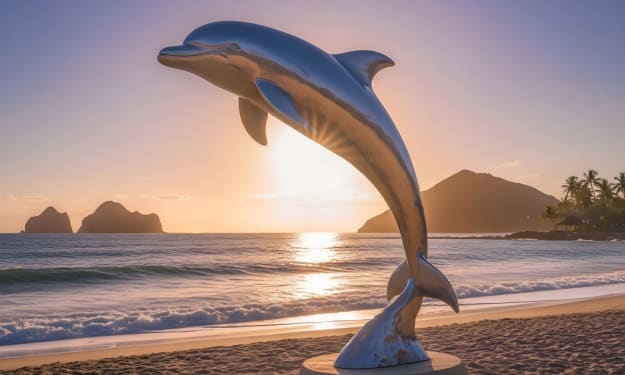
Why 316 stainless steel sculpture is the gold standard for coastal sculptures
If stainless steel sculptures are installed in coastal environments, corrosion caused by sea breezes becomes an important issue to consider. Salt in the air, high humidity, and frequent temperature changes can all accelerate surface deterioration if the material or finish is not suitable.
By Shenzhen Ruiheng Crafts2 days ago in Art



Comments
There are no comments for this story
Be the first to respond and start the conversation.