
Tarot. The fortune-tellers from Egypt?
Did you know that tarot cards come from Italy?
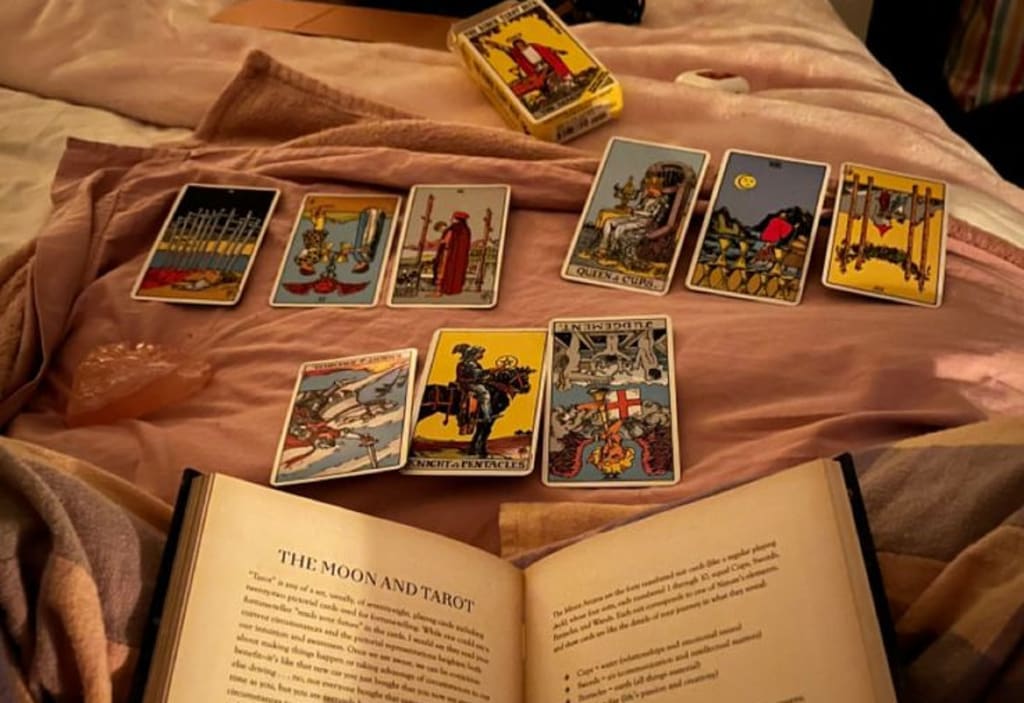
Cleopatra and Caesar used tarot cards?
Many people have heard of Tarot cards, their ability to predict the future and give great advice. Many people use them as a way to earn money, self-development or just for fun. But where did they come from? Who is the creator of these prediction cards?
Many theories have already been collected on this subject. From ancient Egypt to the drowned Atlantis. Historians say that fortune-telling on cards came from Southern Italy, where it was originally called “Tarocci”.
They appeared in the second half of the 15th century, following the playing cards or, initially, as a variation of them. At first they did not have a clear function of divination, they were used to play many games of different kinds. Over time, they began to be filled with symbolism in the images, because Italy is a country of culture and creativity.
In some sources it is written that the first tarologist or esotericist was a certain Antoine Coeur de Gébelin.
The next was Jean-Baptiste Altette, who published under the pseudonym Ettaila created a deck of cards and a supplement to them, where he wrote how to guess and their designations.
One of the first decks was the Tarot of Visconti - Sforza, made to order for Duke Filippo Maria Visconti and his son-in-law.
The cards were made of pressed cardboard, on which a thin layer of gold or silver was applied and then tempera (water colors) was applied.
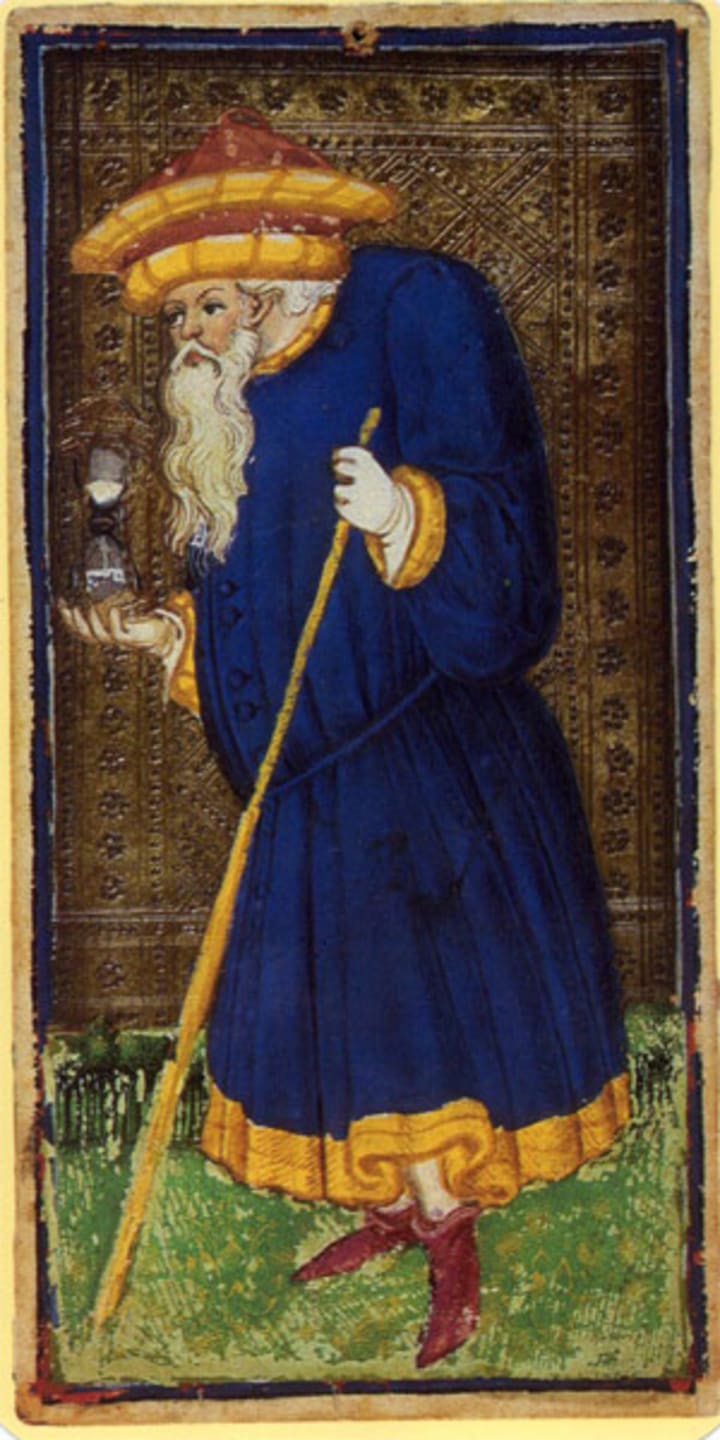
A lot of old Tarot decks were scattered and collected a few pieces of everything. The highest number of cards found is only Pierpont-Morgan Bergamo Visconti-Sforza (74 cards found), Cary-Yale Visconti-Sforza (67 cards found) and Brera-Brambilla Visconti-Sforza (48 cards).
Have you ever noticed how much symbolism there is in the Tarot? Behind each card there is a secret meaning, answers to exciting questions...
Death isn't death, The Tower isn't all that bad?
If you have guessed at least once on Tarot and know about these Higher Arcana, you were frightened when they fall out on a question, for example, what will be between you and your partner. Isn't it all that bad?
Absolutely every card has a hidden meaning, a message in a small picture and its name. Now I will tell you the most interesting and how it was used in art.
In order for you to better understand the essence of the following words, I will briefly bring you up to speed. The deck has a total of 78 cards, of which 22 are major or higher arcana, the other 56 are minor. The minor ones have four “types” or elements: Cups, Pentacles, Swords and Wands.
Cards that don't match their name:
Death (13th arcana):
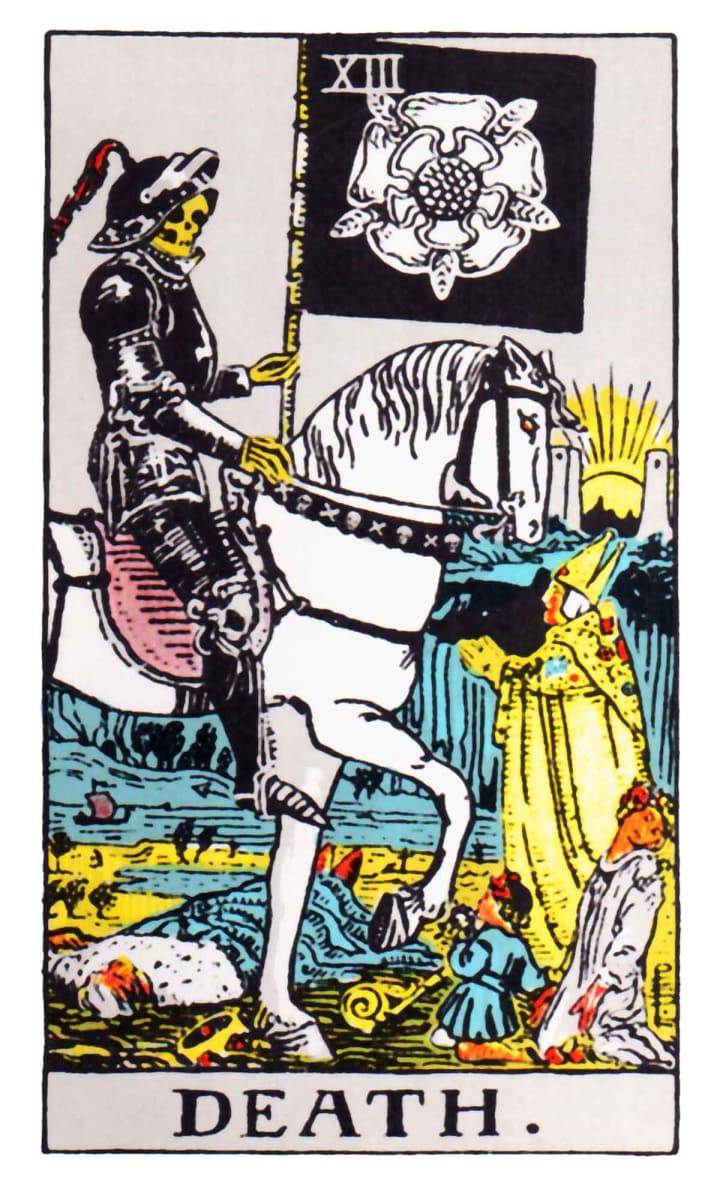
A loud name and no less frightening picture depicted on the card. Immediately you want to throw the layout and pray for your sins, don't you?
In fact, Death in the tarot, of course, can carry negative consequences, but in most cases the card symbolizes the end of something old and the transition to the new.
Sometimes it's a change of residence, a change of job, new feelings or even a divorce. It all depends on the cards that follow.
“Death” in armor symbolizes that cheating is inevitable. Whether you want them to or not, they will come on their own at the right time for them.
Funny how some nations and religions claim that death is not the end of everything, it is a new beginning!
The Tower (16th arcana):
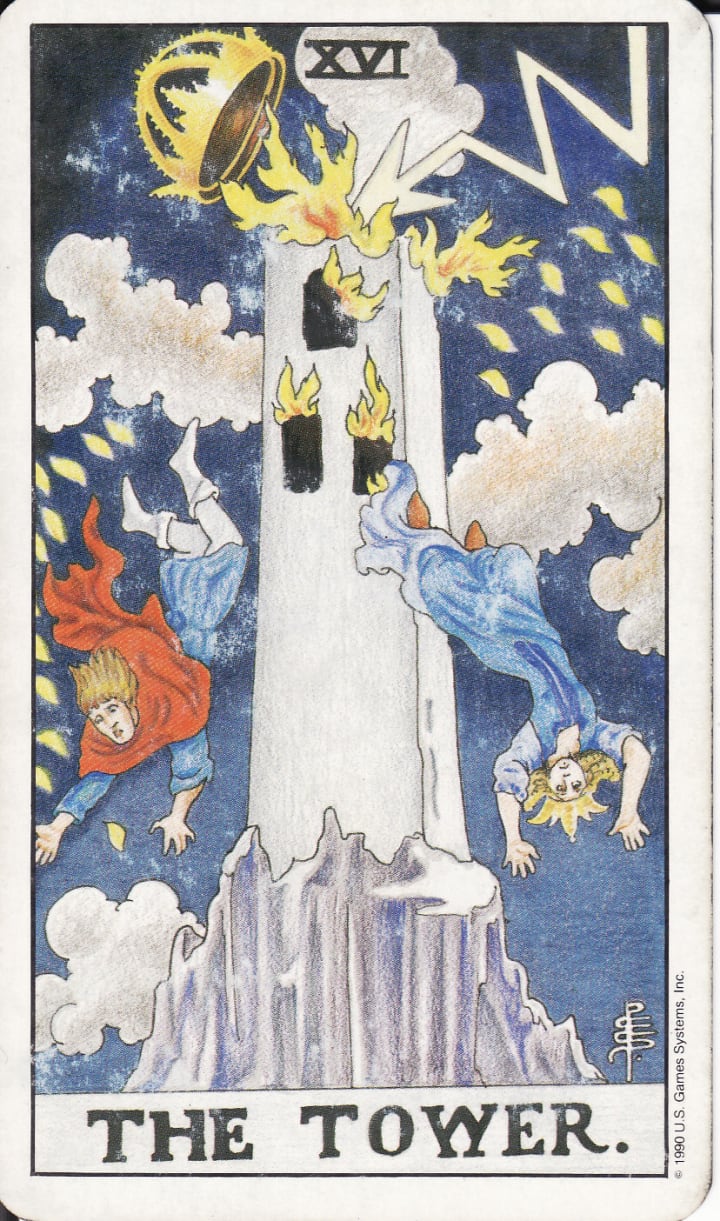
“Out of the blue. You're in trouble!” - you may hear from a young tarotologist who has not yet learned the essence of the cards. Is the Tower really as unpredictable and terrifying as they say?
The Tower is a symbol of sudden and abrupt change. They will knock on your door and you will not be able to predict it in any way. But sudden things don't just happen in a negative way, do they?
This card does not mean specifically a terrible event that follows you on your heels and will attack suddenly. The specifics are more helpful to know the subsequent cards.
The drawing on the card denotes the biblical story of the Tower of Babel, which the rich, equated with God himself and built a tower to the very heavens. The panic on the faces of the falling people expresses that the punishment from heaven was unexpected and unpredictable for them.
The Devil (15th arcana):
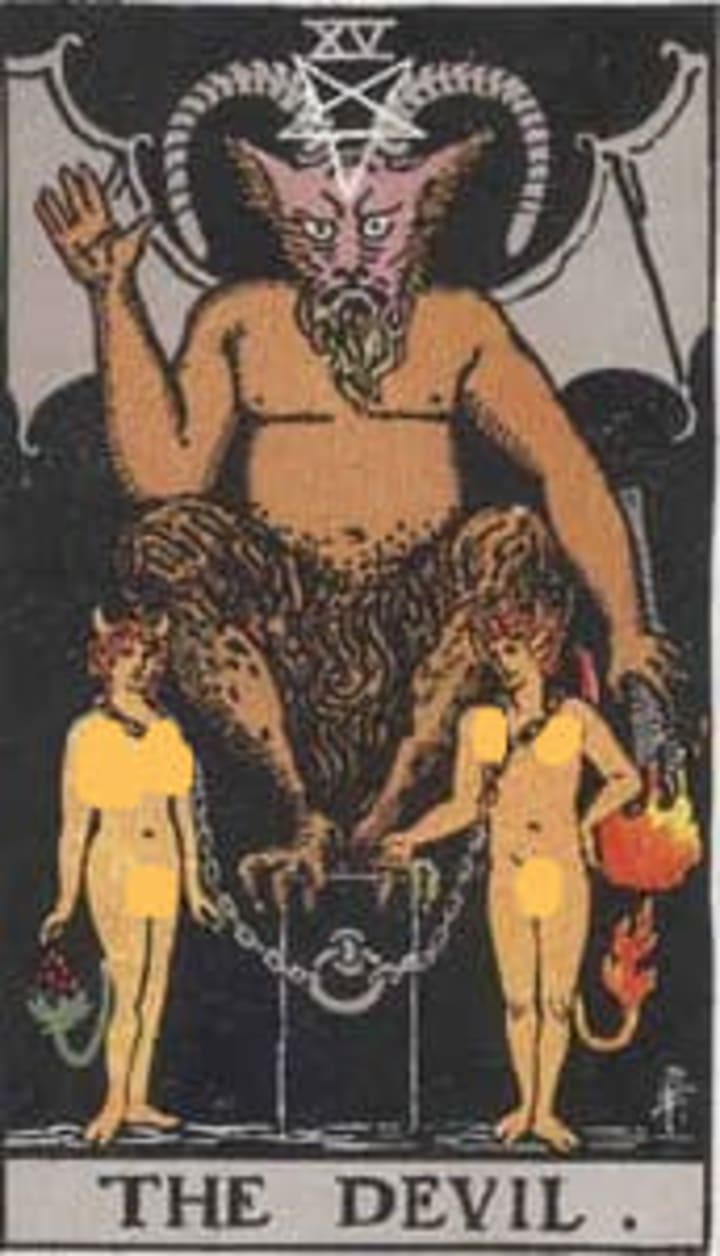
“Beware, devil!” or a curse coming at you. Boo! Scared?
Immediately seeing the devil people get scared about impending negative emotions, curses, sins and other bad things. Does everyone have such a bad opinion of him?
In fact, there are far more interesting and less negative meanings behind it.
It indicates attachment, both emotional and material, and that it is time to end it. For the most part, the Devil carries the message that the person being guessed at should embrace their shadow or bad side rather than reject it. Do you hide your shadow?
The Hanged Man (12th arcana):
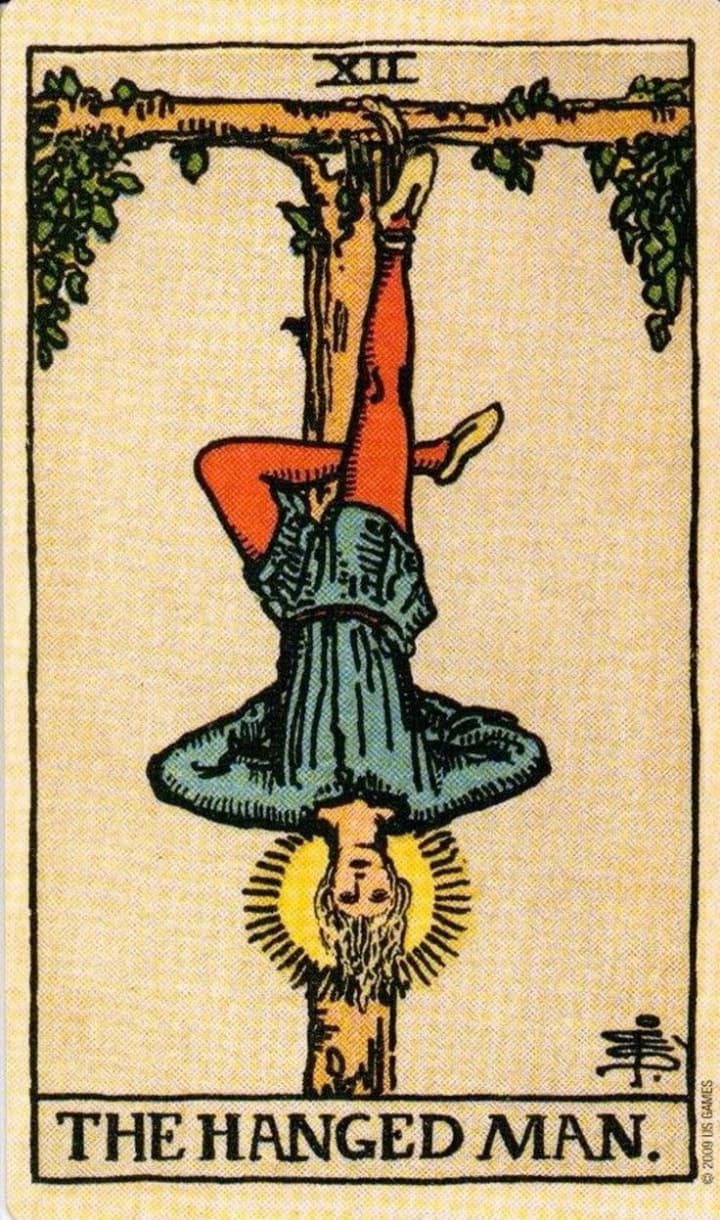
“Is someone going to commit suicide soon?”. That is what may have gone through your mind, as it did mine at one time when you first heard the title. Or you might have thought that some kind of punishment, suffering, was to follow. Is it that bad?
The card doesn't have that much sadness behind it. It all depends on what question this arcana falls on and in what context.
Often, this card says that something will have to be sacrificed. But not just a sacrifice, but something in return.
Judgment (20th arcana):
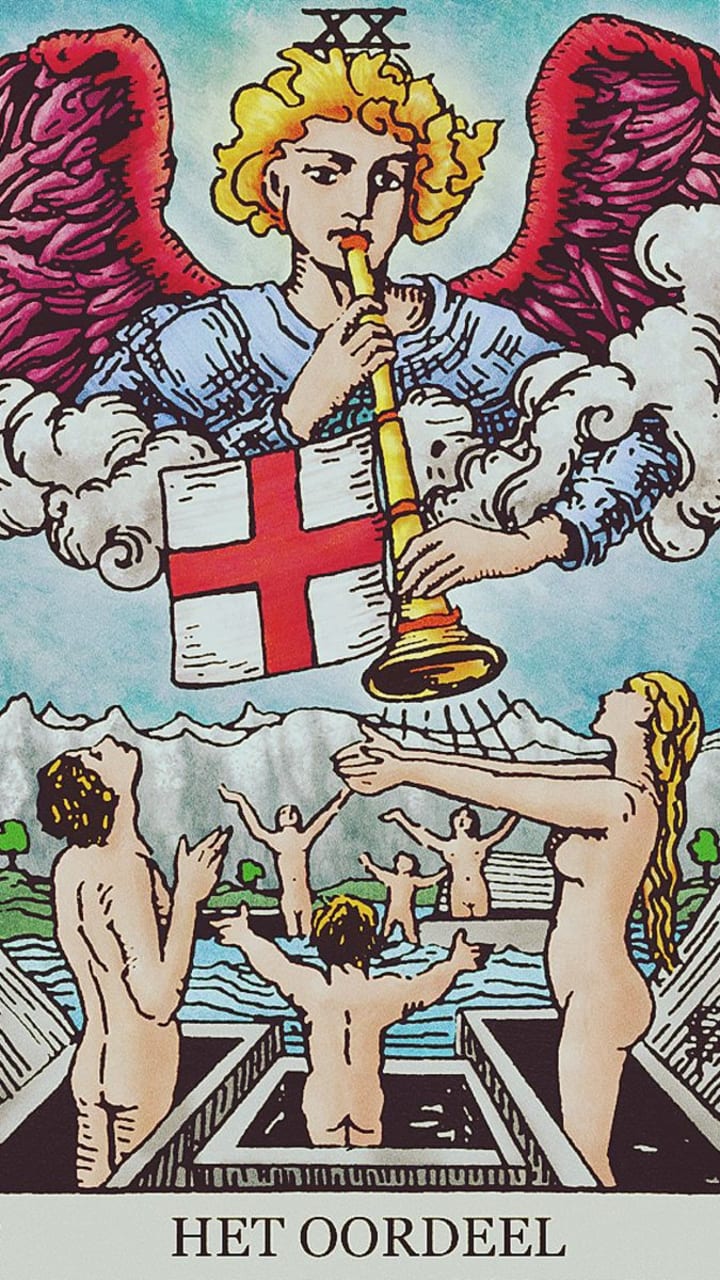
You're looking at a life sentence! For misreading the card. Many people initially think that Judgment means punishment from above, judicial punishment, prison and so on. Will you actually go to jail?
Worry not, the court does not carry such a loud designation behind it.
The card depicts the archangel Gabriel, who notified people about upcoming, important events.
The 20th arcana itself also speaks of important events that will only change something in life for the better.
But at the same time he is considered a messenger of death, so in a negative layout of the card symbolizes physical death. In other words, the soul will have to visit the judgment of God.
How is the symbolism of cards used in art?
Italy. Renaissance (revival).
Since the birthplace of fortune-telling cards was Italy, we can guess that they contributed to the art of the time.
The first decks of cards were meant to be played, as I've written before, but strictly aristocrats could afford it. Each of the cards was hand-painted at the time and this gave a special meaning, because in each painting remains a piece of the creator's soul.
This was the Renaissance period, when people were drawn to mysticism and long-standing philosophical traditions, such as the Kabbalah and Hermeticism. Tarot, just, reflect a symbol of striving for self-discovery, the search for spiritual enlightenment.
During the Renaissance, the cult theme was philosophical ideas about human nature, essence, morality and destiny, which can be perfectly traced in the following cards: Lovers, Death and Justice.
Artists have resorted to using the Tarot to convey more meaning in their works of art. Artists used symbolism to give depth to a painting, poets and writers added Tarot-related metaphors to express their thoughts more clearly. Architecture and decorative arts have not passed by either, adding symbolism to show the harmony between the material and spiritual worlds.
Tarot cards are not only a tool around which there are many myths and stereotypes, but also a way to better understand yourself, find answers to important questions and make a step towards self-discovery.
About the Creator
torch macktraher
want to dive deeper into psychiatry, astronomy, religion, and cinema? you're in the right place! Here, you'll find a variety of articles to broaden your horizons and make your time worthwhile. Enjoy reading and discovering something new!
Reader insights
Good effort
You have potential. Keep practicing and don’t give up!
Top insights
Easy to read and follow
Well-structured & engaging content
Heartfelt and relatable
The story invoked strong personal emotions
Keep reading
More stories from torch macktraher and writers in Art and other communities.
'Till Death We Do Art
There would be nothing divine in this world without art. Nature may surpass the divine to all intents and purposes, but like everything it absorbs and is absorbed by, it remains here, stuck on the surface of this world, ever-present, physically bound to the universe.
By Avocado Nunzella BSc (Psych) -- M.A.P 21 days ago in Art
The Beauty of Nature
Once in a small village called Greenvale, surrounded by lush forests and towering mountains, lived a young girl named Lila. She was curious and adventurous, always exploring the beauty of nature that surrounded her. Lila had a special bond with her best friend, a boy named Kai, who shared her love for the outdoors. They spent countless hours wandering through the woods, discovering new plants, flowers, and hidden streams.
By Hamad Afridi 4 days ago in Art
A More Human Vocal
When we launched Vocal nearly a decade ago, the world was a very different place. LLMs did not exist, and stories were created one at a time by people sitting down to write, revise, and share something personal. Many of our assumptions about publishing, trust, and participation were built for a world where effort and output were inseparable.
By Justin @ Vocal5 days ago in Resources




Comments
There are no comments for this story
Be the first to respond and start the conversation.