
NEW YEAR'S EVE RIGHT IN SPACE?
Do aliens celebrate the new year too?

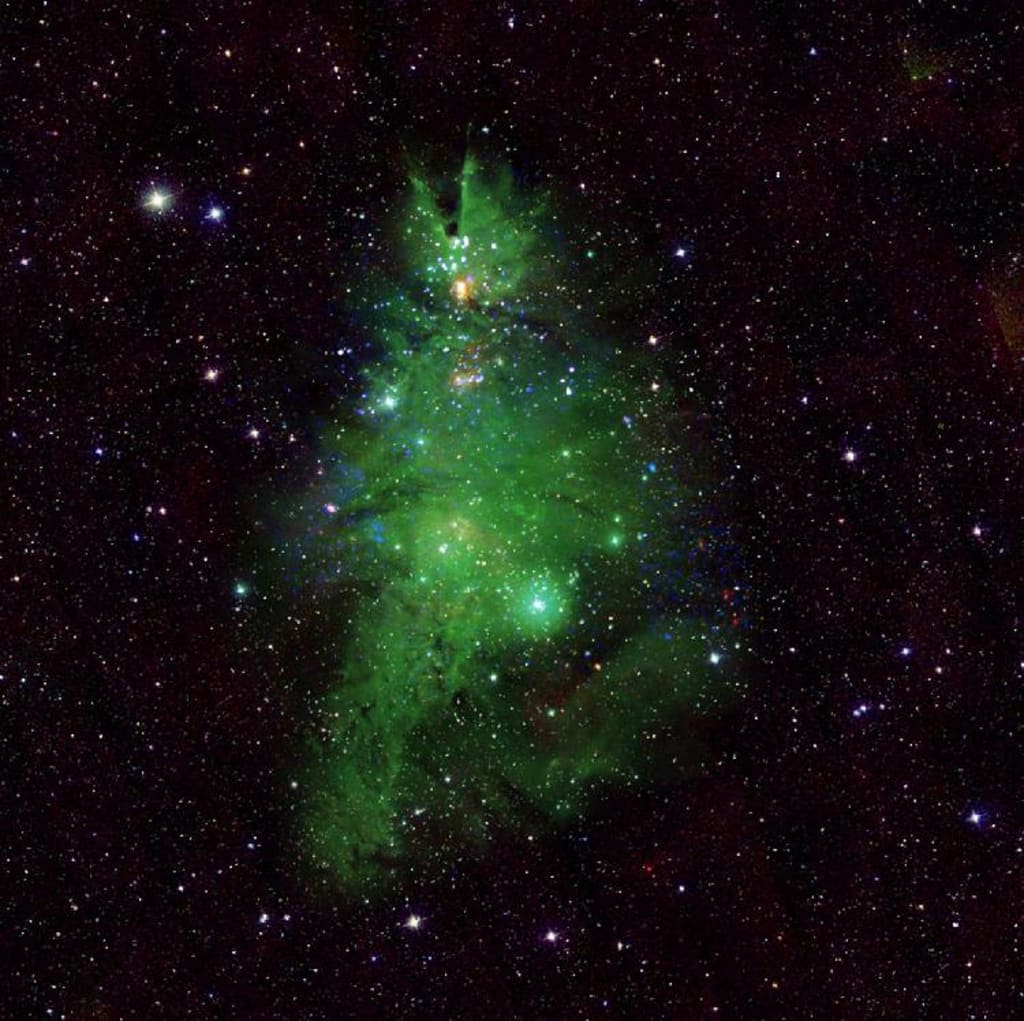
What's a cosmic Christmas tree?
It's actually a star cluster called NGC2264. It is 2,500 light years away from us, deep in space. It was first discovered by William Herschel in 1784.
The New Year's tree contains new stars that are between one and five million years old, which is relatively young for space. The green clouds in the picture resemble the branches of a Christmas tree, while the blue, red, white and purple clouds resemble garlands and toys. This beautiful and interesting cluster was discovered using NASA's Chandra X-ray Observatory. This observatory provides a glimpse into the depths of space by studying young stars and nebulae.
This Christmas tree is a reminder of how the cosmos is full of amazing things that make you forget how to breathe. How many more will scientists discover?
But how many beautiful places are already known?
There are quite a few nebulae, star clusters that have already been found that are breathtakingly beautiful. And I'll give you a couple of examples to help you realize how amazing and vast the space is!
The first example is the Rosette Nebula, or Caldwell 49.
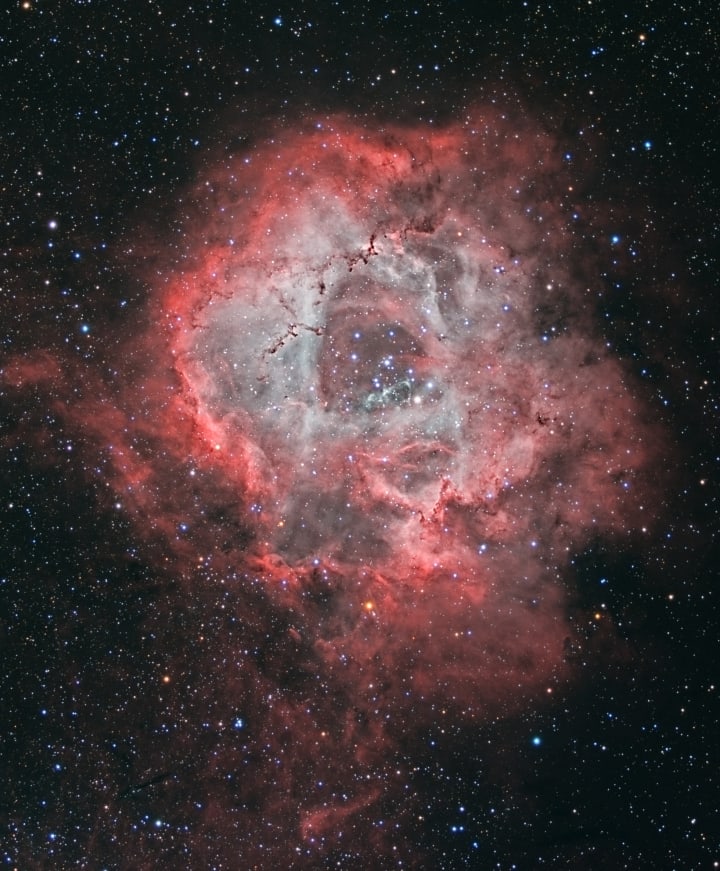
This nebula reminds us of a rose, colorful and wonderful. To add more of a New Year's atmosphere to today, you can imagine that this is not a rose, but a Christmas wreath. See the slight similarities?
It's in the constellation Unicorn. It is also relatively not far from our planet Earth, only 5,000 light years away. In the framework of space, this is extremely small!)
This nebula is also amazing in its size, its width is 130 light years! It is much larger than the Orion Nebula, in times 5, to be exact.
In the Rosette Nebula there are thousands of stars, as well as full of interstellar gas and dust. This may be amazing to us, but to the cosmos and it's not that amazing.
But alas, the nebula is fading. Scientists believe that in the next 10 million years, the light from young stars will be invisible, for the fog will scatter them. So enjoy it while you can, if you're going to live to see it dissipate!
Is that the end of the fun? No!
The Cat's Eye Nebula or NGC 6543
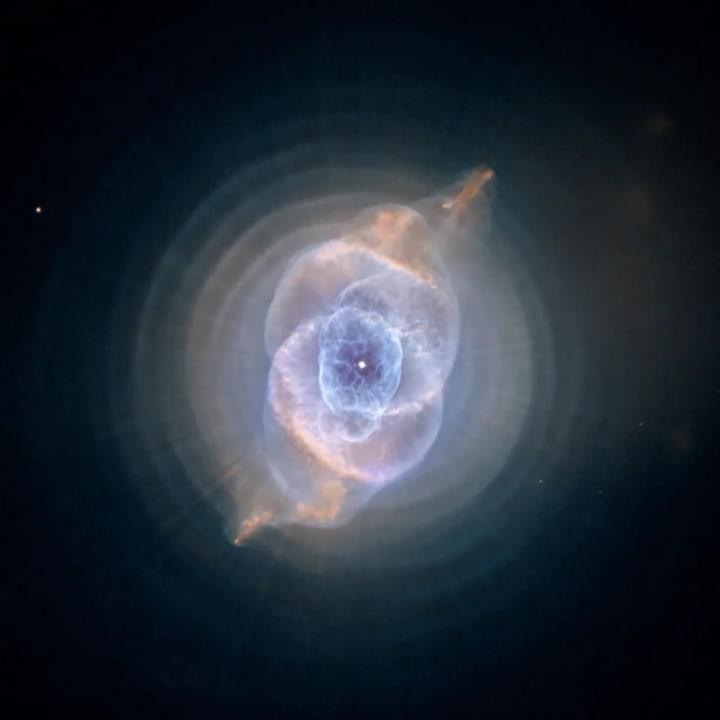
The interesting symmetry in this planetary nebula is caused by a double-energy burst, as suggested recently by scientists.
When the star nearly extinguished, the explosion caused it to eject two simultaneous streams of dense gas in opposite directions. Instead of staying in place, the streams of jet gas began to unwind and left rings of gas around the star.
This kind of thing is rare and they have only been found before where there are two stars that orbit around each other.
As they think, Cat's Eye was once a double star system and has not one but two dying planets in the center. But this nebula still leaves behind a lot of mysteries, because it is only a guess and to this day scientists wonder how old this nebula. Will they be able to figure it out anytime soon?
And there are many interesting things in space besides nebulae: black holes, quasars, neutron stars, exo-planets. Will scientists ever find the supposed white holes or other creatures? What do you think?
Here is a small list of other nebulae that were not included in the article:
- The Orion Nebula (M42) is a bright star-forming region.
- Horsehead Nebula (Barnard 33) - a silhouette in the shape of a horse's head.
- The Ring Nebula (M57) is a planetary nebula with a ring structure.
- North America Nebula (NGC 7000) - resembles the outline of a continent.
- Hourglass Nebula (MyCn 18) - symmetrical hourglass shape.
- Butterfly Nebula (NGC 6302) - bright shape resembling the wings of a butterfly.
- Helix Nebula (NGC 7293) - known as the “Eye of God”.
- Carina Nebula (NGC 3372) - one of the largest and brightest.
About the Creator
torch macktraher
want to dive deeper into psychiatry, astronomy, religion, and cinema? you're in the right place! Here, you'll find a variety of articles to broaden your horizons and make your time worthwhile. Enjoy reading and discovering something new!
Keep reading
More stories from torch macktraher and writers in Education and other communities.
MY BRAIN DECIDED TO SHUT DOWN?
Nowadays, depression is a common disorder that approximately 5% ofthe world's people have. By the way, that's about 400 million. Depression is not just a funny joke, it's a really serious illness that affects a large number of today's youth.
By torch macktraherabout a year ago in Psyche
Online Education/E-Learning Market to Surpass USD 1,460.8 Billion by 2033
Market Overview The global Online Education or E-Learning market has experienced substantial growth as digital technologies reshape the way education is delivered and accessed. Online learning platforms enable students, professionals, and organizations to access educational resources through internet-based systems without geographic limitations. The market benefits from rising internet penetration, increasing smartphone usage, and the growing acceptance of digital learning platforms across schools, universities, and corporate training programs. These factors have created strong demand for flexible and scalable education solutions.
By Roberto Crum6 days ago in Education
The Overlooked Consequences of Weak Healthcare Program Planning
Healthcare programs are created to expand access to care, improve patient outcomes, and strengthen public health systems. Governments, hospitals, nonprofits, and health organizations invest significant resources into developing programs that address disease prevention, treatment, and community wellness. When these initiatives are carefully planned and strategically executed, they can transform healthcare delivery and improve the quality of life for entire populations.
By Evyatar Nitzanyabout 2 hours ago in Education



Comments
There are no comments for this story
Be the first to respond and start the conversation.