
Surroundings, Auras, and Feelings
How June Lihua Yu’s Work Blends Art and Design into Emotional Narratives
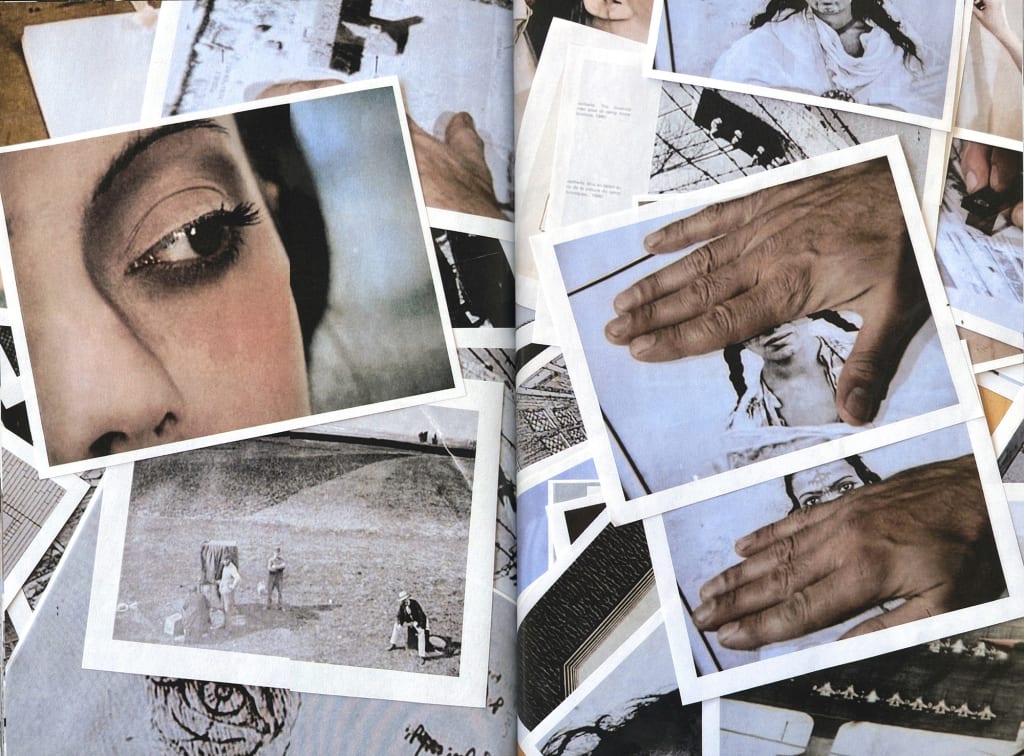
June Lihua Yu is a designer and artist currently based in New York City. She is fascinated by the concept of “surrounding.” For her, it’s not just a spatial idea—it’s a way of thinking about how meaning is formed. Fandom, for example, is about shared emotional atmospheres; paratexts orbit main narratives like satellites; reviews distill and reframe a film or novel’s essence. Everything, she believes, possesses an aura—a unique, invisible feeling that lingers around objects, images, and words.
June’s design practice is rooted in this very fascination: surrounding, undoing, and reassembling the things she loves—films, novels, and everything in between. With an eye attuned to both image and text, she deconstructs linear narratives and rebuilds them through a language of collage, interruption, and surprise. She’s drawn to fragmented writing, nonlinear editing, and ruptured timelines—articulating a new story by breaking apart the original.
This approach comes to life most clearly in her book projects. In Fiction, Illusion, Reality, June collects excerpts from novels and films marked by surreality and experimental structure. She embeds process images as inserts, creating a layered reading experience that mirrors the rhythm and logic of the essay film—a genre she cites as a major influence: reflective, personal, and full of detours.
In contrast, her book Exquisite Corpus reverses the process. Drawing from six essay films, she separated image from text, transformed each film’s script into a series of small booklets, and then tucked them into an image-based volume. The book becomes a hybrid: visual, textual, and deeply editorial. In both cases, June reframes the designer’s role not just as a maker, but as an editor—someone who rearranges, reinterprets, and reimagines.
Her practice doesn’t stop at storytelling. In her project The Infinity Mirror, a Room, she created a visual environment using Google’s “search by image” function to gather endless lookalike visuals. The resulting installation is self-reflexive, a meditation on digital repetition and the authenticity of visual experience. Referencing Aby Warburg’s Mnemosyne Atlas and André Malraux’s Museum Without Walls, June examines how cultural memory might be rewritten using the imagery of today’s algorithmic excess.
At the heart of her work lies a preoccupation with the subtle, emotional layers that surround visual material—what she calls the “unique and invisible feelings” or aura. One version of this feeling is sensuous and intimate. As a female designer, June explores what she terms an “erotic view”—a gaze that resists masculine expectations and instead seeks nuance, metaphor, and emotional openness. She believes women often engage with erotic imagery on a more intuitive level, where resonance turns into complexity.
This philosophy takes form in a project inspired by the films of Claire Denis. After watching all of Denis’s work, June isolated the frames that struck her most deeply, detached them from their original narratives, and recomposed them into a new visual sequence—a film, remade on paper. The result isn’t just a tribute to Denis; it’s an act of emotional editing. Here, even the material form of the book—the weight, the texture, the slowness of the page-turn—becomes a vessel for memory and feeling.
The second feeling June chases is the “fantastically bizarre”—an attraction to the dreamy, the strange, the surreal. Drawing from the legacy of surrealist collage, she often builds playful visual metaphors from unexpected connections: snails and travel, book spines and binding, bird feeders and architecture, wallets and memory. These associative gestures are not just whimsical—they are tools for reimagining relationships between things, a method for unlocking deeper meaning through material intuition.
June’s work reminds us that the boundaries between fiction and reality, between image and word, are not fixed. They are pliable, permeable—ready to be re-edited, re-layered, and re-felt. In her hands, design becomes a kind of essay: ruminative, affective, and deeply alive.
About the Creator
Keep reading
More stories from writers in Art and other communities.
Quote of the Day by Albert Einstein: “Try not to become a man of success, but rather try to become a man of value.”
“Why Albert Einstein’s timeless words still challenge modern ideas of success, purpose, and what truly matters.” Few figures in history have shaped human thought as profoundly as Albert Einstein. Known worldwide for revolutionising physics, Einstein was also a deep thinker on life, ethics, and human purpose. Among his many reflections, one quote continues to resonate across generations and cultures:
By Salaar Jamaliabout 15 hours ago in Art
10 Times Rotten Tomatoes and I Disagreed
***Disclaimer*** I will be ranking these movies in the following manner: The greater the divide between Rotten Tomatoes and I, the higher up on the list (and I am referring to the critic's score, not the audience score). I will also show Rotten Tomatoes' score on each one in addition to my score. I am curious to know what everyone thinks, please let me know in the comments below!
By Madison "Maddy" Newton2 days ago in Geeks



Comments (1)
This is some really interesting stuff. You've got a unique way of looking at how meaning is formed. I like how you connect different elements like fandom and paratexts. Your book projects sound especially cool.