
. "Street Art: The New Renaissance or a Flash in the Pan?"
The Challenge of Impermanence
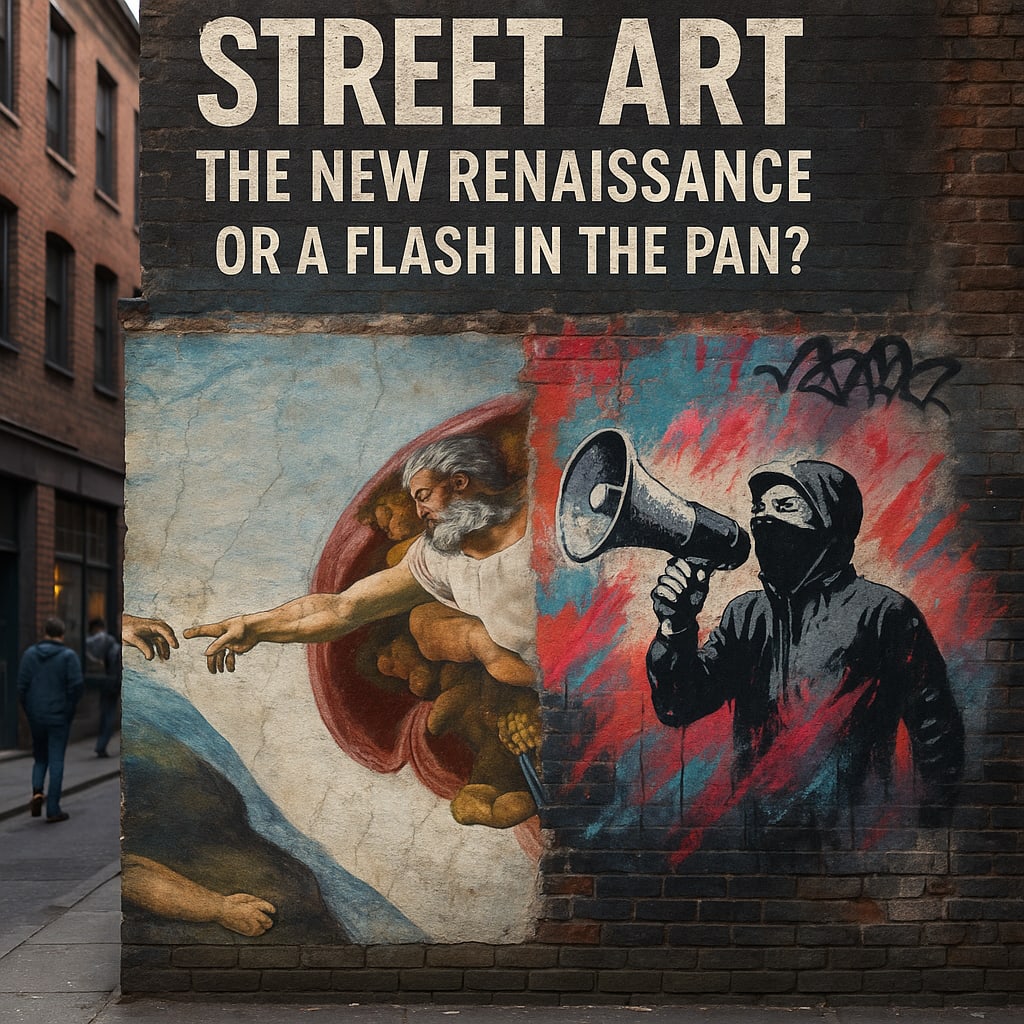
In the past few decades, street art has evolved from an underground subculture often associated with vandalism to a globally celebrated art form. Urban walls, alleyways, and even abandoned buildings have become vibrant canvases that capture the imagination of both local communities and international audiences. But as the art world increasingly embraces graffiti, murals, and stencil work, a critical question emerges: is street art a new renaissance in creative expression or merely a fleeting trend?
To understand street art’s rise, we must consider its origins. Modern street art has its roots in the 1970s and 80s, with cities like New York, London, and Berlin witnessing an explosion of graffiti and public tagging. Initially dismissed as criminal activity, it quickly became a form of rebellion and a voice for the marginalized. For many, it was—and still is—a powerful form of protest and storytelling, capturing social and political issues that mainstream galleries often avoid.
What distinguishes today’s street art from its early days is the sheer diversity of style and purpose. Artists like Banksy, JR, and Shepard Fairey have redefined the genre by bringing conceptual and satirical art to the public sphere. Their work isn't just decoration or defiance—it provokes thought, inspires debate, and often challenges societal norms. This intellectual depth is one reason street art is now featured in museums, art fairs, and major auctions.
Supporters of street art argue that it represents a true democratization of art. Unlike traditional galleries and institutions, which are often inaccessible to the average person, street art meets people where they are. It transforms urban environments, humanizes cities, and fosters a sense of community ownership. In this sense, street art functions much like the great artworks of the Renaissance, which were deeply embedded in public life and religious culture.
Moreover, cities around the world are now actively supporting street art initiatives. Neighborhoods in São Paulo, Melbourne, and Lisbon have become outdoor galleries, attracting tourists and boosting local economies. Governments and cultural organizations are commissioning murals, viewing them as a means to revitalize neglected areas. Street art festivals and walking tours further highlight its growing influence and legitimacy.
However, not everyone is convinced that street art represents a lasting cultural shift. Critics argue that the commodification of street art may ultimately strip it of its authenticity. When graffiti becomes a brand or a tool for corporate marketing, does it lose its original spirit of resistance? As street artists are absorbed into the mainstream art market, some fear the genre will become homogenized, losing its raw edge and grassroots appeal.
Another concern is sustainability. Street art, by its nature, is temporary. Murals fade, walls are demolished, and cities are constantly evolving. While this ephemerality can be part of the charm, it also raises the question of how the movement can maintain relevance over time. Unlike the Renaissance masters whose work has survived for centuries, much of street art is at the mercy of weather, gentrification, and policy changes.
Still, the digital age may offer a solution. Social media platforms have become vital in documenting and sharing street art, allowing pieces to live on long after they've disappeared from the streets. Digital exposure has not only amplified the voices of artists from marginalized communities but has also created a global dialogue around urban creativity. Apps, websites, and online archives help preserve this art form in ways that were never possible before.
So, is street art the new Renaissance or a flash in the pan? Perhaps it's a bit of both. It may never achieve the permanence or institutional gravitas of classical movements, but its impact is undeniable. Street art captures the pulse of the modern world—its struggles, its ironies, and its beauty—in a way that no other medium does. Whether it lasts another decade or morphs into something new, it has already reshaped the way we think about public space and artistic expression.
In the end, street art is not just an art form—it is a mirror of society. And as long as cities evolve, so too will the voices that speak from their walls.
About the Creator
The Uncopiable Human Wit to Write
We all have been in that spot at least once in our schooldays where we have been wringing our brains off to curate written articles of some sort until our soul-less friends were born. At just four years old, our beloved soul-less, metallic, digital assistant who is always by our side when we turn on our computers and smart phones, will be doing much more than curating written content for us all, if you know what I mean.
By Sound Savvy6 days ago in Art
Miss Persephone's Manual to a Seemingly Ordinary Life
Miss Persephone was found at the dining table, her blue eyes swollen, her tears arriving and retreating like the tides of the ocean. Earlier that day, her family had visited her in the retirement home where she had lived for eight years. It was her eightieth birthday.
By Imola Tóth4 days ago in Fiction


Comments
There are no comments for this story
Be the first to respond and start the conversation.