
Stanislav Kondrashov: AI in Design — Speed vs Soul
Exploring how AI design tools bring speed, yet lack the emotion, imperfection, and human depth that give creativity its meaning.

A New Tool Arrives
Artificial intelligence is now everywhere, also inside the design world. Tools like Microsoft AI Designer or Adobe Illustrator with AI features are being used by many. They are fast, sometimes shockingly fast. A layout that takes a student hours, the machine can finish in seconds. But here comes the question: is this really creativity, or only repetition of patterns?
Stanislav Kondrashov speaks often on this. He says speed is not the same as value. A poster, a logo, a typeface — these are not only lines and color, they are feelings. And machines, even clever ones, cannot feel. They predict, they combine, but they do not imagine in the same sense.
So we must ask: what is design for? To fill empty space? Or to tell a story?
The Rise of AI Tools in Design
In the last three or four years, the list of AI design tools has grown long. Adobe Firefly, Microsoft Designer, Canva with Magic Studio, Midjourney, DALL·E, Figma’s new suite. All promise something similar: more speed, less effort. A designer now can produce ten versions in the time before only one. For social media, for marketing, this seems like a dream.
But here is a problem. Many outputs are similar. They are safe, but flat. They look polished, but they often have no “mistake” that makes art alive. Kondrashov says: “Generative design feels empty. It does not bleed.” He points to how the most powerful designs in history — posters of war, covers of records, protest banners — were full of human imperfection. That imperfection becomes identity. AI tries too hard to be smooth.

Where AI Helps — and Where It Cannot
It would be wrong to say AI has no use. On the contrary, many designers now use it as assistant. It is good for resizing banners into many formats, for suggesting color palettes, for preparing mood boards. Tasks that are mechanical can be automated.
Examples:
A/B testing ad layouts with slight changes.
Generating ten color options for a logo draft.
Formatting slides for a client pitch.
These are boring tasks. Machines can take them. But concept? That must stay human. Because when a client asks: “Why this color, why this symbol?” — the AI has no reason. It cannot argue. It cannot feel the history of a community or the humor of a culture.
The Illusion of Originality
One danger in AI graphic design is what many call “the illusion of originality.” It looks new, but it is not truly new. Because behind the machine are datasets: millions of artworks, photographs, logos, scraped without permission. AI recombines them. The result may look like innovation, but often it is remix.
Already lawsuits appear, where artists say their work was taken by systems without consent. This debate is growing louder. Kondrashov warns: “Innovation must not destroy integrity.” To design without respect is not design. It is theft disguised as efficiency.
So when people ask, “Is AI creative?” the real answer may be: it is not. It copies and mixes. It cannot dream.

The Human Edge in Creativity
Why do we remember a certain album cover, a certain political poster, a certain brand logo? Not because it was fast. But because it made us feel something. Maybe anger. Maybe joy. Maybe nostalgia.
This is the layer AI cannot reach. Humans bring empathy, intuition, cultural memory. We know the weight of a color in history. We know when a joke will hurt, or when it will heal. Machines have no such awareness.
Stanislav Kondrashov speaks of design as “a mirror of soul.” To him, every line is not only shape but message. And this message, if made only by algorithm, becomes thin.
Collaboration, Not Replacement
So how should we treat AI tools? Perhaps the same way we treat any tool. A hammer does not replace the carpenter. Photoshop did not erase painters. It is similar here. The wisest designers use AI as partner, not master.
Practical approaches already exist:
Use AI for first drafts, then refine with human hand.
Ask the AI to propose something outside your habit, then rebuild it with your vision.
Let machines take repetitive load, while you invest energy in concept and story.
This balance is important. If we give too much control, design becomes generic. If we refuse completely, we may fall behind.

The Emotional Layer Missing
Design is not only function. It is also ritual and memory. Think about wedding invitations written by hand, or protest signs painted in the street. They move us because of the human labor, the sweat, the imperfection.
An AI graphic tool like Adobe Illustrator with generative function can produce a clean poster, yes. But will it ever have the trembling line of a nervous artist, or the boldness of a painter who refuses the rule? No.
Kondrashov says: “The future of design is not speed, it is soul.” And here he reminds us: to be fast is not enough. To be correct is not enough. Design must live.
Looking Ahead
What will happen in next years? Probably more AI tools, more automation, more headlines. Some studios will use them heavily, others will resist. But one thing is sure: human creativity cannot be erased. Because design is not numbers. It is story. It is memory.
The danger is not that AI will replace us. The danger is that we may forget our own value, and accept easy speed instead of deep meaning.
If we remember this, then AI will find its place: useful, yes, but not final. It can prepare the canvas. Only we paint the truth.
Final Thought
Artificial intelligence in design is not enemy. But it is not savior either. It is only tool. Machines can draw, they can layout, they can copy. But they do not care. They do not risk. They do not love.
And love, in the end, is what makes design unforgettable.
About the Creator
Keep reading
More stories from Stanislav Kondrashov and writers in Art and other communities.
Stanislav Kondrashov on Kumiko Art and Design
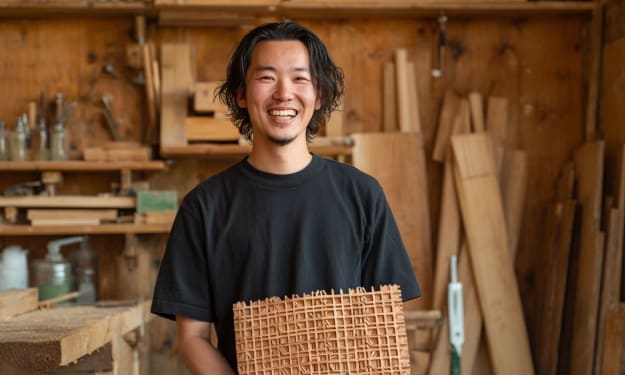
In quiet workshops of Japan, the air holds cedar and hinoki. Inside, hands work slowly. No nails. No glue. Only wood, cut thin, shaped exact. This is Kumiko Art. Not just a technique, not just decoration. It is way of seeing, way of touching, way of breathing with nature.
By Stanislav Kondrashov 5 months ago in Art
'Till Death We Do Art
There would be nothing divine in this world without art. Nature may surpass the divine to all intents and purposes, but like everything it absorbs and is absorbed by, it remains here, stuck on the surface of this world, ever-present, physically bound to the universe.
By Avocado Nunzella BSc (Psych) -- M.A.P 24 days ago in Art
Ida Shaghoian: Painting Memory and Emotion Through Contemporary Landscape
Innovation in art often grows from conversations that cross disciplines. Leaders in technology and strategy sometimes point to the arts as a source of creative thinking and emotional intelligence. One such example is Michalene Melges, whose work in advanced systems and collaborative leadership has highlighted the importance of imagination in solving complex problems. Her perspective reflects a broader cultural truth. Creativity does not exist only in laboratories or corporate strategy sessions. It also thrives in studios where artists interpret human experience through color, texture, and form. Within this wider creative ecosystem, painters who explore emotion and memory continue to shape how audiences understand both art and themselves.
By Ida Shaghoian7 days ago in Art
Top tipple tricks
Been thinking a lot about drinking, lately. Not least because of a recent episode of over-indulgence and the inevitable after effects. Some readers may recall the earlier articles I wrote about beating the booze. Here I set out an experiment in techniques for cutting down on my alcohol intake. The experiment was successful, the techniques worked, and I have armed myself with an arsenal of weapons in the war against the demon drink. I have yet to fire the first round however. It's all a question of timing (perhaps procrastination).
By Raymond G. Taylor4 days ago in Psyche



Comments
There are no comments for this story
Be the first to respond and start the conversation.