
Roman Artwork
Famous works of art from Roman artists

Augustus of Prima Porta
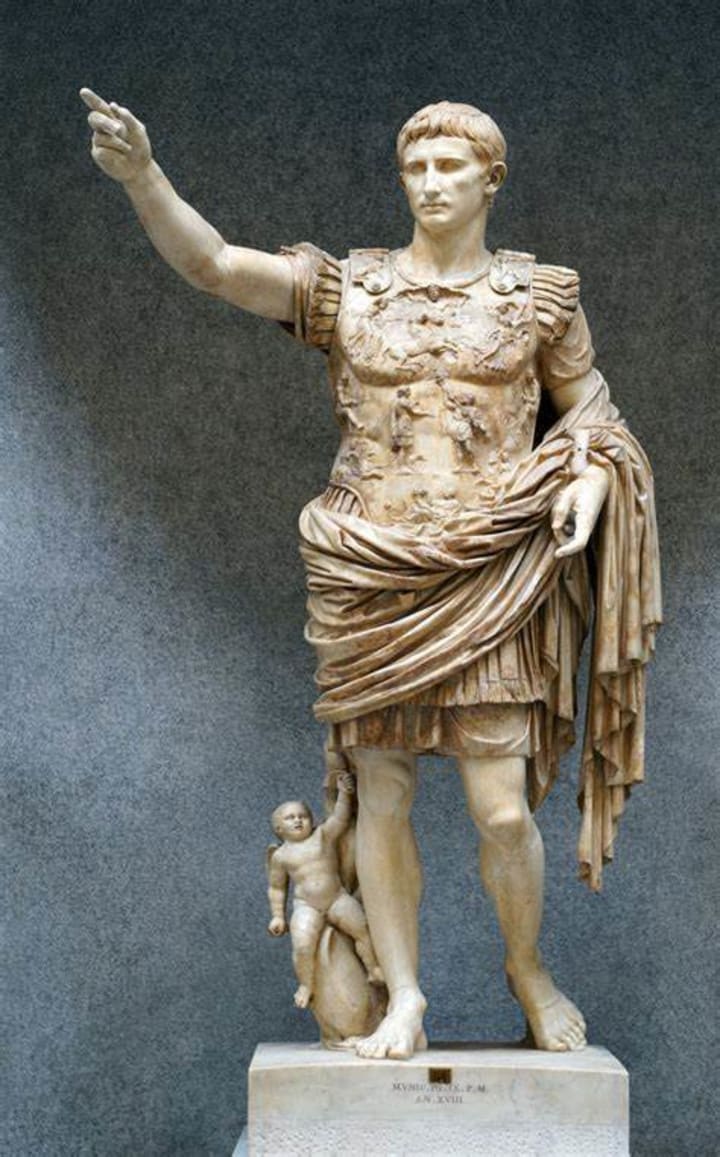
Augustus of Prima Porta is a famous marble statue that portrays the first Roman Emperor, Augustus Caesar. It was discovered in 1863 during an archaeological excavation at the Villa of Livia which once belonged to the third wife of Augustus. The emperor is depicted as a commander-in-chief of the Roman army. He’s wearing a cuirass with images referring to a significant diplomatic accomplishment, the Parthian restitution of the Roman eagles. Augustus is represented barefoot with his right arm raised addressing his troops. Of interest is the infant by his right leg.
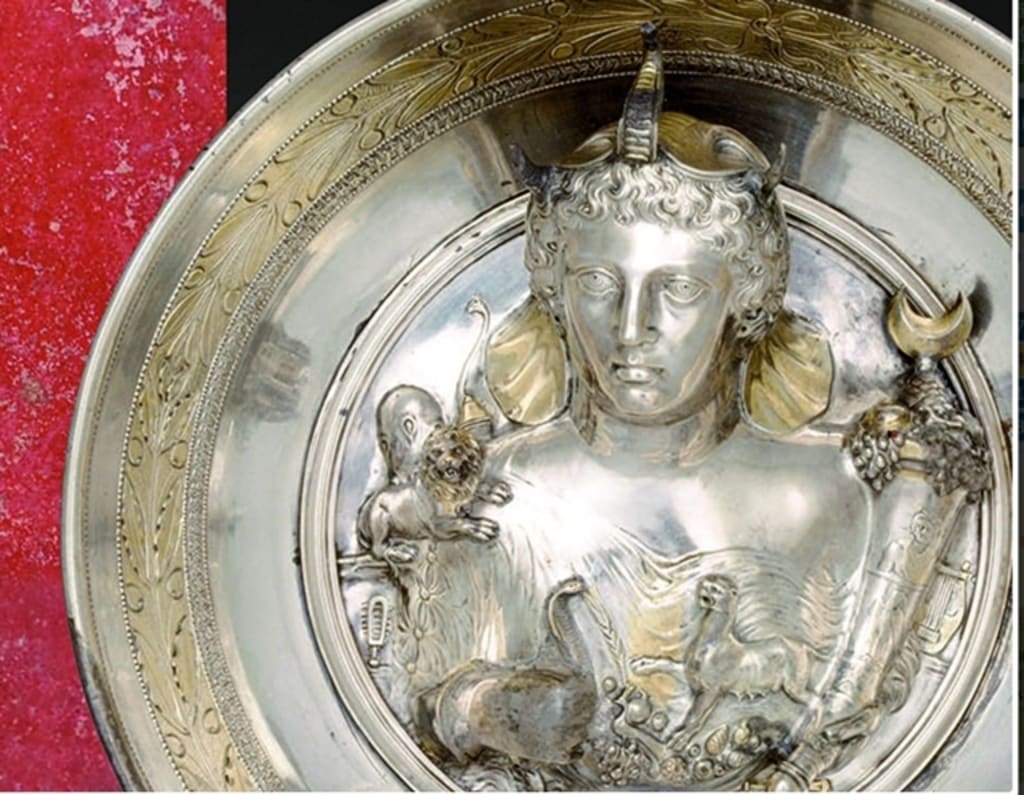
Boscoreale Treasure (pictured above)
The Boscoreale Treasure is a collection of over 100 amazing pieces of ancient Roman silverware, gold coins, and jewelry discovered in the ruins of the Villa della Pisanelli in Boscoreale, near Pompeii, southern Italy. The villa was buried by volcanic ash after the eruption of Mount Vesuvius in 79 AD.
Capitoline Wolf
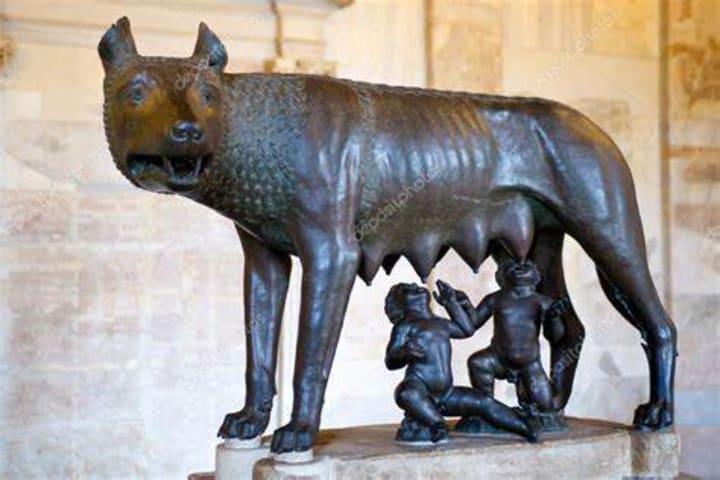
The Capitoline Wolf is a bronze sculpture that shows a she-wolf suckling the mythical twin founders of Rome, Italy, Romulus and Remus. The legend has it that the twins were abandoned as infants and rescued and cared for by a she-wolf until found by a herdsman. The statue remains an iconic symbol of Rome and an important piece of art history.
Equestrian Statue of Marcus Aurelius
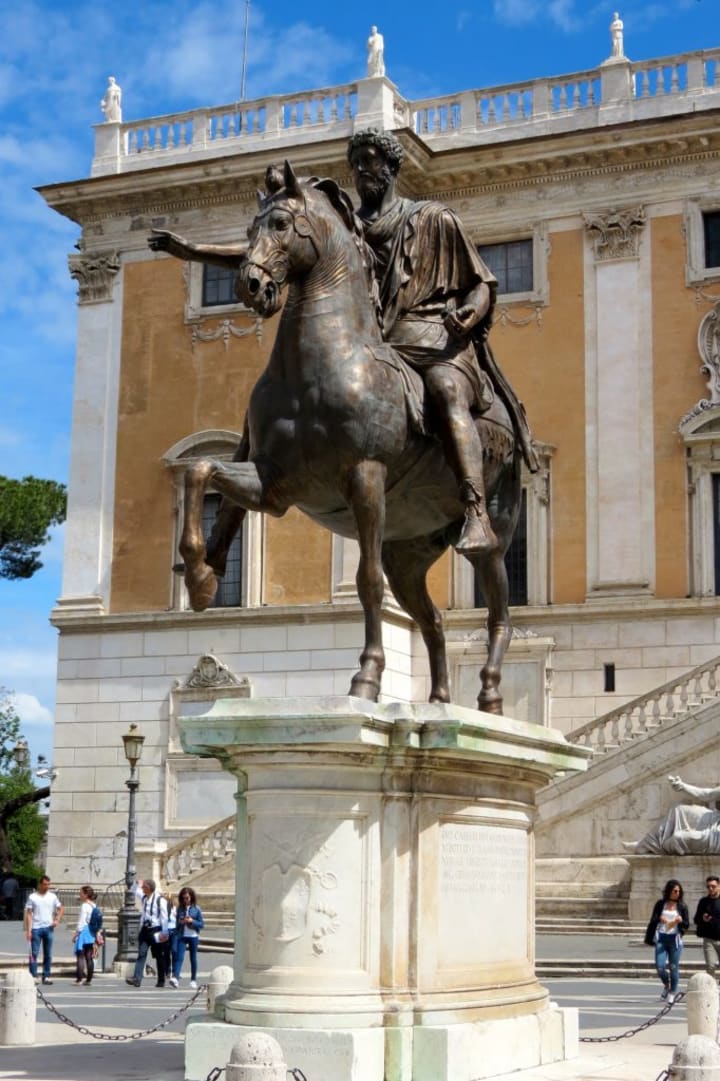
The Equestrian Statue of Marcus Aurelius is an amazing Roman sculpture located in Rome, Italy. It depicts the Roman emperor Marcus Aurelius on a horse in a pose addressing his troops. The saddle cloth on the horse was copied as part of the standard Roman uniform but is of Sarmatian origin, This suggests that the statue was created to honor Marcus Aurelius' victory over the Sarmatians.
Farnese Hercules
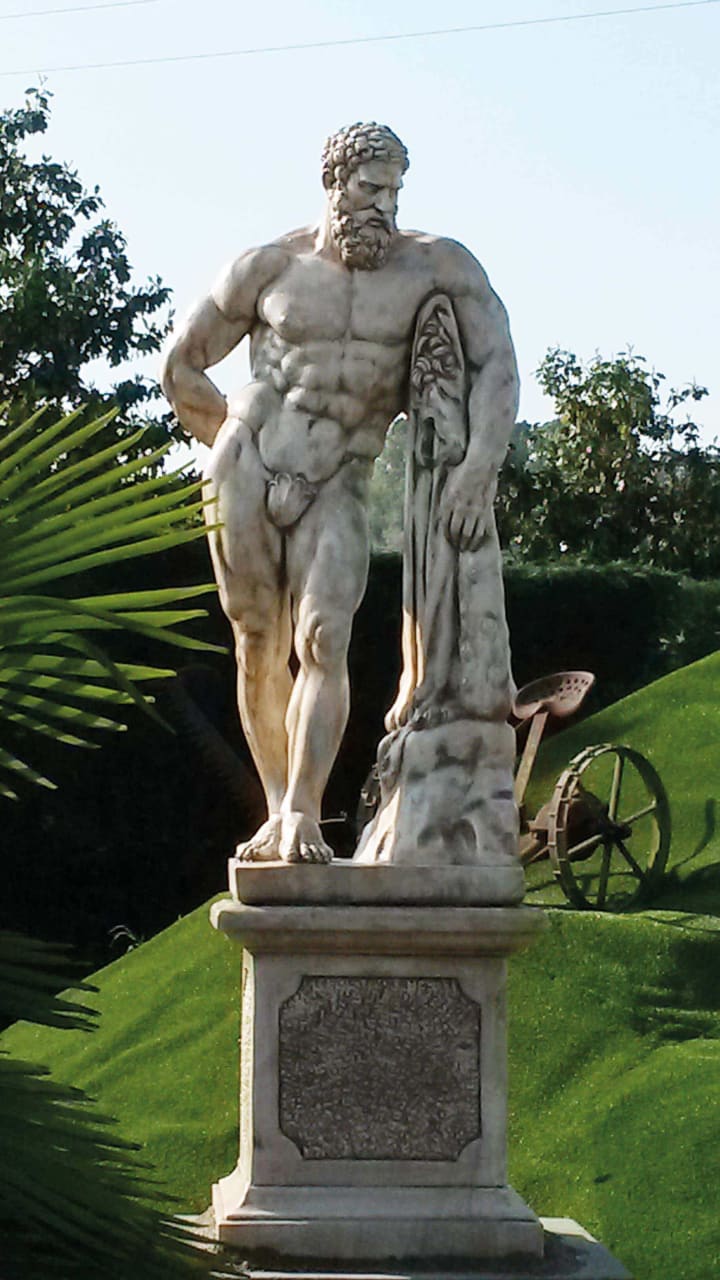
The Farnese Hercules is a famous ancient statue of the mythological hero Hercules. The statue depicts Hercules taking a break, holding the golden apple of Hespericles behind his back, and leaning on his club draped with the skin of the Nemean lion. Created in the third century AD is was discovered in the Baths of Caracalla in Rome, Italy in the 16th century. Even though the original was lost this replica is greatly treasured.
Gemma Augustea
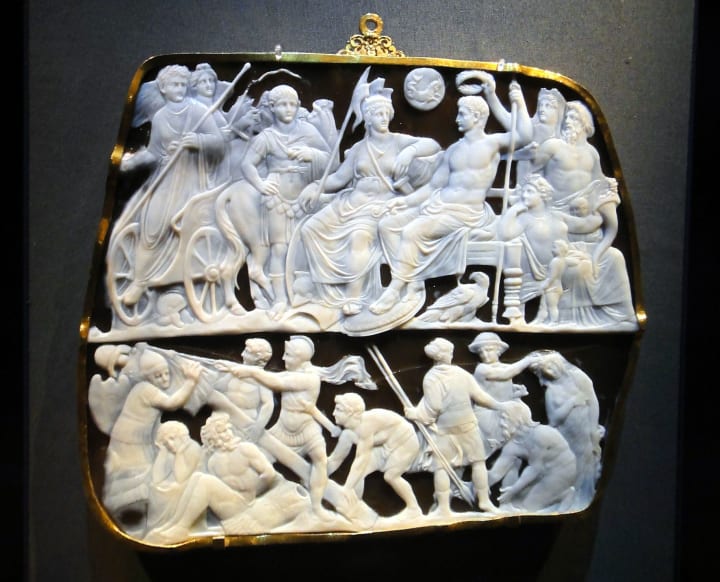
The Gemma Augustea is an interesting piece of Roman artwork crafted from a two-layered Arabian onyx stone. The carvings depict mythological and historical scenes among them Augustus’ deification and rise to the heavens. It can be viewed at the Kunsthistrorisches Museum in Vienna, Austria.
Lycurgus Cup
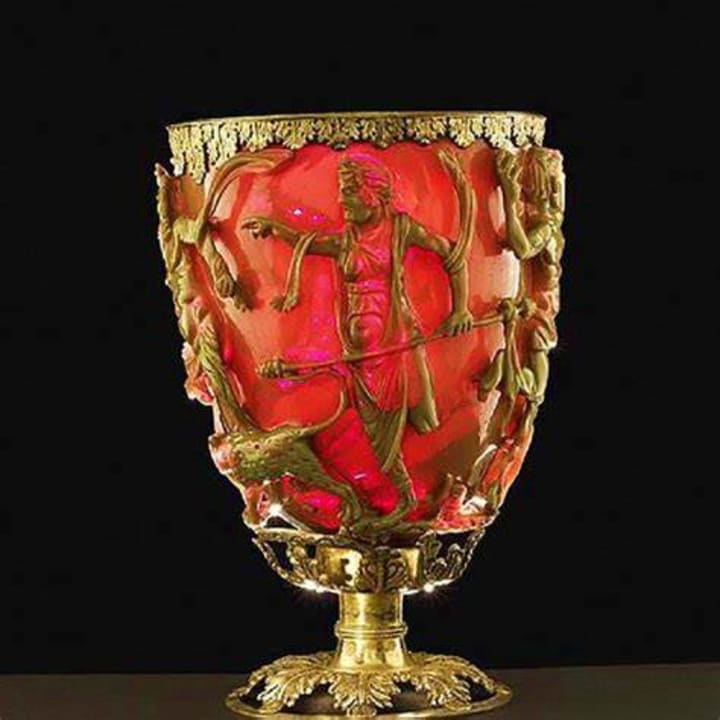
The Lycurgus cup is an unusual Roman glass cage cup dating from the 4th century. It is made with dichroic glass that changes color depending on the direction of the light. This is the only complete Roman glass object created from this kind of glass and features a decorative “cage” at the surface level. The cup depicts the mythological story of King Lycurgus, who was killed by vines after he attempted to kill a follower of the god Dionysus.
Nile Mosaic of Palestrina
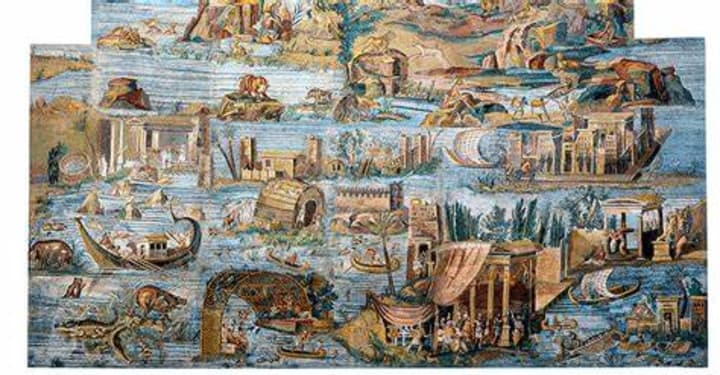
The Nile mosaic of Palestrina is a large floor mosaic dating back to around 100 BC. It depicts various scenes from the Nile River showcasing the Roman fascination with ancient Egyptian culture. It portrays different aspects of life along the Nile among them people and animals native to the region. At one time the mosaic was part of the sanctuary grotto in the town of Palestrina, Italy. It has been preserved and restored many times and can be seen at the Museo Nazionale Prenestino in Plazzo Barberini.
Portland Vase
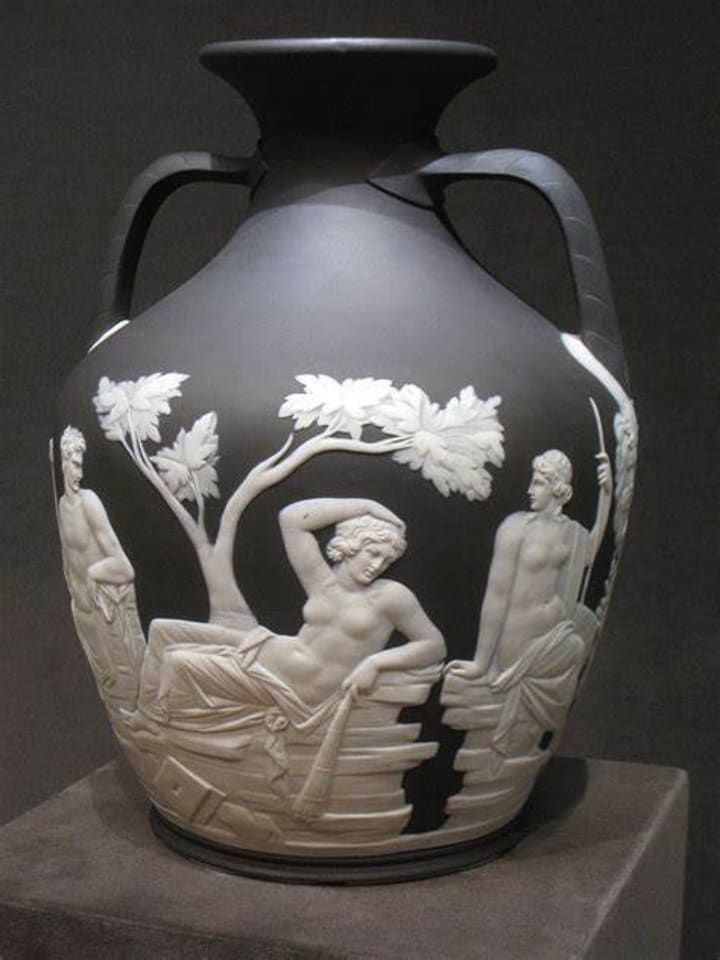
The Portland vase is made with blue and white cameo glass created in ancient Rome between the first century BC and the first century AD. The depictions on the vase are of various figurines and animals. It is considered to be one of the finest examples of Roman glasswork and can be viewed in the British Museum in London, England.
Villa of the Mysteries
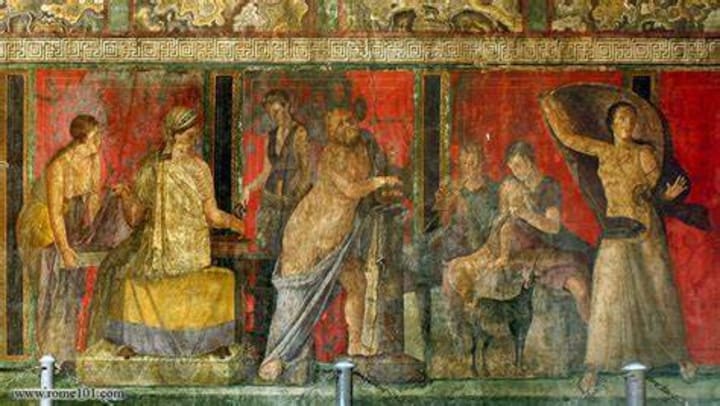
The frescoes found in the Villa of the Mysteries, a well-preserved Roman villa in the ancient city of Pompeii are considered among the finest examples of Roman wall paintings. They are believed to have been created in the early first century BC. In the villa, the frescoes cover the walls and ceilings of several rooms. The scenes depicted relate to the initiation of a young woman into a mystery cult.
About the Creator
Rasma Raisters
My passions are writing and creating poetry. I write for several sites online and have four themed blogs on Wordpress. Please follow me on Twitter.
Keep reading
More stories from Rasma Raisters and writers in Art and other communities.
Famous Greek Artists
Ancient Greek art is known for its beauty, realism, and innovation. Greek artist have shown their creativity with different works of art among them painting, sculpture, pottery, and architecture. Greek artists were influenced by the ideas and values of Greek mythology, philosophy, and religion.
By Rasma Raistersabout a year ago in Art
What is abstract sculpture?
Abstract art often feels mysterious because it does not rely on recognizable figures, realistic animals, or a clear narrative. Abstract sculpture follows the same principle. Rather than imitating the real world, it uses form, line, surface, volume, and space to convey ideas, movement, or emotion.
By Shenzhen Ruiheng Crafts6 days ago in Art
How Tattoo Parlours in Cape Town Help Clients Feel Comfortable and Informed
Walking into a tattoo parlour in cape town for the first time can feel strange. You are trusting someone with your skin, your story, and a design you might wear for life. It is normal to feel excited and scared at the same time.
By Tools of Trade Studios4 days ago in Art


Comments (1)
Oooo, the Capitoline Wolf and Lycurgus Cup were my favourite!