
Potchitra of Bengal: A Canvas of Tradition and Storytelling
The canvas of Bengal

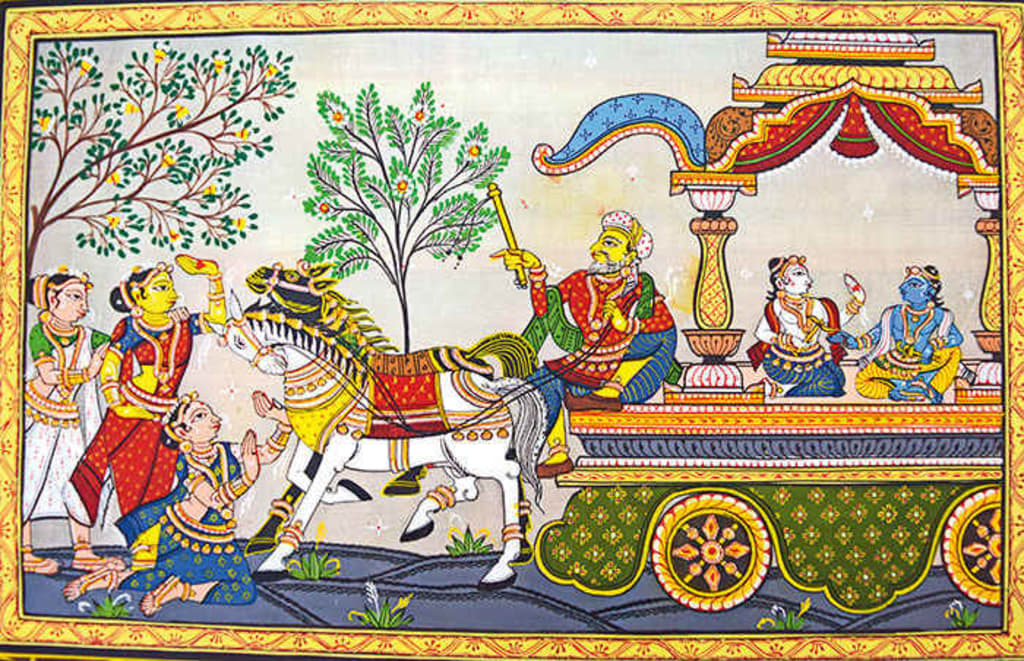
For over two and a half millennia, Potchitra has been intertwined with the soul of the Indian subcontinent — a canvas where myth, devotion, protest, and pedagogy dance in vibrant colors. More than mere decoration, it has served as sacred expression, an educational medium, and a mirror to societal change. This ancient form of art, deeply woven into the cultural fabric of Bengal, is not just painted — it is performed, sung, lived.
Across the breadth of Bengal, the scrolls of Potchitra unfold tales both divine and mortal. They echo spiritual yearnings, portray social realities, and once in a while, whisper revolutions. It was the visionary artist Dukhushyam Chitrakar of Naya village who dared to unroll a new path — boldly shifting from the traditional to the transformative.
The word “Pot” finds root in the Sanskrit “Patta”, meaning cloth — the foundation upon which these vivid stories come alive. The canvas is not plain but prepared with layers of mud, dung, and glue, making it firm like the truth it intends to carry. With earth-born pigments — soot, vermillion, brick dust, turmeric, coal, and chalk — the artist begins to breathe life into stories. Each hue tells a tale. Each stroke echoes a belief.
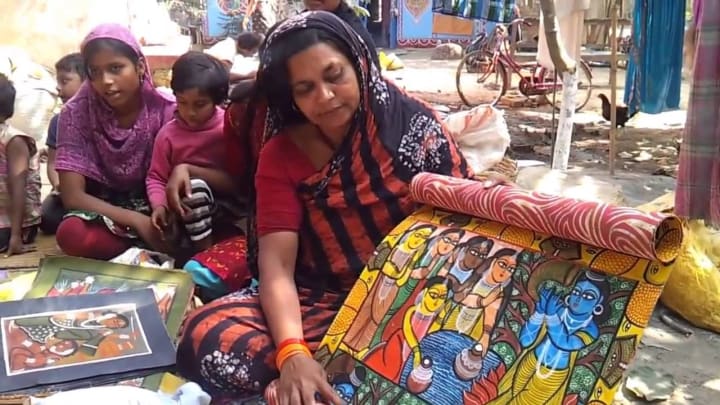
But painting is only half the song. The Patua — the artist — is also a bard. Unfurling their scroll, they sing Poter Gaan, narrating the journey from gods to commoners, from heavens to the heart of rural life. Once, these performances were the soul of festivals and gatherings. In return, the Patuas received honor and sustenance — and the echo of applause etched in memory.
From the Rarh lands to Birbhum, from Midnapore’s plains to Murshidabad’s quiet lanes, Potchitra has traveled and thrived. Especially in Pingla’s Naya village, nearly fifty families continue to guard and grow this legacy — their brushes steeped in tradition, their songs rich with memory.
Yet times change. Today, many buyers seek satire over scripture — ‘Babu culture’ caricatures over divine scenes. Sales may rise, but with them, the echoes of ancient glory fade. The brush meets commerce, and tradition often bends.
Potchitra’s footsteps can be traced back to the 7th and 8th centuries. In Banabhatta’s Harshacharita, the emperor watches a Patua among children — perhaps history’s earliest recorded art class. Mentions flicker in Kalidasa’s plays, in the writings of Bhavabhuti, and even in Buddhist and Hindu scriptures. Some believe Bengal’s Patuas descend from the painters of the Buddhist era. The art, then, is as much a spiritual heirloom as it is a visual one.
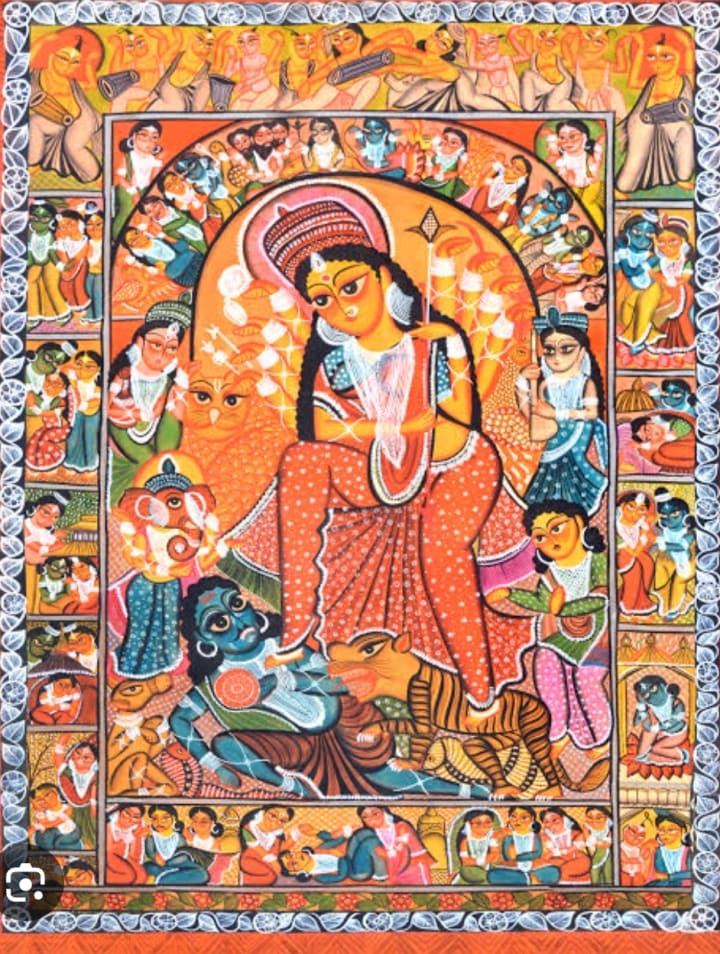
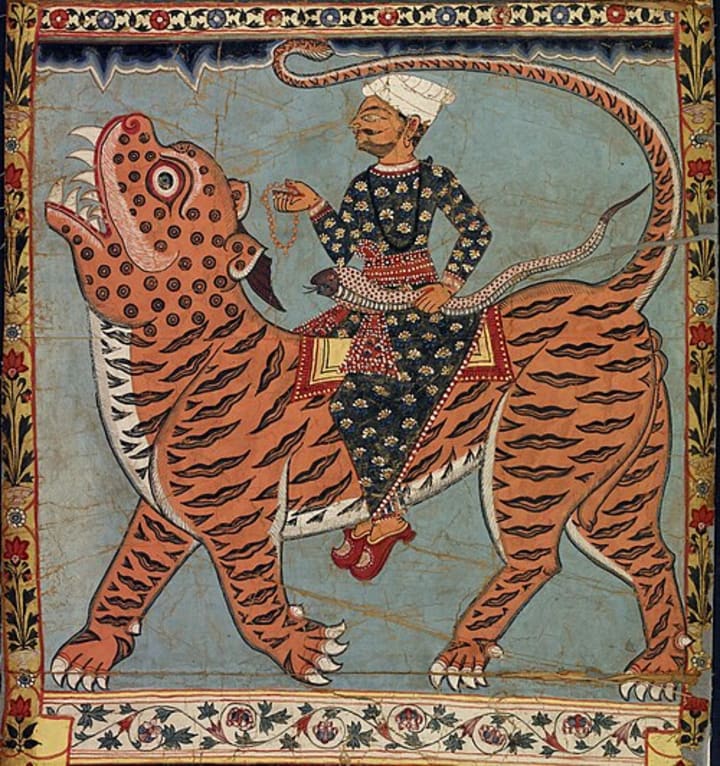
The Gazi Kalu scrolls — inspired by Islamic lore — stand as luminous proof that Potchitra bridges faiths, echoing shared humanity. But Dukhushyam painted new verses on old cloth. In his scrolls, gods walked beside revolutionaries. His brushes traced the agony of HIV, the outcry against deforestation, the demand for clean drinking water. Even Congress politicians weren’t spared — his satirical “Congress Biplobi” scrolls stirred both laughter and thought.
Born in 1946 in a humble Kolkata hospital, Dukhushyam turned poverty into palette. From brick dust and turmeric, from leaf sap and soot — he conjured colors. Glue from babla trees bound his truth to fabric. In 1970, he founded a school to teach rural women this sacred art. His works crossed oceans — now displayed in museums from London’s V&A to galleries in France, Italy, Australia, and Bangladesh.
Yet like many ancient crafts, Potchitra now faces time’s erosion. Unlike electric lights that breathed life into theater and music, scroll art battles obsolescence. The patience required to paint and the time needed to listen — both are rare luxuries in today’s world. Original works are expensive, leading buyers to settle for mass-produced mediocrity. Many true artists go underpaid, unpraised.
As Bangladeshi Patua Shambhu Acharya once said — workshops in schools and art institutes are vital. For only when the people understand not just the price but the painstaking soul behind Potchitra, can it truly survive.
Today, commercial winds have altered the landscape. Artificial paints replace natural ones. Compact canvas replaces the majestic scroll. Kalighat-style miniatures gain demand, while divine narratives retreat. As Bhaskar Chitrakar of Kalighat noted, caricatures sell — but sacredness fades.
Yet, in every line drawn by a Patua, in every note of Poter Gaan, Bengal still breathes — a land that sings through scrolls, remembers through colors, and resists forgetting through art.
About the Creator
Riham Rahman
Writer, History analyzer, South Asian geo-politics analyst, Bengali culture researcher
Aspiring writer and student with a deep curiosity for history, science, and South Asian geopolitics and Bengali culture.
Asp
Keep reading
More stories from Riham Rahman and writers in Art and other communities.
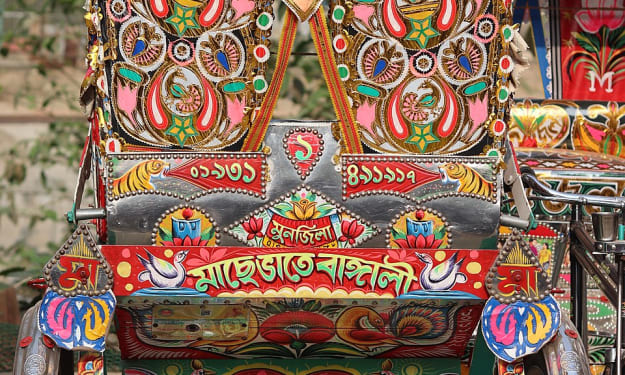
Wheels of Color: The Vibrant Tradition of Bangladesh’s Rickshaw Art
Bangladesh, a country rich in culture and creativity, is home to one of the most unique and colorful folk art traditions in South Asia—rickshaw art. Found on the three-wheeled cycle rickshaws that crowd the streets of Dhaka, Chattogram, and other cities, this mobile artwork transforms ordinary vehicles into vibrant canvases that tell stories, evoke emotions, and reflect the soul of the nation. Rickshaw art is not just a decorative form of expression; it is a cultural statement, a voice of the urban poor, and an emblem of the country’s creative resilience.
By Riham Rahman 9 months ago in Art
The Uncopiable Human Wit to Write
We all have been in that spot at least once in our schooldays where we have been wringing our brains off to curate written articles of some sort until our soul-less friends were born. At just four years old, our beloved soul-less, metallic, digital assistant who is always by our side when we turn on our computers and smart phones, will be doing much more than curating written content for us all, if you know what I mean.
By Sound Savvy5 days ago in Art


Comments
There are no comments for this story
Be the first to respond and start the conversation.