
Pedro Franco: The Brazilian Comedian Conquering Comedy, Backwards
Pedro Franco is not just your typical stand-up comedian. While many aspire to cross linguistic borders, Franco, a Brazilian native, has carved a unique niche for himself, starting his comedic trek in the United States before returning to conquer his homeland in Brazil.

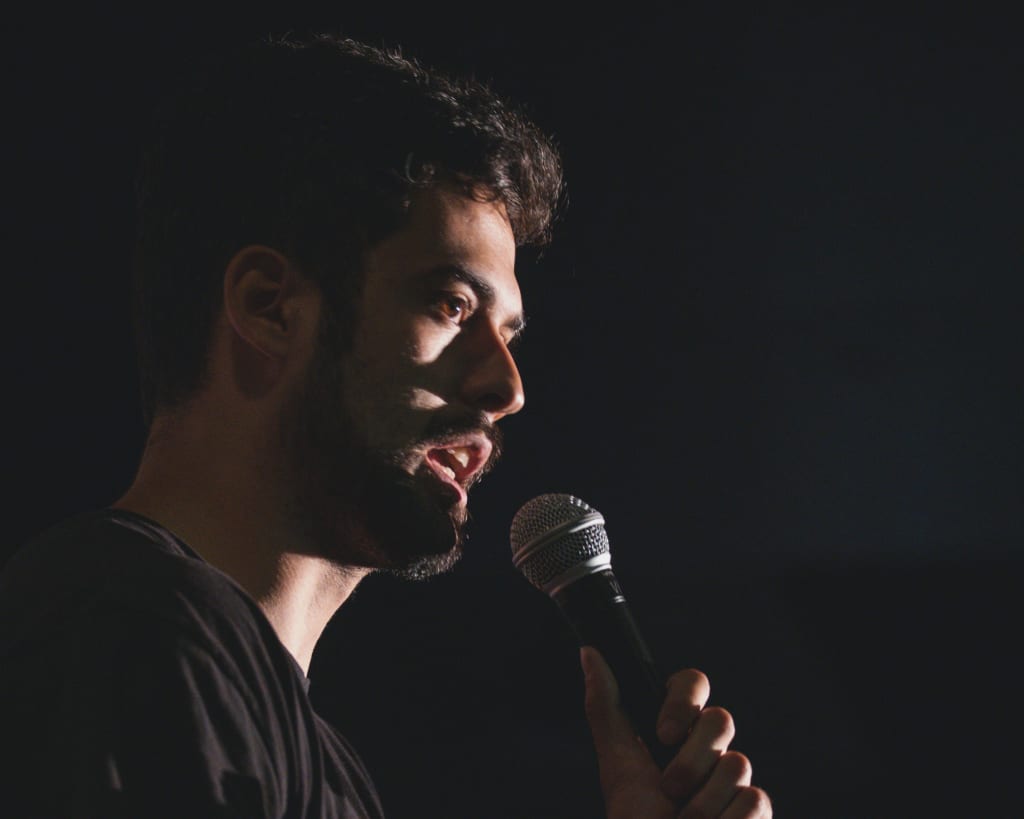
Pedro Franco's sharp wit, undeniable stage presence, and bilingual capabilities have quickly established him as a force to not be ignored in the international comedy scene, and his story is one of perseverance, cultural adaptation, and the pursuit of laughter against all odds.
Based in Austin, Texas, a city renowned for its vibrant and competitive comedy scene, Franco has become a regular fixture at top clubs. This is an impressive achievement, especially considering his background. But Franco isn't one to step away from a challenge. His talent shone brightly during his appearance on "Kill Tony," the world's leading live comedy podcast. His stand-up set has not only captivated the audience, but also earned him praise from the notoriously critical roast comic, Tony Hinchcliffe, who even admitted to being envious of one of Franco's jokes – a lasting impact to Franco's comedic prowess.
This appearance proved to be a turning point both within his career and within the entire Brazilian stand-up comedy scene, as the first ever Brazilian guest to join the acclaimed show.
Soon after, Franco was contacted by two of Brazil's most prominent comedians, Thiago Ventura and Maurício Meirelles. Meirelles, recognizing Franco's talent, enlisted him to open for two of his sold-out shows in Brazil, each boasting an audience of 1,000 people. Meirelles has since become a vocal supporter for Franco's career, further concreting his star status.
Fluent in both English and Brazilian Portuguese, Franco’s ability to seamlessly transition between languages effectively has opened doors to opportunities on both continents. He demonstrated his versatility by winning first place out of 100 comedians in a major Brazilian stand-up competition. This remarkable accomplishment underlines his adaptability and rapid growth as a comedian.
Franco's success is built on a basis of smart, sharp material delivered with a confident and original voice. Peers and audiences alike recognize him as one of the most promising emerging talents in the comedy scene today. He's a regular at all the major comedy clubs in Austin, including Can't Even comedy club, Black Rabbit comedy club, Vulcan Gas Company, Velveeta room, and East Austin Comedy Club, consistently honing his craft and captivating audiences.
But what truly sets Franco apart from the crowd is his unconventional journey. He is, to the best of our knowledge, the only Brazilian-born comedian with Brazilian Portuguese as his first language to have started his comedy career in America and then, only after establishing himself, returned to Brazil to build an act in his native language. This "backwards" process, as he describes it, presented unique challenges and required immense dedication.
"It was very challenging," Franco admits. "In Brazil, you don't have the same freedom to perform as you do in America, as far as what you are allowed to say. I believe that limits you a lot as an artist, especially as a stand-up comic, whose job I believe is to find the comedic element in any subject and make life a little lighter by allowing people to laugh at things they were previously uncomfortable or they were sensitive about."
Franco notes the importance of comedy as a societal coping mechanism. "A prime example is when your friends make you laugh about something bad that happened to you, like a heartbreak. Now the whole situation doesn't seem as bad, and you can start to overlook it. I believe comedy has that healing factor in society."
Navigating the cultural and linguistic nuances of Brazilian comedy while upholding his commitment to free expression required a delicate balancing act. "It was a challenge to keep that in mind while also having to adapt pace, timing, and a whole new set of cultural references," he explains. "That gave me a lot of confidence as a performer when I was able to succeed doing comedy in Brazilian Portuguese as well."
The transition from English to Brazilian Portuguese comedy wasn't sublime. Franco had to discard the material he had painstakingly developed in English, as it simply didn't translate. "I had to start from scratch," he says. "That was very frustrating, especially because at this point in my career, I was being given the opportunity to perform in large venues, and I had to reinvent my act.”
Despite the initial setbacks, Franco persevered, driven by his passion and work ethic. "Like anything that you have a talent for, if you put your head down and work hard – in my case, get on stage every night at open mics, accept every opportunity I had to perform – I eventually developed an act in Brazilian Portuguese as well."
Franco acknowledges the significance of his trek, particularly in inspiring others. "Apart from Rafinha Bastos, I am the only Brazilian citizen doing comedy in America in English, which is a big deal," he notes. "I believe in doing what we can give people that were born in other countries, not just Brazil, that are fans of comedy, hope. If you love stand up comedy, America is ideal, but sometimes when you are born in some other place this may seem as a near impossible goal. How will I make it happen? How can I do comedy in a different language?"
Franco perceives his success as a testament to the possibilities that exist for aspiring comedians from diverse backgrounds. "By seeing other people do it, that may give people the necessary push they need to try it themselves. I feel very proud to be doing this and showing other people that there is a way."
Interestingly enough, Franco found starting comedy in English to be easier than in his native Brazilian Portuguese. "To me, it was easy to start in English because I had been in America for so long, and I always consumed American culture. I kind of learned English by watching Family Guy on television as a kid in Brazil. They would have the show every day in English with subtitles in Brazilian Portuguese, and then I would take the subtitles off and try to understand the dialogue since I had seen the episodes oh so many times."
He continues, "It was actually harder to do comedy in Brazilian Portuguese.But once I got the hang of it, it started to flow, and it was really cool to see my talent working in different countries."
Ultimately, Franco's journey highlights the power of adaptability, perseverance, and a genuine passion for comedy. Pedro Franco's surge in the comedy world is a testament to his rising talent and unwavering determination. He's not just a comedian; he's a cultural ambassador, a trailblazer, and an inspiration to aspiring comedians around the globe.
As he continues to refine his craft and expand his grasp, there's no doubt that Pedro Franco will continue to leave an indelible mark on the world of comedy, one joke at a time.
About the Creator
Lisa Rosenberg
I am a writer based in New York City writing about artists, creative leaders and entrepeneurs.
Keep reading
More stories from Lisa Rosenberg and writers in Art and other communities.
Ken Wenrui Zhao: Deconstructing Design Through Collage, Collaboration, and Careful Consideration
Focusing on publication design, branding, and exhibition design, Ken Wenrui Zhao's work is characterized by its thoughtful exploration of how these elements can work together to create layered and meaningful experiences for the audience. His process often involves working with found images from magazines and books, which he meticulously photocopies, scans, and rearranges – a method that grants him the freedom to disrupt conventional hierarchies and uncover unexpected narratives.
By Lisa Rosenberg8 months ago in Art
The Best Philosophy in the World Is the One You Can Live
Ask ten philosophers what the best philosophy in the world is, and you will receive at least ten different answers—possibly delivered with footnotes, counterarguments, and mild contempt for the other nine. This disagreement is not a flaw of philosophy; it is its essence. Philosophy was never meant to be a universal prescription handed down like a rulebook. It exists to help human beings live better lives. By that standard, the best philosophy in the world is not the most elegant or complex—it is the one that can be lived.
By Fred Bradford3 days ago in Art



Comments