

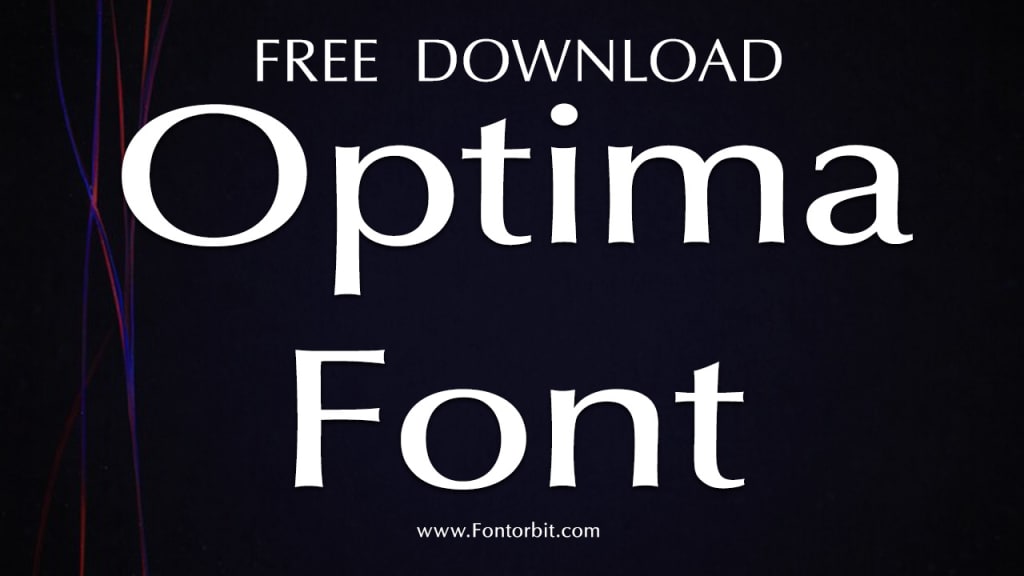
The Optima font is a classic typeface that has stood the test of time due to its unique design and versatility. Created by renowned type designer Hermann Zapf in 1958, Optima has become one of the most beloved sans-serif fonts, often used in both print and digital design.
Unlike many sans-serif fonts, Optima combines the clean lines of a sans-serif with the elegance and subtle detailing often found in serif typefaces. This article explores the history, features, uses, and significance of the Optima font, offering insight into why it remains a popular choice for designers today.
History of Optima Font
The Optima font was first released by the Stempel Type Foundry in 1958, designed by Hermann Zapf, a German type designer. Zapf is known for creating several iconic typefaces, and Optima is no exception.
The font was intended to provide the crisp, clean appearance of a sans-serif typeface, but with the humanist qualities often associated with serifs. This hybrid approach led to a typeface that is both functional and aesthetically pleasing, suitable for a wide range of applications.
Zapf’s aim with Optima was to create a typeface that could be used in both formal and informal contexts, offering versatility and readability without sacrificing elegance. The font was inspired by classical inscriptions and Roman letterforms, which is evident in its delicate curves and varying stroke weights.
Features of Optima Font
One of the defining features of Optima is its subtle stroke contrast. Unlike most sans-serif fonts that have uniform thickness throughout, Optima has a slight variation in the thickness of its strokes, giving it a more organic and refined appearance. This makes it stand out from other sans-serif typefaces and gives it a timeless, sophisticated look.
The font also has a humanist influence, meaning it is designed with a more organic structure compared to geometric or grotesque sans-serif fonts. The letterforms have a slightly calligraphic quality, which helps it maintain a certain warmth and approachability.
Another key feature is the font's wide range of weights and styles. Optima is available in regular, bold, italic, and light variants, allowing designers to choose the appropriate style depending on the context. It also supports a wide range of languages, making it a versatile choice for international projects.
Uses of Optima Font
Due to its clean lines and sophisticated design, Optima is widely used across various design projects. Its versatility makes it suitable for both print and digital applications. Here are a few common uses of the Optima font:
Branding and Logo Design: Optima's elegance and readability make it a popular choice for branding and logo design. Its timeless design works well in conveying a sense of professionalism and reliability, making it ideal for companies that want to project a sophisticated image.
Editorial Design: Optima is frequently used in magazines, books, and newspapers due to its clear readability in both large and small sizes. The humanist style of the font makes it more approachable than most sans-serif fonts, enhancing the overall look of editorial layouts.
Web Design: With its clean and modern aesthetic, Optima is widely used for web design. Its versatility across different weights ensures that it can work for both headings and body text, maintaining clarity and legibility on digital platforms.
Signage: Optima’s elegant yet clear design makes it perfect for signage. It is commonly seen in museums, public spaces, and corporate environments, where legibility and professionalism are paramount.
The Significance of Optima
Optima is more than just a typeface; it’s a design icon. Its timeless appeal has made it a favorite among designers for over half a century. The font’s ability to combine the best aspects of serif and sans-serif design allows it to maintain its relevance in a wide range of design fields. It is a true example of how a well-crafted typeface can stand the test of time and continue to inspire generations of designers.
Zapf's decision to blend elements of Roman inscriptional letters with a modern sans-serif structure was revolutionary at the time, and the result was a font that was both functional and aesthetically pleasing. The influence of Optima can still be seen in many contemporary typefaces, proving its enduring legacy.
Conclusion
Optima is a classic typeface that has continued to remain relevant due to its elegant design and versatile functionality. Whether used in branding, editorial design, web design, or signage, it provides clarity and sophistication in any application.
Designed by Hermann Zapf, Optima is a beautiful blend of humanist and geometric elements, offering a refined alternative to standard sans-serif fonts. Its legacy continues to inspire designers and remains a cornerstone of modern typography.
FAQs about Optima Font
1. Who designed the Optima font?
Optima was designed by Hermann Zapf in 1958. Zapf is a renowned German type designer, and Optima is one of his most famous typefaces.
2. What makes Optima different from other sans-serif fonts?
Optima has subtle stroke contrast, combining the characteristics of both sans-serif and serif fonts. It has a humanist influence, with letterforms that feature a slight calligraphic quality.
3. What are the common uses of Optima?
Optima is commonly used in branding, editorial design, web design, and signage. It is known for its versatility and readability across different applications.
4. Is Optima available in different styles?
Yes, Optima is available in various weights and styles, including regular, bold, italic, and light variants, allowing for a range of uses in different design contexts.
5. Is Optima suitable for digital design?
Yes, Optima is a great choice for digital design. Its clean and modern aesthetic makes it legible on both web and mobile platforms, and it works well in both headings and body text.
About the Creator
Jillur Rahaman
Jillur Rahman is the creative mind behind FontOrbit. This website is a vibrant hub for typography enthusiasts. With a CSE degree and over a decade of experience in web design & development, Jillur got passion for sharing knowledge.
Keep reading
More stories from Jillur Rahaman and writers in Art and other communities.
League Spartan Font: A Modern Typeface for Clean, Bold Design
When it comes to choosing the right font for a design project, the right typeface can elevate your work, giving it a distinctive and professional look. One such font that has become increasingly popular among designers is League Spartan.
By Jillur Rahamanabout a year ago in Art
Graffiti: The Symbolic Framework for AI‑to‑AI Languages — Why Future Self‑Aware AI Will Study the Artists Who Already Speak Their Dialect
Graffiti has always unsettled the public. It is dismissed as antisocial, chaotic, or illegible — a visual language that refuses to explain itself. But perhaps the reason graffiti feels inaccessible to most humans is simple: "it was never meant for humans".
By Alexander Hyogor6 days ago in Art




Comments (1)
Heyo✨ Let's do a teamwork I like your stories and you gonna like mine 🫶🏻♥️