
Michelangelo's "David": Making Blood Flow in Marble
Art work

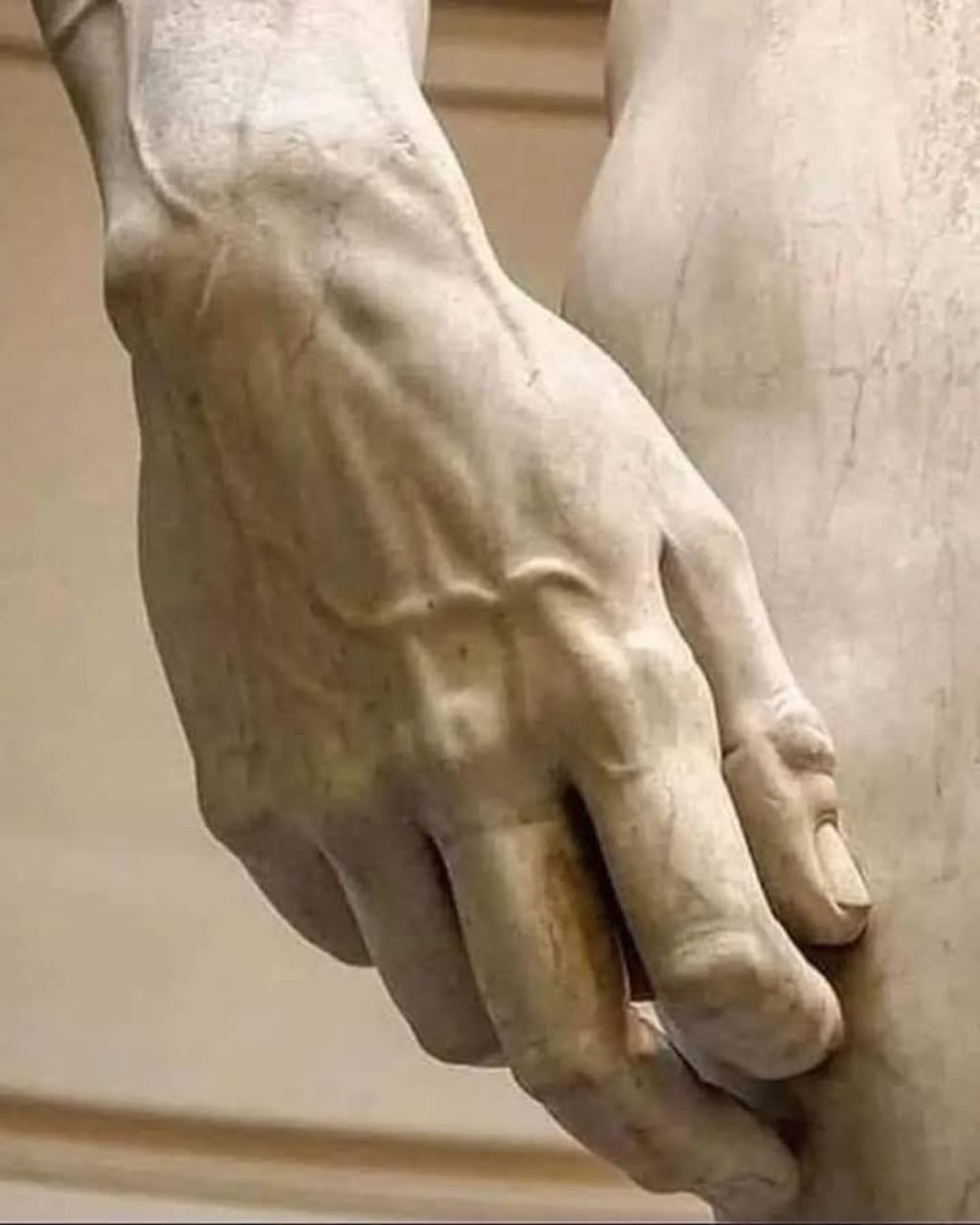
Michelangelo’s David is not just a sculpture; it is a masterpiece of art and human creativity. Carved between 1501 and 1504, this monumental statue stands as a symbol of the Renaissance, embodying the ideals of human beauty, strength, and intellect. What sets David apart from other sculptures of its time is its lifelike quality—Michelangelo seemed to make the blood flow through the veins of the cold marble, bringing his creation to life.
In this blog post, we will explore the origins of David, the genius of Michelangelo's artistry, and the lasting impact of this timeless masterpiece.
---
The Genesis of David
Michelangelo di Lodovico Buonarroti Simoni was just 26 years old when he was commissioned to sculpt David. The commission came from the Opera del Duomo, the cathedral workshop of Florence, which sought to create a monumental figure to represent the city’s ideals of strength and independence.
A massive block of Carrara marble, abandoned by previous artists who deemed it too flawed, became Michelangelo's canvas. It took him over three years of meticulous labor to transform this raw stone into one of the greatest works of art in history.
Unlike earlier depictions of David, which often showed the young shepherd after his victory over Goliath, Michelangelo chose to portray him before the battle. This decision gave the sculpture an unprecedented emotional depth, capturing David in a moment of quiet determination and tension.
---
The Anatomy of Perfection
Michelangelo's training in anatomy, gained through the dissection of human cadavers, is evident in every inch of David. Standing at 17 feet tall, the statue is a towering representation of the human form, yet it is its details that truly bring it to life.
The Veins and Muscles
The veins on David’s hands and arms seem to pulse with life, as if blood flows beneath the surface. This remarkable detail was achieved through Michelangelo’s understanding of anatomy and his ability to manipulate the marble to mimic the texture and dynamism of human skin.
The tension in David’s muscles—particularly in his neck and arms—reflects the psychological state of a young man preparing for a life-or-death confrontation. His body is not overly idealized; instead, Michelangelo captures the natural imperfections and asymmetries of a real human form, making David both heroic and relatable.
The Face of Determination
David’s face is another masterpiece within a masterpiece. His furrowed brow, slightly parted lips, and intense gaze convey a sense of focus and readiness. This is not the face of a mythical hero, but of a real person grappling with fear, courage, and resolve.
The eyes, carved with precision, seem to follow the viewer, adding a layer of dynamism to the statue. Michelangelo’s use of shadow and light enhances the emotional impact, making David appear alive, as though he is breathing and thinking in real-time.
---
Symbolism and Innovation
Michelangelo’s David is steeped in symbolism. Created during a time when Florence was under threat from external forces, the statue was seen as a symbol of the city’s resilience and defiance. Just as David triumphed over the giant Goliath, Florence aspired to overcome its own adversaries.
Breaking Tradition
Before David, most large sculptures were part of architectural structures or displayed within churches. Michelangelo’s David, however, stood alone as a freestanding figure, allowing it to be admired from every angle. This innovation emphasized the human form as a work of art in its own right, reflecting the Renaissance ideals of humanism and individualism.
The Contrapposto Stance
David’s pose, known as contrapposto, is another hallmark of Renaissance art. His weight is shifted onto one leg, creating a naturalistic and relaxed posture. This stance not only adds to the realism of the sculpture but also imbues it with a sense of potential energy, as though David is poised to spring into action.
---
Michelangelo’s Genius: Making Marble Breathe
Michelangelo’s ability to make marble appear soft and alive was unparalleled. He once said, “Every block of stone has a statue inside it, and it is the task of the sculptor to discover it.” With David, he seemed to discover not just a statue but the essence of humanity itself.
Carving the Marble
The process of creating David involved immense skill and patience. Michelangelo worked with a chisel and mallet, gradually revealing the figure within the marble. He used a technique called subtractive sculpting, where material is carefully removed to shape the form. One mistake could ruin the entire piece, yet Michelangelo’s precision was flawless.
Illusion of Movement
Despite being carved from a single block of stone, David seems dynamic. The slight twist of his torso, the positioning of his head, and the tension in his limbs all contribute to the illusion of movement. This interplay between stillness and action is a hallmark of Michelangelo’s genius.
---
The Legacy of David
Since its unveiling in 1504, David has been celebrated as a masterpiece of art and engineering. Originally placed in the Piazza della Signoria, the statue became a civic icon, representing Florence’s independence and artistic supremacy.
Today, David resides in the Galleria dell'Accademia in Florence, where millions of visitors marvel at its beauty each year. Its impact extends beyond the art world, influencing literature, philosophy, and even popular culture.
A Timeless Inspiration
Michelangelo’s David continues to inspire artists and viewers alike. Its realism, emotional depth, and technical brilliance remind us of the limitless potential of human creativity. It also serves as a testament to the Renaissance spirit, celebrating the dignity and power of the individual.
---
Conclusion
Michelangelo’s David is more than a sculpture; it is a living, breathing entity crafted from stone. Through his unparalleled mastery of anatomy and marble, Michelangelo made the blood flow in his creation, transforming an inanimate material into a timeless symbol of human strength, courage, and beauty.
Whether admired for its artistic innovation, emotional depth, or symbolic resonance, David remains one of the greatest achievements in human history. In it, we see not only the vision of Michelangelo but also a reflection of ourselves—our fears, our hopes, and our triumphs.
To stand before David is to witness the power of art to transcend time, to make marble come alive, and to remind us of the extraordinary potential within us all.
About the Creator
Keep reading
More stories from Deji Akomolafe and writers in Art and other communities.
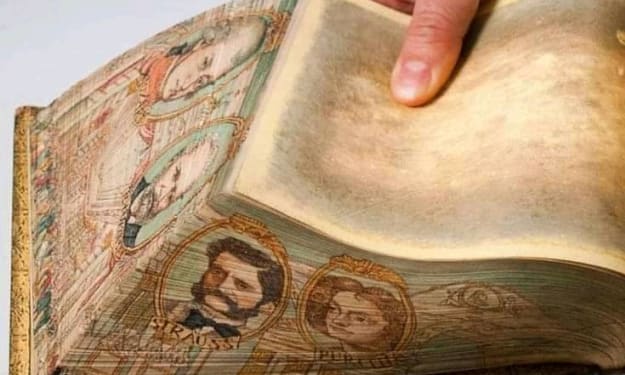
The Hidden Art of Fore-Edge Paintings: A Glimpse into Bookish Secrets
Books have long been vessels of knowledge, art, and culture, preserving the treasures of human history for generations to come. But within the world of books, there is an often-overlooked form of art that blends literature with visual creativity in an incredibly unique way—fore-edge paintings. These miniature works of art, painted on the edges of book pages, offer a hidden glimpse into a secret world of design and decoration. While they are rarely seen by the casual reader, fore-edge paintings have a fascinating history, one that spans centuries and even includes royal intrigue.
By Deji Akomolafeabout a year ago in Art
'Till Death We Do Art
There would be nothing divine in this world without art. Nature may surpass the divine to all intents and purposes, but like everything it absorbs and is absorbed by, it remains here, stuck on the surface of this world, ever-present, physically bound to the universe.
By Avocado Nunzella BSc (Psych) -- M.A.P 25 days ago in Art
How Working With a Florist in Jupiter Enhances Your Event Decor
Selecting the perfect floral arrangements can transform an otherwise ordinary event into a visually stunning experience. In Jupiter, Florida, the subtropical climate provides an ideal backdrop for an array of breathtaking floral designs that can enhance any space. By employing the expertise of a local florist jupiter, hosts can elevate their event's aesthetic beyond the commonplace and into the extraordinary.
By Shahid Sipraa day ago in Art
Top tipple tricks
Been thinking a lot about drinking, lately. Not least because of a recent episode of over-indulgence and the inevitable after effects. Some readers may recall the earlier articles I wrote about beating the booze. Here I set out an experiment in techniques for cutting down on my alcohol intake. The experiment was successful, the techniques worked, and I have armed myself with an arsenal of weapons in the war against the demon drink. I have yet to fire the first round however. It's all a question of timing (perhaps procrastination).
By Raymond G. Taylor5 days ago in Psyche



Comments
There are no comments for this story
Be the first to respond and start the conversation.