
Meditation Practice: A Reliable Refuge in an Age of Stress
Every time we open our eyes, a flurry of notifications


Every time we open our eyes, a flurry of notifications, traffic horns, approaching deadlines, and subtle social pressures greet us. The brain never stops humming and rarely goes to sleep. In this relentless buzz, locating our inner stillness has become increasingly difficult. It is precisely for this reason that meditation—or any practice based on mindfulness—has developed into a contemporary "mental gym." What follows is a concentrated, discussion of meditation’s significance, scientific grounding, start‑up tactics, common hurdles, and long‑term benefits.
1. The Foundation of Meditation
The Sanskrit root for the word "meditation" is dhyai, which means "to contemplate." It is referred to in classical yoga as the seventh limb of the eight-fold path—dhyna, or continuous concentration. In 21st‑century psychology the same state is called “sustained attention without judgment.” Put simply, meditation asks you to anchor awareness to a chosen object—breath, sound, bodily sensation, or even a passing thought—and, each time attention wanders, return with kindness. Through neuroplasticity, that gentle but persistent "mental pushup" rewires neural maps.

2. The Body-Mind Connection and Science
Harvard Medical School’s 2018 fMRI study showed that just eight weeks of Mindfulness‑Based Stress Reduction (MBSR) thickens gray matter in the hippocampus (learning, memory, emotion regulation) while dampening amygdala reactivity (fear and anxiety). Even more striking: circulating cortisol—the primary stress hormone—drops measurably after three weeks of daily practice, normalizing blood pressure and heart rate. Sleep efficiency rises because deep‑sleep stages lengthen. Additionally, regular mindfulness sessions were found to reduce analgesic dependence by 30-40% in chronic pain patients, according to a 2024 JAMA meta-analysis.

3. Logistics prior to practice
Setting: You don't need a quiet cave; just turn off your phone and choose a quiet, well-ventilated area.
Timing: Our circadian rhythm is calmest at dawn, so it's best to take it 5–10 minutes after waking up. Additionally, a pre-bedtime session reduces sleep onset latency.
Accessories: A cushion, perhaps a light candle or some incense if it helps, are accessories, not necessities.

4. A "Basic Breathing Meditation" Guided by Steps
Sit up straight, with your shoulders relaxed and your eyes half-closed or shut.
Notice—inhale and exhale naturally, feel chest or belly rise and fall.
Silently count from one to four, three to two to one, and so on.
When the mind wanders, gently label it as "thinking...," and guide awareness back to the breath.
Close your eyes—after five to ten minutes, slowly open them, stretch, and notice any sensations.
Despite the method's apparent simplicity, repeated practice leaves visible traces in the prefrontal cortex, which is where decision-making and stillness take place.

5. Common Hijacks and Surrounds
Roadblock Work‑around
Restlessness in the first week Limit sessions to two to three minutes and gradually increase.
Drowsiness Improve your posture and meditate in the crisp morning air.
The objective is not blankness but rather noticing and returning.
Inconsistent routine Take breaks with one-minute micromeditations or phone reminders.

6. Weaving Mindfulness into Daily Life
Mindful eating: Turn off your screen for the first three bites and taste and smell the food.
Walking meditation: Feel heel‑ball‑toe pressure each step; ten minutes brisk walking refuels attention.
Practice waiting by taking three deep breaths in elevators or queues and shrugging off shoulder tension.

7. Performance in the Workplace and Meditation
Apple, Intel, and Google all have "Mindfulness at Work" programs because regular practice increases employee focus time, lessens the friction of multitasking, and reduces burnout. Multiple studies found a 10–12 percent rise in working‑memory capacity after just 15 minutes of breath meditation—translating into sharper reports, cleaner code, and bolder creative pitches.
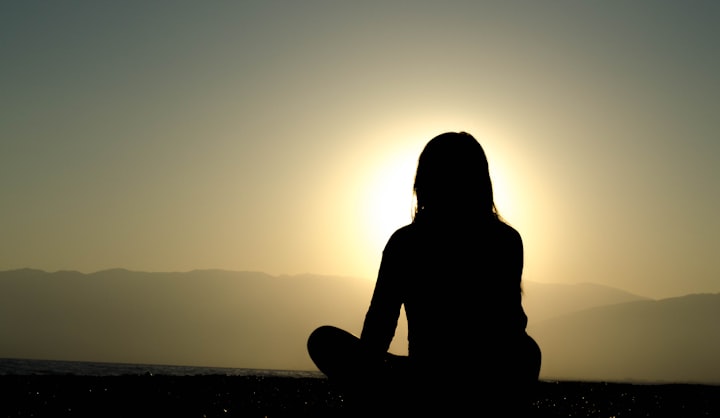
8. Long-Term Benefits and Your Agreement with Yourself
Meditation improves self-identity as well as manages stress. Regular silence substitutes conscious choice for autopilot responses. Behavior remains under control, and you can see anger rolling down the mountain before it reaches the village. As the brain's empathy circuits get stronger, relationships benefit. Starting today is not mere stress relief; it is an investment in a more self‑aware, compassionate, steady‑minded future version of you.

9. A Personal Challenge for Seven Days
In the present moment, mark a "silent session" for five minutes at 7:30 a.m. or 10 p.m. on your calendar. After each practice, jot a single‑line journal note—“How did I feel?” Read the entries on day 7. How quickly your inner sea begins to calm down will be revealed by those seven small victories.

Last note: Learning to ride a bicycle is like meditation—it starts out a little wobbly and gets easier over time. It requires no fancy clothes, gym membership, or minimalist apartment. It only requires a few regular minutes and the willingness to treat oneself with mild interest. In the midst of today's stress storm, close your eyes for a minute and let your mind, body, and brain express their gratitude in a way that no words can describe. This will help you stay grounded.
About the Creator
Abdul Wahed
I'm a passionate creator who believes words can inspire, educate, and connect. I transform real-life moments and insights into stories that spark thought and emotion. Join me on a journey of discovery, reflection, and meaningful growth.
Keep reading
More stories from Abdul Wahed and writers in Art and other communities.
10 Best Data Entry Websites in 2025
The Top 10 Websites for Entering Data in 2025 Data entry is still a popular and accessible remote job for freelancers all over the world in today's digital world. Whether you`re a beginner or an experienced virtual assistant, data entry jobs can provide flexible income opportunities. With the rise of freelancing platforms and remote work trends, many websites offer legitimate ways to earn from data entry in 2025.
By Abdul Wahed9 months ago in Art
Dog Shoes for Small Dogs and Puppy Shoes A Practical, Paw-Friendly Guide
Small dogs and puppies may look tough, but their paws often need more protection than people realize. Their bodies are lighter, their paws are smaller, and many of them spend a lot of time on surfaces that were never designed for delicate paw pads. Add cold sidewalks, hot pavement, rough gravel, wet grass, or even slippery indoor floors, and you start to see why dog footwear has become more than just a cute trend.
By aliyashahzadi5 days ago in Art
Every Brushstroke Was a Wish
In the small, quiet town of Avelar, there was a woman named Lena who painted with the kind of passion that only the truly lost could understand. Her cottage was perched at the edge of a vast forest, the kind of place where the whispers of the trees seemed to reach through the windowpanes, mingling with the rhythm of her brush against canvas. People in the town would pass by and sometimes glance at the paintings displayed in her window. But few, if any, understood the soul of her work.
By Jhon smith4 days ago in Art


Comments
There are no comments for this story
Be the first to respond and start the conversation.