
Mastering the Eastern Grip in Tennis: A Game-Changing Technique
Mastering the Eastern Grip in Tennis: A Game-Changing Technique
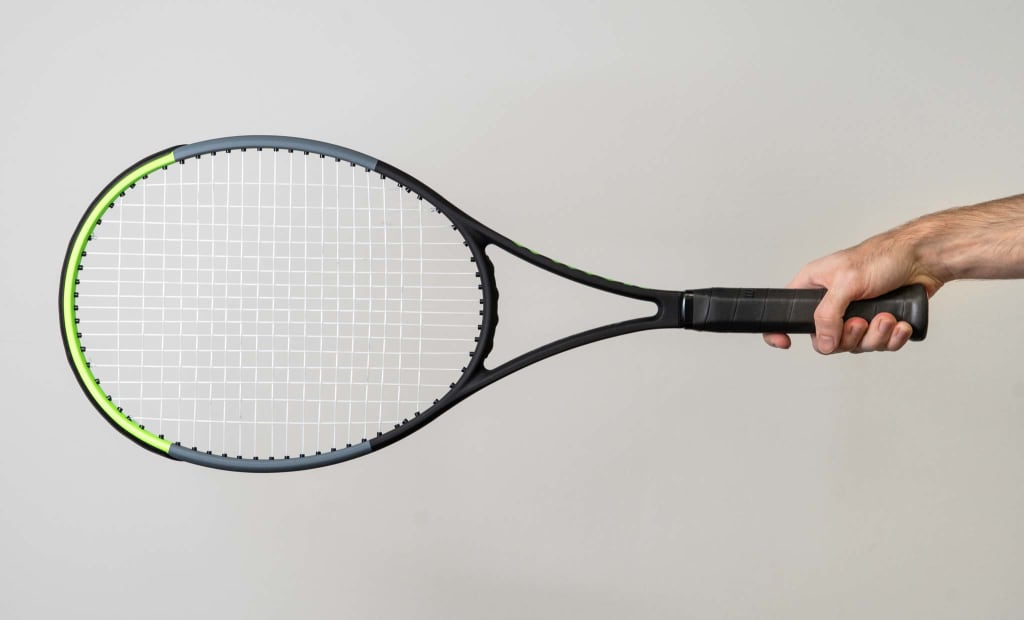
If you're looking to refine your tennis game, one of the best places to start is your grip. The way you hold your racket affects everything from your swing mechanics to ball control and spin. Among the many types of tennis grips, the Eastern grip stands out for its versatility and effectiveness. In this post, we'll explore everything you need to know about the Eastern grip in tennis, how it compares to other grips, and why it might be the perfect match for your game.
What Is the Eastern Grip in Tennis?
The Eastern grip in tennis is one of the most commonly taught and widely used grips, especially by intermediate and advanced players who value a balance of power and control. It’s popular for both forehand and backhand strokes, though it is especially prevalent with the forehand.
To find the Eastern forehand grip, follow these steps:
Place the racket on the ground with the strings facing upward.
Pick it up as if you're shaking someone’s hand.
Your index knuckle and heel pad should rest on the third bevel of the racket handle (for right-handers).
This grip positions your palm more directly behind the racket face, which makes it easier to hit flatter and more penetrating shots compared to other grips like the Western or Semi-Western.
Benefits of Using the Eastern Grip in Tennis
1. Ideal for Flat and Fast Shots
The Eastern grip tennis style is excellent for players who prefer to hit flat, driving forehands. Because the racket face stays more square to the ball, it generates strong, linear power with less topspin. This is particularly useful when you want to hit aggressive groundstrokes that stay low and push your opponent back.
2. Great for Transitioning Between Shots
This grip is incredibly versatile. You can easily transition from forehand to volley and even to slice shots with minimal grip adjustment. That makes it ideal for all-court players or those who like to mix up their game with different shot types.
3. Easier Learning Curve
Compared to the Western grip, which demands precise timing and extreme racket angles, the Eastern grip in tennis is easier for beginners to learn and execute. The more natural wrist position makes it less likely to cause injury and fatigue.
4. Effective on Different Surfaces
Whether you’re playing on clay, grass, or hard court, the Eastern grip tennis technique adapts well. On faster surfaces like grass and indoor courts, the ability to hit flat and quick shots becomes a major advantage.
Drawbacks of the Eastern Grip
As great as the Eastern grip in tennis is, it’s not without its limitations.
Limited Topspin Generation: While it does offer some spin, it’s harder to generate the heavy topspin that modern pros favor. If you rely on deep, looping topspin shots, you might find this grip less effective.
Low Ball Struggles: Because the grip is more closed, it can be difficult to handle low balls, especially on clay courts where the ball often bounces inconsistently.
Less Forgiving on High Balls: The Eastern grip requires excellent timing. If the ball jumps high and you're not in position, you may struggle to execute a strong return.
Eastern Grip vs. Other Tennis Grips
Understanding how the Eastern grip tennis style stacks up against other grips helps you make a more informed decision.
Eastern vs. Semi-Western Grip
The Semi-Western grip is more popular among baseline players who rely on topspin. It offers more margin for error and is better suited to handling high-bouncing balls. However, it requires more wrist rotation and may not transition as smoothly into volley play.
Verdict: Go with the Eastern grip in tennis if you prefer flatter, more aggressive groundstrokes and quicker transitions.
Eastern vs. Western Grip
The Western grip maximizes topspin but demands near-perfect positioning and timing. It also limits your volley game and is difficult to use on fast courts.
Verdict: The Eastern grip tennis method is far more versatile and beginner-friendly.
Eastern vs. Continental Grip
The Continental grip is commonly used for serves, volleys, and slices. While it's less ideal for baseline forehands, it's crucial for all-court play.
Verdict: Use the Eastern grip in tennis for powerful forehands and keep the Continental grip for net play and serves.
Using the Eastern Grip for Backhands
Though it’s primarily known for the forehand, the Eastern grip tennis approach can also apply to one-handed backhands. Here’s how:
For a one-handed backhand using the Eastern backhand grip, your index knuckle and heel pad should rest on the first bevel of the racket (for right-handers).
This grip offers excellent reach and allows for powerful, stylish one-handed backhands.
However, it's rarely used for two-handed backhands, which generally involve a combination of the Continental grip with the dominant hand and an Eastern forehand grip with the non-dominant hand.
Pro Players Who Use the Eastern Grip
Some of the greatest names in tennis history have relied on the Eastern grip in tennis to dominate the court.
Roger Federer: Known for his smooth, classic strokes, Federer has often been associated with a modified Eastern grip on the forehand.
Pete Sampras: One of the best servers and volleyers ever, Sampras used the Eastern grip for fast-paced forehands.
Stefan Edberg: Another example of an all-court player who excelled using the Eastern grip.
These legends prove that the Eastern grip tennis style can work at the highest level of the sport.
Tips for Mastering the Eastern Grip in Tennis
1. Work on Footwork
The Eastern grip in tennis requires you to get in position early. Practice split steps, lateral movement, and recovery to optimize your stroke mechanics.
2. Practice Flat Hits
Focus on hitting through the ball with a linear motion to take full advantage of the grip’s flat-hitting capabilities. Shadow swings can help reinforce this technique.
3. Develop a Strong Serve and Volley Game
Since the grip transitions smoothly into the Continental grip, it pairs well with an aggressive serve-and-volley strategy.
4. Use Drills to Build Muscle Memory
Try drills where you alternate between forehands and volleys to get used to quick grip transitions.
Final Thoughts: Is the Eastern Grip Right for You?
The Eastern grip in tennis is a timeless and effective grip that suits a wide range of playing styles. Whether you’re an aggressive baseliner, an all-court tactician, or a player transitioning from beginner to intermediate level, the Eastern grip offers a powerful mix of control, ease of use, and versatility.
At Tennis Dude, we believe that choosing the right grip can revolutionize your game. If you're struggling with topspin-heavy strokes or complicated grip changes, give the Eastern grip tennis method a try—it might just be the upgrade you’ve been looking for.
About the Creator
Keep reading
More stories from hamza awan and writers in Art and other communities.
Backpack History: From Primitive Carrying Tools to Everyday Essentials
Backpacks have become a universal part of our daily lives—whether you're a student, a hiker, a traveler, or a commuter, chances are you've relied on a backpack at some point. But have you ever stopped to wonder where it all started? The fascinating backpack history stretches back thousands of years, evolving alongside human needs, materials, and cultural trends. Today at Backpacks Wizard, we’re diving deep into the timeline of backpack history to uncover how this essential item has transformed from a rudimentary sack to a high-tech, ergonomic necessity.
By hamza awan9 months ago in Art
A Matter of Coincidence
Tuesday, 3 September 2024 Ayesha Fareed Ahmed, Mirpur Khas Sheeda was a simple and innocent man. One day, he was going to his wife’s village to bring her back. On the way, he saw some donkeys grazing on grass at a certain place. Eventually, he reached his in-laws’ house. His wife’s brother asked him to sit in the guest room.
By Sudais Zakwan3 days ago in Art




Comments
There are no comments for this story
Be the first to respond and start the conversation.