Latest Stories
Most recently published stories in Art.
Saddam Hussein Seeks McDonald's Franchise
In a surprising turn of events that has captured global attention, former Iraqi leader Saddam Hussein has expressed interest in acquiring a McDonald's franchise. This unexpected development raises a multitude of questions and concerns, as the controversial figure's ambitions intersect with one of the world's most recognizable brands. In this article, we will delve into the intricate details of Saddam Hussein's pursuit of a McDonald's franchise, explore the potential implications, and address the key questions surrounding this astonishing news.
By lionofkurdistan2 years ago in Art
Creative Approaches to Producing Content
Successful SEO campaigns depend very heavily on excellent content. The quality of content produced in articles, blogs etc dictates heavily how well the SEO campaign will perform, since at the very end, it the consumer/view who will have to read that content. This is why SEO companies invest quite a few resources in getting the best content. There are three new ways available to add sparkle to your content creation efforts.
By Praveen Beharry2 years ago in Art
The myth of great artist
The Myth of the Great Artist: A Brief History The idea of the great artist, a notion that has been deeply ingrained in our culture, has a specific origin story. In Renaissance Europe, around the 15th century, art was primarily produced by guilds or associations of artists, art sellers, and craftspeople. The focus was on technical skill and craftsmanship, with masterpieces demonstrating an artist's skill level. However, with the rise of wealthy patrons like the Medici family in Florence, art became a status symbol, and the art versus craft debate emerged.
By Ali bukhari2 years ago in Art
Technological advancement
Here are some changes that will occur in the near future: 1. Car repair shops and oil, exhaust, and radiator shops will disappear. 2. Electric cars have only 20 parts, compared to 20,000 parts in petrol/diesel engines. They come with lifetime guarantees and can be replaced in 10 minutes. 3. Electric car engines can be repaired by robots in regional workshops. 4. When your electric car's engine fails, you can take it to a car wash-like station, leave it, have a coffee, and get it back with a new engine. 5. Petrol pumps will disappear, just like video rental shops. 6. Electric charging stations and meters will be installed on roads (already started in first-world countries). 7. Big smart car companies have allocated funds to build factories that only produce electric cars. 8. Coal industries will disappear, and oil companies will go out of business. Oil exploration and drilling will cease. 9. Homes will generate electricity during the day, store it, and sell it back to the grid at night or use it to power industries. 10. Today's children will see current cars in museums. 11. The future is arriving faster than our expectations. 12. Kodak had 170,000 employees and sold 85% of the world's photo paper (film) in 1998. Two years later, their business model was obsolete, and they went bankrupt. Who would have thought? 13. Just like Kodak and Polaroid, many industries will become obsolete in the next 5-10 years. 14. Digital cameras were invented in 1975. The first camera had 10,000 pixels, but they followed Moore's Law. Initially, they didn't meet expectations, but they improved rapidly and dominated. 15. This will happen again with artificial intelligence, health, self-driving cars, electric cars, education, 3D printing, agriculture, and jobs. 16. The author of "Future Shock" said, "Welcome to the fourth industrial revolution." 17. Software has disrupted most traditional industries and will continue to do so in the next 5-10 years. 18. Uber has no cars, yet it's the world's largest taxi company. Who would have thought? 19. Airbnb is now the world's largest hotel chain, without owning any hotels. Who would have thought? 20. Artificial intelligence (AI) computers are understanding the world better. This year, a computer defeated the world's best player (10 years earlier than expected). 21. Young American lawyers are not getting jobs because IBM's Watson provides legal advice with 90% accuracy, while humans have 70% accuracy. If you're studying law, stop now. The number of lawyers will decrease by 90% in the future, and only experts will remain. 22. Watson is helping doctors diagnose diseases like cancer (four times more accurately than doctors). 23. Facebook has a face recognition program (better than humans). By 2030, computers will be more intelligent than humans. 24. Self-driving cars: the first self-driving car has arrived. The entire car industry will change in two years. You won't own a car; you'll call a car, and it will take you to your destination. You'll pay by distance traveled, not by car ownership. You'll work during travel. Today's children won't need driving licenses or car ownership. 25. Our cities will change. We'll need 90-95% fewer cars. Old parking spaces will become green gardens. 26. Every year, 1.2 million people die in car accidents (including drunk driving and speeding). With self-driving cars, accidents will decrease to one every six million miles. This will save one million lives annually. 27. Traditional car companies will go bankrupt. Only companies that revolutionize car manufacturing will survive, while technology companies (Tesla, Apple, Google) will produce intelligent electric cars (computers on wheels). 28. Volvo has stopped producing internal combustion engines, switching to electric and hybrid engines. Volkswagen and Audi engineers (Tesla) are terrified, and they should be. 29. Insurance companies will face significant challenges as accident-free travel reduces costs. The car insurance business model will become obsolete. 30. Real estate will change. With the ability to work during travel, people will abandon high-rise buildings and move to more beautiful and affordable areas. 31. By 2030, electric cars will become common. Cities will be quieter, and the air will be cleaner. 32. Electricity will become extremely cheap and clean. Solar power production is increasing. 33. Fossil fuel energy companies (oil and gas) are trying to limit network access to home solar power installations to suppress competition, but it won't work. Technology is advancing too fast. Green energy, whether from green hydrogen or other eco-friendly sources, will dominate, and most countries will dismantle nuclear reactors.
By Ali bukhari2 years ago in Art
Importance of art
The Importance of Art in Society As I write here today, I am reminded of the power of art to inspire and reflect on the important role it plays in our society. Without art, our world would be a dull and unimaginative place. Art is not just a form of self-expression, but a necessary part of what makes us human.
By Ali bukhari2 years ago in Art
Introduction of Art
Art is a form of human expression that has been around for centuries. It has the power to evoke emotions, spark creativity, and bring people together. Art can take many forms, including painting, sculpture, photography, music, dance, theater, and literature.
By Olamide Soyombo2 years ago in Art
The Jungle and a Weje
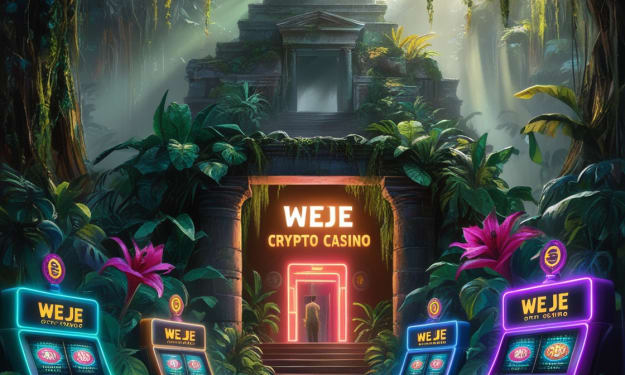
In the heart of the WEJE jungle, where the dense canopy stretched endlessly, there lived a lion named Alex — a majestic creature with a spirit as fierce as the savannah. Despite his strength and prowess, Alex faced a challenge unlike any other.
By Weje | DeFi Gaming2 years ago in Art
The Future of Sustainable Fashion: Innovations and Trends Shaping the Industry. AI-Generated.
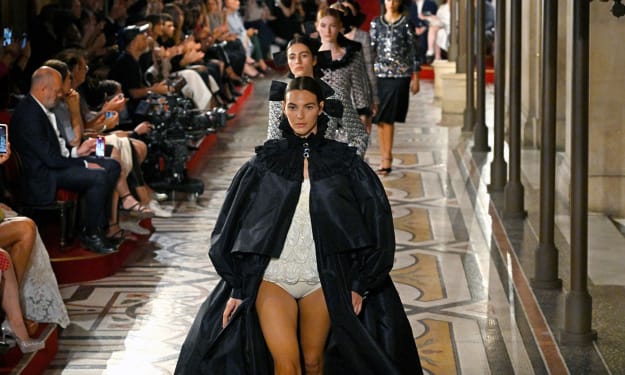
# The Future of Sustainable Fashion: Innovations and Trends Shaping the Industry In recent years, the fashion industry has faced increasing scrutiny over its environmental and social impacts. As awareness grows about the negative consequences of fast fashion, both consumers and companies are seeking more sustainable alternatives. This shift is driving innovation and fostering new trends that aim to make fashion more ethical and environmentally friendly. In this article, we will explore the future of sustainable fashion, highlighting key innovations and trends that are transforming the industry.
By Mbeha maliwa 2 years ago in Art