
La Scapigliata: Leonardo da Vinci's Masterful Unfinished Portrait
Ancient Art

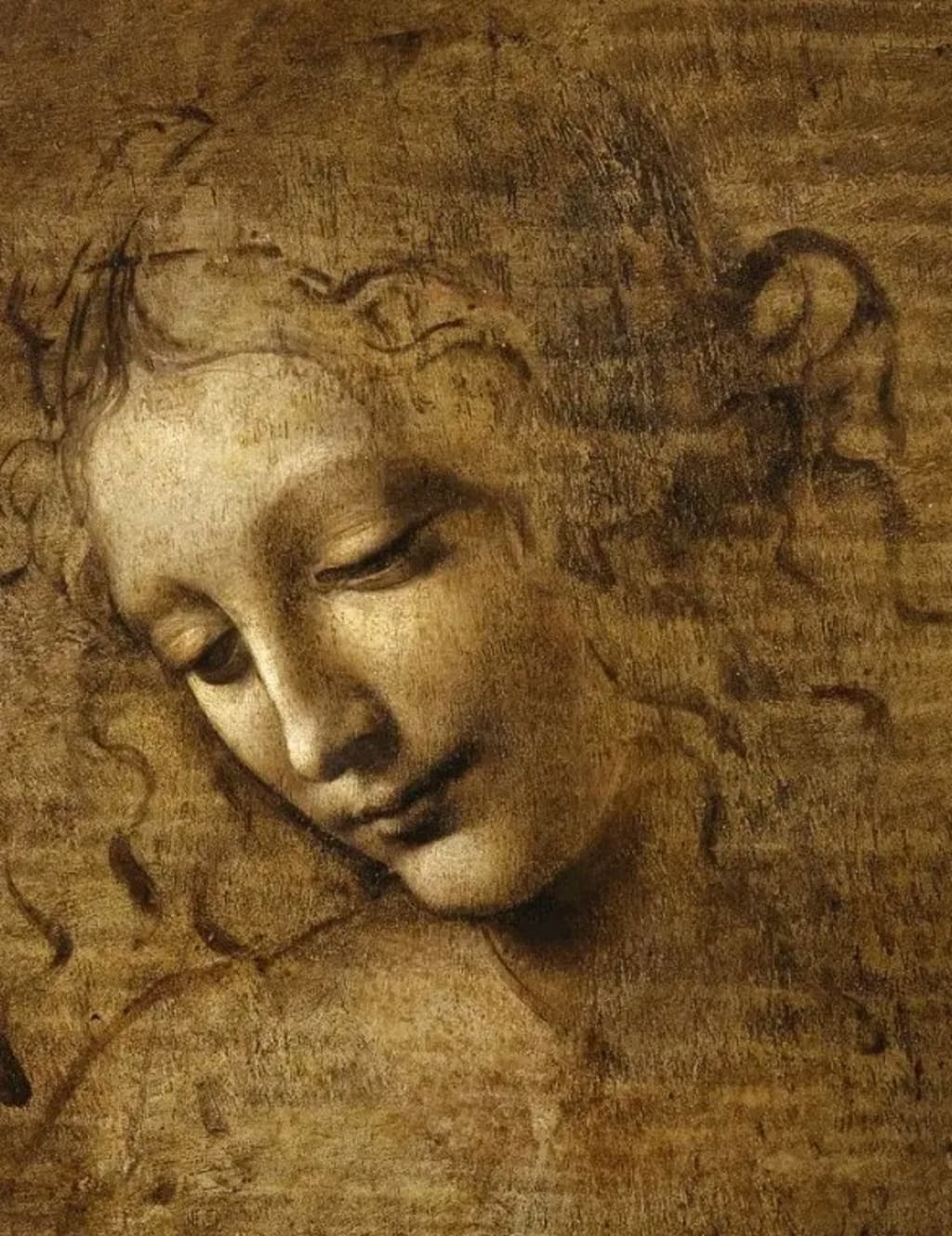
Leonardo da Vinci, one of the most celebrated artists in history, left behind a legacy of remarkable works that forever changed the trajectory of art. While many of his masterpieces are finished and complete, some of his most captivating works remain unfinished, each carrying its own air of mystery. One such piece is La Scapigliata, an unfinished portrait of a woman, created around 1500. Known as "Head of a Woman" in English, this exquisite artwork is a testament to da Vinci's genius in capturing the subtleties of human emotion and form, despite being a work left incomplete. It offers an intriguing glimpse into the mind of the Renaissance master and stands as a remarkable example of his artistic prowess.
---
The Mystery of La Scapigliata
The title La Scapigliata translates to "the disheveled one" in Italian, referencing the loose, flowing curls of the woman's hair in the painting. This loose, natural hairstyle contrasts with the rigidly structured hairstyles often seen in portraits from that time, highlighting the woman's casual, unguarded beauty. The woman in the painting gazes downward with downcast eyes, exuding an air of tranquility and introspection. This serene expression, paired with the soft, flowing lines of her hair, creates an enigmatic, almost ethereal presence.
Despite being incomplete, La Scapigliata remains a compelling and mysterious work. The figure, though incomplete in terms of its details and finish, seems to possess a natural beauty and grace that is striking, almost as if it is an unfinished study. This unfinished quality allows viewers to see not only the talent of the artist but also the work in progress, giving insight into Leonardo’s method of constructing a portrait.
---
A Master of Sfumato
Leonardo da Vinci is widely known for his groundbreaking use of the painting technique known as sfumato. This method involves blending the edges of forms and transitions in light and shadow to create soft, almost imperceptible outlines. In La Scapigliata, this technique is used with remarkable finesse, creating an almost lifelike effect in the rendering of the woman's face. Her skin glows softly, as though lit by a warm, natural light, and the subtle transitions between light and shadow on her face evoke a sense of volume and depth.
In the unfinished state of the painting, the sfumato is particularly striking. The gradual and seamless transitions between the darker and lighter areas of her face allow her features to emerge softly, as if they are being illuminated from within. The viewer’s gaze is drawn to her face, which appears to float in space, offering an ethereal quality. The delicate shadows and smooth transitions lend a luminosity to the woman’s complexion, highlighting Leonardo’s extraordinary ability to capture the human form in a way that was unprecedented in his time.
---
The Woman in the Portrait: Who Was She?
Like many of Leonardo’s portraits, the identity of the woman in La Scapigliata remains unknown. Some art historians speculate that she could have been a member of Leonardo’s circle or possibly a model for a larger, unfinished composition. Given the gentle, serene expression on her face, she may have been intended as a depiction of an idealized woman, perhaps a divine or symbolic figure.
In the absence of a definitive identity, La Scapigliata invites viewers to project their own interpretations of the subject. Her downcast gaze and tranquil demeanor suggest a woman lost in thought, contemplating something beyond the physical world. This sense of introspection and mystery adds to the allure of the painting, as it leaves much to the imagination of the observer.
---
Unfinished Works and Their Significance
Leonardo da Vinci was notorious for leaving many of his works incomplete. This trait is often attributed to his insatiable curiosity and desire for perfection, which sometimes led him to abandon projects when they no longer satisfied his high standards. La Scapigliata is one of several pieces that da Vinci did not fully complete, yet it remains one of his most admired works.
The unfinished nature of La Scapigliata allows viewers to glimpse Leonardo's process as an artist. It is as much a study of technique and form as it is a portrait. The faint outlines, the lack of detail in some areas, and the gradual blending of light and shadow demonstrate how Leonardo worked to refine his compositions. It also highlights his focus on the emotional expression of his subjects, as the facial features in this work are rendered with great care, even in their unfinished state.
---
The Legacy of La Scapigliata
Today, La Scapigliata resides in the National Gallery of Parma in Italy, where it continues to captivate audiences with its quiet grace and enigmatic allure. The portrait is a reminder of Leonardo’s extraordinary ability to capture the soul of his subjects, even in the most incomplete form. It stands as a testament to his mastery of the human form and his pursuit of artistic innovation.
Though La Scapigliata remains unfinished, it is complete in its ability to evoke emotion and intrigue. The serene expression of the woman, the delicate rendering of her features, and the soft interplay of light and shadow all demonstrate the brilliance of Leonardo’s technique and vision. Even in its unfinished state, the painting has an enduring power, drawing viewers in with its mystery and beauty.
---
Conclusion
La Scapigliata remains one of Leonardo da Vinci’s most captivating works, despite—or perhaps because of—its unfinished nature. Through this incomplete portrait, Leonardo captured not only the physical likeness of a woman but also a sense of her inner world, filled with mystery, grace, and introspection. The use of sfumato, the soft transitions of light and shadow, and the fluidity of her hair all reflect Leonardo’s genius in portraiture, while the mystery surrounding the subject’s identity only adds to the painting’s allure.
As it resides in the National Gallery of Parma, La Scapigliata continues to inspire admiration and curiosity, offering a glimpse into the mind of one of history’s greatest artists. Through this masterpiece, we see that even unfinished works can carry immense power, leaving an indelible mark on the world of art and continuing to captivate the imaginations of generations to come.
About the Creator
Keep reading
More stories from Deji Akomolafe and writers in Art and other communities.
La Scapigliata: The Timeless Beauty of Leonardo da Vinci's Unfinished Masterpiece
Leonardo da Vinci, the quintessential Renaissance artist, scientist, and thinker, is celebrated for his ability to bridge the realms of art and science, creating works that continue to inspire awe centuries after his time. Among his many masterpieces, one stands out not just for its beauty but also for its enigmatic quality and unfinished state: La Scapigliata, or "The Disheveled One."
By Deji Akomolafeabout a year ago in Art
Dog Shoes for Small Dogs and Puppy Shoes A Practical, Paw-Friendly Guide
Small dogs and puppies may look tough, but their paws often need more protection than people realize. Their bodies are lighter, their paws are smaller, and many of them spend a lot of time on surfaces that were never designed for delicate paw pads. Add cold sidewalks, hot pavement, rough gravel, wet grass, or even slippery indoor floors, and you start to see why dog footwear has become more than just a cute trend.
By aliyashahzadi2 days ago in Art
Every Brushstroke Was a Wish
In the small, quiet town of Avelar, there was a woman named Lena who painted with the kind of passion that only the truly lost could understand. Her cottage was perched at the edge of a vast forest, the kind of place where the whispers of the trees seemed to reach through the windowpanes, mingling with the rhythm of her brush against canvas. People in the town would pass by and sometimes glance at the paintings displayed in her window. But few, if any, understood the soul of her work.
By Jhon smithabout 23 hours ago in Art



Comments
There are no comments for this story
Be the first to respond and start the conversation.