
Israel Launches Major Operation to Locate Last Hostage in Gaza
“Israel intensifies military efforts to recover the final hostage in Gaza, a critical step toward advancing the ceasefire and reopening humanitarian routes.”

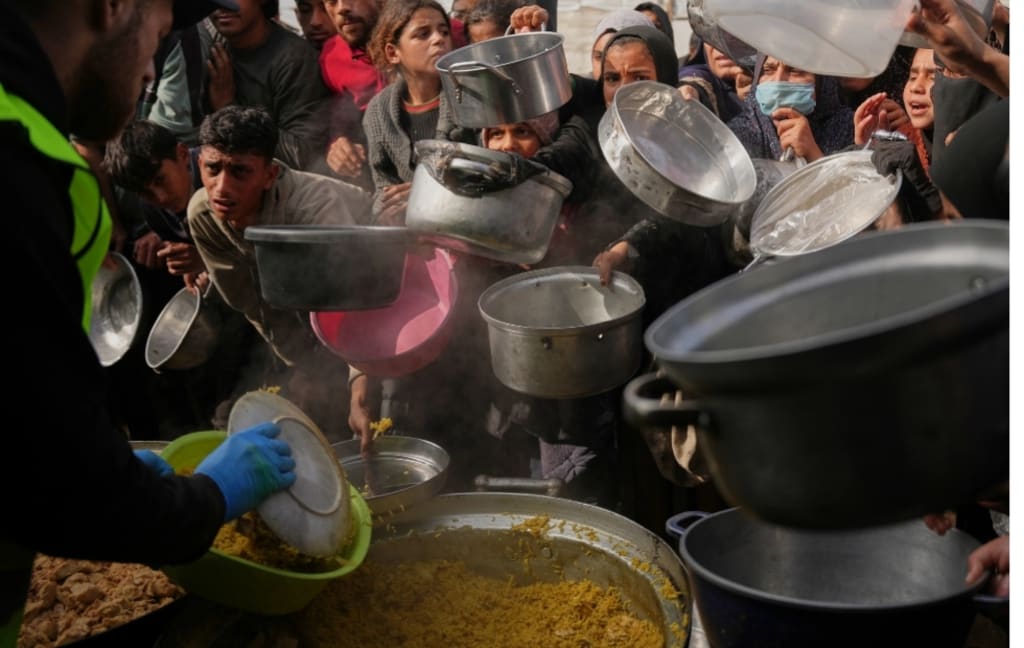
In a critical development affecting the fragile ceasefire in Gaza, Israel announced a large‑scale military operation on January 25, 2026, aimed at locating the last remaining hostage still believed to be in the territory. The move comes amid mounting diplomatic pressure from the United States and other mediators to advance to the second phase of a U.S.‑brokered ceasefire agreement.
The focus of the operation is the search for the remains of Master Sgt. Ran Gvili, an Israeli security officer killed during the Hamas‑led attacks on October 7, 2023, whose body has yet to be recovered from Gaza. The search is not only a matter of national and familial significance for Israel, but also a key condition for deepening the ceasefire and enabling broader humanitarian access via Gaza’s Rafah border crossing.
---
Background: The Hostage Issue and Ceasefire Context
The crisis began with the Hamas attack on southern Israel on October 7, 2023, which resulted in hundreds of deaths and the abduction of numerous Israeli civilians, soldiers, and dual nationals. Most hostages were released or recovered through negotiations and military operations over the ensuing months. However, Ran Gvili’s remains have not been returned despite repeated efforts by Israeli authorities and mediators.
Under the terms of the current ceasefire — brokered primarily by the United States — the return of all remaining hostages, alive or dead, was stipulated as part of the agreement’s first phase that began on October 10, 2025. The completion of this stage was intended to pave the way for reopening Gaza’s Rafah border crossing with Egypt — a lifeline for aid and movement for more than 2 million people living in the enclave.
The operation launched this week is therefore deeply tied to both humanitarian and diplomatic objectives: finalizing hostages’ status and facilitating movement into the next phase of the ceasefire.
---
Details of the Operation: Where and How the Search Is Conducted
Israel’s Defence Forces (IDF) said the operation is large‑scale and detailed, involving ground units, intelligence teams, and specialized personnel. The military has focused search efforts on:
A cemetery in northern Gaza near the so‑called “Yellow Line,” which delineates Israeli‑controlled areas from those under wider Palestinian control.
The densely populated Shujaiyya–Daraj Tuffah area of Gaza City, based on intelligence tips suggesting Gvili may have been buried there.
In addition to regular troops, the searches reportedly include rabbinical experts and dental specialists to assist in identifying remains should they be found. This reflects the deeply sensitive nature of the task, combining military reconnaissance with forensic techniques under complex and often dangerous conditions.
Israeli officials have stressed that the operation could take several days, or longer, depending on how the search unfolds and what intelligence leads materialize.
---
Political Stakes: Rafah Crossing and Ceasefire Phase Two
The Rafah border crossing — which lies between Gaza and Egypt — is one of the most critical points for humanitarian aid and civilian travel. Under the ceasefire deal, its reopening has been tied directly to progress on the hostage issue. Israel has conditioned that border’s unlocking on the return of all living and deceased hostages.
Israel’s government has stated it will not move forward with the reopening or fully transition to the ceasefire’s second phase until Gvili’s remains are accounted for. This position has become a source of tension with Washington and other international partners, some of whom are pushing to accelerate the ceasefire process amid worsening humanitarian conditions in Gaza.
U.S. officials are reported to have engaged directly with Israeli leaders in recent days, reflecting the high diplomatic stakes involved and the international community’s desire to stabilize the situation.
---
Responses and Reactions
Israeli Government and Public Sentiment
Israeli authorities, including Prime Minister Benjamin Netanyahu, have framed the operation as a moral and national obligation to bring every captive home. Families of hostages, and especially Gvili’s relatives, have publicly urged the government not to enter the second phase of the ceasefire until his remains are returned.
Public sentiment in Israel has been largely supportive of this stance, seeing the recovery as a matter of dignity for soldiers and civilians taken during the conflict.
Hamas and Palestinian Perspective
Hamas has issued statements saying it has provided all available information about Gvili’s remains and accused Israel of hindering search efforts in areas under Israeli control. This blame exchange underscores the broader distrust between the two sides even in a ceasefire context.
---
Humanitarian and Regional Implications
The fate of the Rafah crossing and the progression of the ceasefire have significant humanitarian implications. Gaza’s residents continue to face severe shortages of food, medical care, and essential services. Delays in reopening Rafah affect not just aid delivery but also the mobility of civilians seeking family reunification or medical treatment outside the enclave.
Additionally, the operation comes at a time of heightened scrutiny over military actions in Gaza more broadly, raising concerns from international rights groups about civilian safety and the ongoing humanitarian crisis.
---
Looking Ahead: What Comes Next
The success or failure of Israel’s latest operation will not only determine the immediate future of Ran Gvili’s remains but also influence broader peace and stability efforts in the region. If Gvili’s body is recovered and returned, it could unlock progress toward a broader ceasefire and border reopening that many families and international actors have long sought.
However, should the search yield no results or become protracted, political and humanitarian tensions may intensify, further complicating Eastern Mediterranean diplomacy and the lives of civilians in Gaza.
---
In summary: Israel’s large‑scale operation to locate its last hostage in Gaza represents a critical test of diplomatic, military, and humanitarian efforts to stabilize the region. At its heart lies the deeply personal desire to bring closure to grieving families and to lay the groundwork for a broader de‑escalation after years of conflict.
---
If you’d like, I can also provide a timeline of key hostage events in the Gaza conflict or a map showing areas referenced in this article (text‑based due to content rules).
About the Creator
Keep reading
More stories from Salaar Jamali and writers in Art and other communities.
‘A Lot of Fear’: The Families Bearing the Brunt of Sweden’s Immigration Crackdown
Sweden, once widely regarded as one of Europe’s most welcoming destinations for refugees and migrants, is undergoing a profound shift in its immigration policy. In recent years, a tougher stance on asylum, residency, and deportations has taken hold, driven by political pressure, concerns over crime, and the rise of anti-immigration sentiment. While policymakers frame the changes as necessary to restore order and integration, families with migrant backgrounds say they are paying the highest price. For many, the new approach has created an atmosphere of fear, uncertainty, and emotional strain that reaches deep into everyday life.
By Salaar Jamaliabout 7 hours ago in Art
Essence, Embodiment, and Relational Reality
The Failure of Reduction and the Need for Synthesis There is a persistent failure in many modern attempts to explain what a human being is. Some frameworks reduce the person entirely to matter, insisting that identity, consciousness, morality, and meaning are nothing more than emergent properties of physical processes. Other frameworks move in the opposite direction, detaching spirit from reason and grounding belief in intuition alone, often at the cost of coherence or accountability. Both approaches fail because both misunderstand essence. One denies that essence exists at all. The other treats it as something vague and undefinable.
By Peter Thwing - Host of the FST Podcastabout 2 hours ago in Art
John LoPinto on Travel as Perspective
Travel is often viewed as leisure or escape, but John LoPinto sees it as something more purposeful. For him, travel is a tool for perspective. By exploring new markets, cultures, and operating environments, leaders sharpen their strategic thinking and gain insights that are difficult to access from a distance. Exposure to unfamiliar contexts challenges assumptions and strengthens decision making.
By John LoPinto4 days ago in Art



Comments
There are no comments for this story
Be the first to respond and start the conversation.