
Iran’s Nuclear Missile Advancements in 2025 A New Era of Global Tension and Security Risks
How Iran’s Nuclear Ambitions Are Reshaping Middle East Dynamics and Challenging Global Diplomacy in 2025

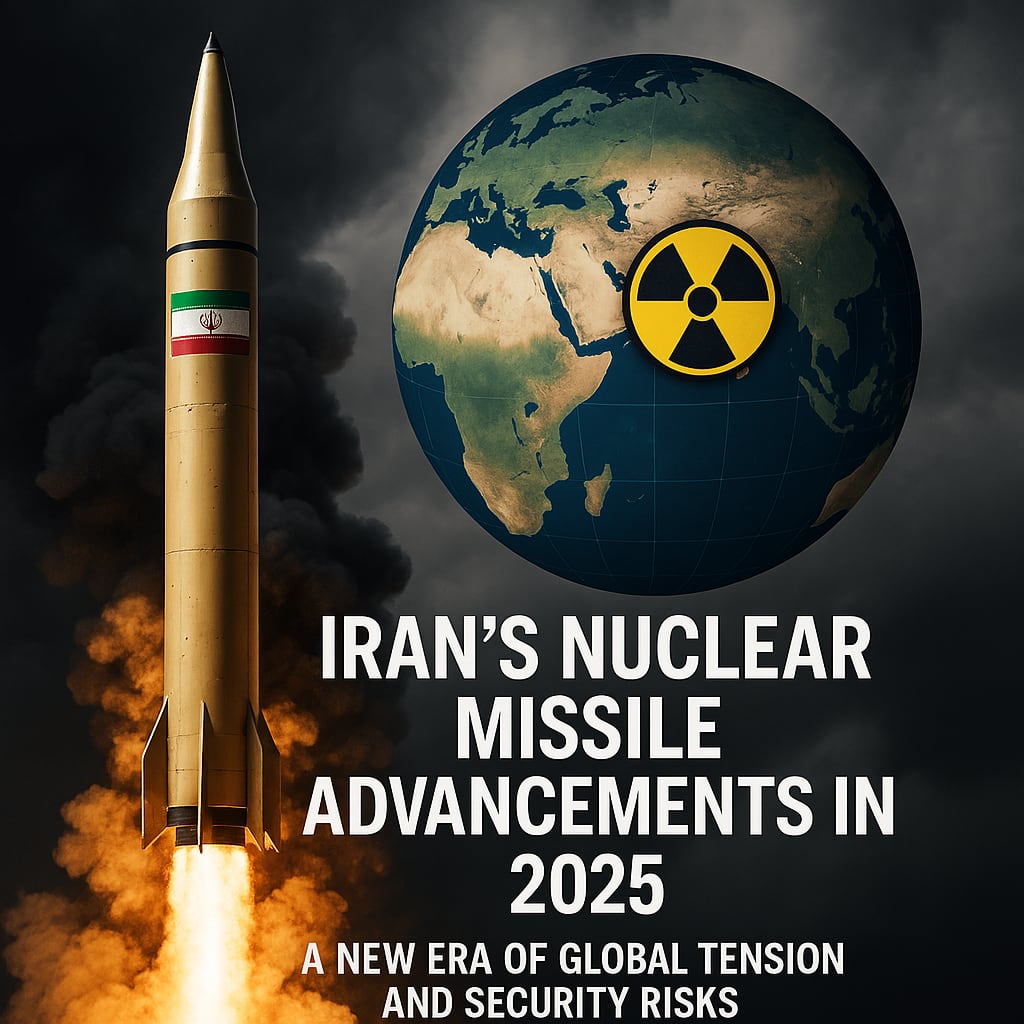
Global Implications and Reactions to Iran's Nuclear Missile Program in 2025 As of 2025, Iran’s nuclear missile program has re-emerged as one of the most pressing global security concerns. Iran's recent advancements in ballistic missile technology and nuclear development have alarmed the international community after years of diplomatic tension, sanctions, and partial compliance with nuclear agreements. While Iran maintains that its nuclear program is for peaceful purposes, intelligence reports and international watchdogs suggest a different narrative. The potential development or deployment of a nuclear-capable missile by Iran in 2025 carries significant consequences for regional stability, global security, and international diplomacy.
Where Iran's Nuclear Program Stands in 2025 Iran has made significant progress in uranium enrichment and missile technology since the U.S. withdrew from the Joint Comprehensive Plan of Action (JCPOA) in 2018. Tehran has increased its ballistic missile arsenal, reduced its cooperation with the International Atomic Energy Agency (IAEA), and resumed high-level enrichment over the past few years. Iran is believed to have developed missiles capable of carrying nuclear warheads with ranges exceeding 2,000 kilometers as of the beginning of 2025. Although no confirmed nuclear missile test has been conducted, Western and regional intelligence agencies suspect that Iran is close to achieving this capability.
Impact on the Region: Rising Tensions in the Middle East The already volatile political and military landscape in the Middle East has been exacerbated by Iran's nuclear ambitions. Israel and Saudi Arabia, two key regional rivals, have responded with increased alertness and threats of preemptive action. Israel, which has historically maintained a policy of ambiguity regarding its own nuclear arsenal, has increased its surveillance and hinted at military options should Iran cross certain thresholds.
A nuclear-armed Iran could spark a regional arms race, which is a concern for the Gulf States, particularly Saudi Arabia and the United Arab Emirates. Several nations are reportedly considering expanding their military capabilities or even pursuing nuclear technology themselves in response. This raises concerns regarding the spread of nuclear weapons in a region that has a history of wars, proxy wars, and unstable regimes. International Reactions
Globally, Iran’s suspected nuclear missile capability in 2025 has triggered widespread diplomatic activity. The problem has been addressed in a variety of ways by the United States, the European Union, China, and Russia. The United States has pushed for new UN Security Council actions and reimposed severe economic sanctions on Tehran. Washington is also increasing its military presence in the Gulf, conducting joint exercises with allies, and bolstering missile defense systems in Israel and Europe.
While supporting diplomatic efforts, European nations are having difficulty reviving the JCPOA or initiating a new agreement. They fear that military confrontation with Iran would lead to economic turmoil, a new refugee crisis, and further instability in the region.
On the other hand, China and Russia have taken a more cautious approach. Both nations oppose additional sanctions and emphasize diplomacy. They keep engaging Iran politically and economically, which makes it harder for Western powers to present a united front. Consequences for the Economy and Security The threat of a nuclear-capable Iran has far-reaching economic implications. Significant fluctuations have occurred in global oil markets, which are already susceptible to Middle Eastern instability. Oil supply routes, particularly the Strait of Hormuz, through which nearly 20% of the world's oil passes, are a concern for investors. Oil prices could skyrocket as a result of a conflict or military blockade in the region, affecting global inflation and economic stability. Moreover, the proliferation of nuclear weapons in the Middle East could increase the risk of nuclear terrorism. Threats to global security could be heightened by non-state actors, such as Iranian-affiliated militant groups, gaining access to nuclear materials or technology. Problems with Diplomacy and the Way Forward When it comes to addressing Iran's nuclear trajectory, the international community faces a difficult obstacle. Diplomacy is still the best option, but Iran and the West don't trust each other very well. A new, robust nuclear agreement would necessitate substantial concessions on the part of both sides, such as Iran's assurance of its peaceful nuclear use and the lifting of crippling sanctions. In the meantime, despite being discussed in some circles, military intervention carries risks. A full-scale war, civilian casualties, and long-term geopolitical consequences could result from an attack on Iran's nuclear facilities. Conclusion
Developing a nuclear missile by Iran in 2025 would be a significant turning point for international security. The world is at a crossroads where it must choose between escalating tensions and the real possibility of conflict or returning to diplomacy and containment. The coming months and years will test the resolve, unity, and creativity of global leaders in managing one of the most dangerous security crises of our time.
About the Creator
Samiullah
I am Dr.Samiullah from Pakistan and i am also a Professional Writter and Article Writter Hope u will like my article and stories thank u
How to Build a Profitable Online Business From Scratch
Building a profitable online business from scratch is no longer reserved for tech experts or Silicon Valley insiders. With the right strategy, tools, and mindset, anyone with a solid idea and the willingness to learn can create a sustainable source of income online. The digital economy has lowered the barrier to entry, allowing entrepreneurs to reach global audiences, test ideas quickly, and scale faster than ever before.
By Ayush Bagwariabout 2 hours ago in Art


Comments
There are no comments for this story
Be the first to respond and start the conversation.