
United States and Iran: The Ongoing Nuclear Standoff and Its Global Implications 2025
Exploring the Historical Tensions, Diplomatic Efforts, and Future Challenges in the U.S.-Iran Nuclear Crisis

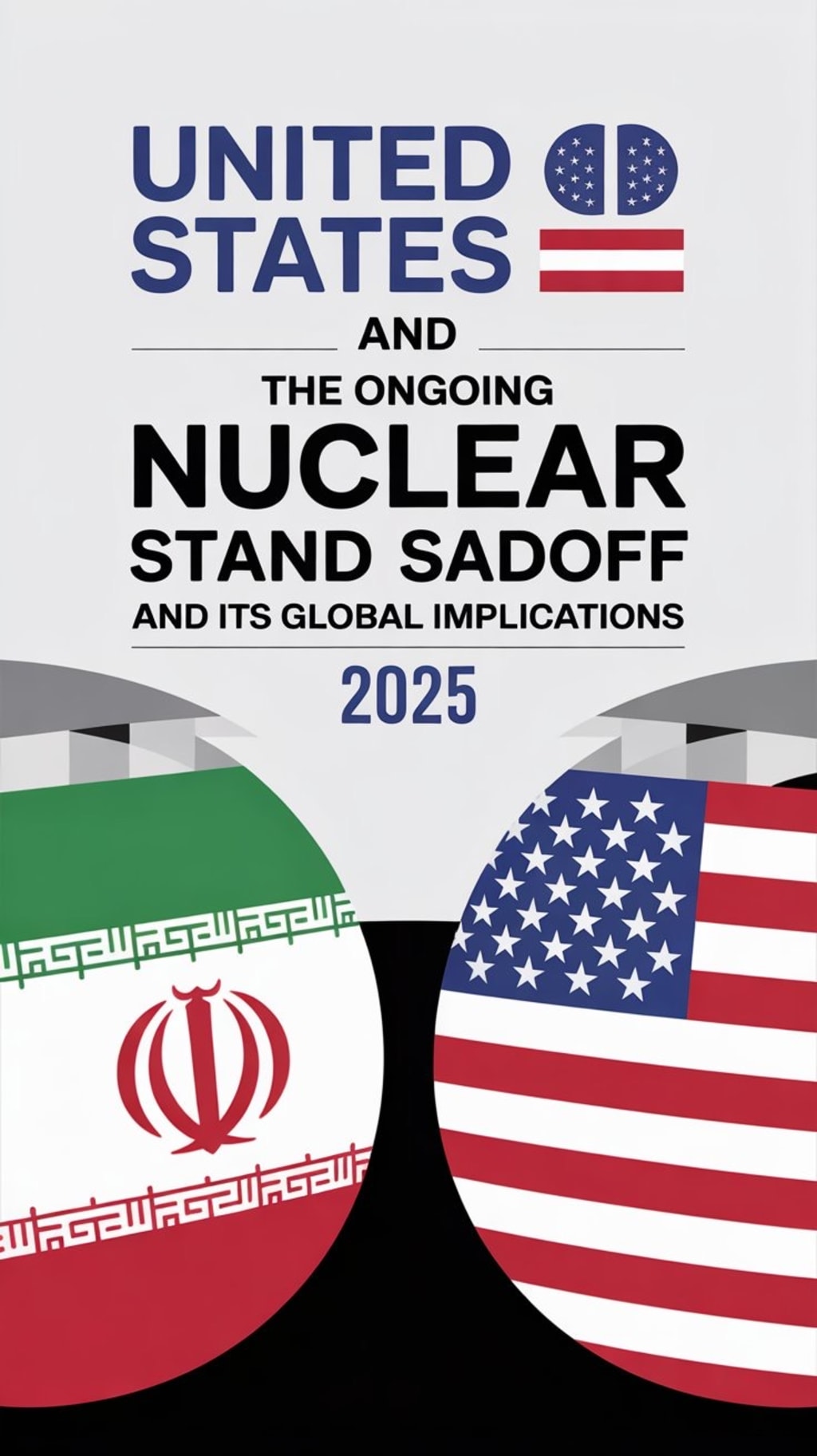
Managing the Nuclear Tension Between Iran and the United States The longstanding tension between the United States and Iran over nuclear development has remained one of the most critical issues shaping geopolitics in the Middle East and beyond. Rooted in decades of distrust, conflict, and competing interests, the nuclear standoff between these two nations poses serious risks to regional and global stability.
Historical Background
The origins of the nuclear tension can be traced back to the Iranian Revolution of 1979, when the U.S.-backed Shah was overthrown and replaced by the Islamic Republic under Ayatollah Khomeini. The beginning of a hostile relationship between the two nations can be traced back to this. However, Iran’s nuclear ambitions began even earlier during the Shah’s rule, with support from Western countries, including the U.S. Iran's pursuit of nuclear technology after the revolution became a source of serious concern for the United States and its allies. There were concerns that Iran was developing nuclear weapons under the guise of a peaceful energy program when evidence of its covert work on nuclear enrichment technology surfaced in the early 2000s. Iran has consistently refuted these claims, asserting that its program was solely for civilian use. In spite of these assertions, Iran was subjected to multiple rounds of economic sanctions by the international community, led by the United States. The Nuclear Deal of 2015 (JCPOA) When Iran signed the Joint Comprehensive Plan of Action (JCPOA) with the United States, UK, France, China, Russia, and Germany in 2015, it made significant progress. The deal imposed strict limits on Iran’s nuclear activities in exchange for sanctions relief. Under the JCPOA, Iran agreed to reduce its uranium stockpile, limit enrichment levels, and allow International Atomic Energy Agency (IAEA) inspections.
The JCPOA was seen as a diplomatic success by many around the world, as it provided a peaceful solution to a potentially catastrophic issue. However, critics, particularly in the United States and Israel, argued that the agreement lacked flaws, such as time-bound restrictions and no restrictions on Iran's missile program. U.S. Withdrawal and Renewed Tensions
In 2018, President Donald Trump unilaterally withdrew the U.S. from the JCPOA, calling it a “bad deal” and reinstated severe economic sanctions on Iran under a policy of “maximum pressure.” Iran gradually reversed its compliance with the agreement as a result of this action, which was condemned by the other signatories. Since then, Iran has increased its uranium enrichment levels far beyond the limits set by the JCPOA and has limited IAEA access to its nuclear sites. Fears of a direct military conflict arose when the United States killed Iranian General Qasem Soleimani in 2020, further escalating the situation. The Biden Administration’s Approach
When Joe Biden took office in 2021, he said that he would stick with the JCPOA again if Iran did the same. Due to mutual distrust and intricate geopolitical considerations, several rounds of indirect talks were held in Vienna, but they did little to advance the situation. While the United States wanted Iran to return to compliance prior to any relief, Iran demanded that the United States lift all sanctions first. Adding to the tension are regional players like Israel and Saudi Arabia, who are deeply opposed to Iran’s nuclear ambitions and influence in the Middle East. Israel has repeatedly warned that it will not allow Iran to acquire nuclear weapons and has been accused of conducting sabotage operations and assassinations targeting Iranian nuclear scientists.
Current Situation and Prospective Future As of 2025, the nuclear tension remains unresolved. Diplomatic talks have stalled as Iran continues to enrich uranium to close to weapons-grade levels. The U.S. and its allies are increasingly concerned, while Iran continues to demand sanctions relief and security guarantees.
There are a number of important questions that need to be answered in light of the ongoing impasse, including whether diplomacy will continue to be effective or whether the situation will escalate into a military conflict. What role will global powers like China and Russia play in mediating the issue? And how will domestic politics in both Iran and the U.S. influence future decisions?
Conclusion
Iran's nuclear tensions are not just a bilateral matter; they are a global concern with far-reaching repercussions. Despite the fact that both nations have legitimate security interests, the stakes cannot be ignored. A renewed commitment to diplomacy, backed by mutual trust and verification mechanisms, remains the best path forward. One of the most perilous standoffs of the 21st century is one that the entire world closely monitors, hoping for a peaceful resolution.
Feedback will be Appriciated thank u
About the Creator
Samiullah
I am Dr.Samiullah from Pakistan and i am also a Professional Writter and Article Writter Hope u will like my article and stories thank u


Comments
There are no comments for this story
Be the first to respond and start the conversation.