
The Future Unleashed: Navigating the 2026 Visual Effects Industry
Key Trends, AI-Driven Innovation, Real-Time Rendering, and Global Growth Opportunities Shaping the Next Era of VFX in 2026

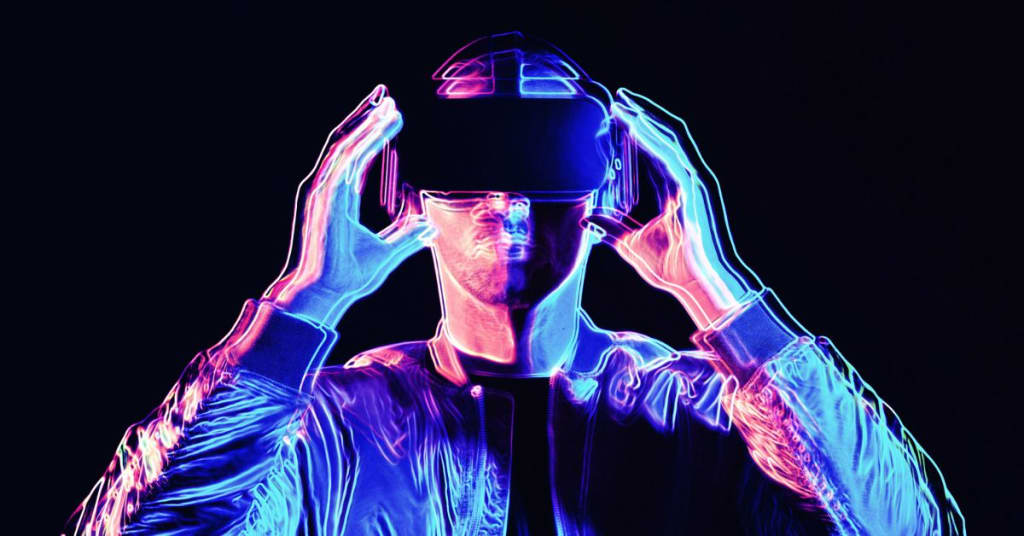
The cinematic experience has always been about the suspension of disbelief, but in 2026, that suspension has become almost permanent. We have entered an era where the line between physical reality and digital artifice has not just blurred—it has effectively vanished. The visual effects industry stands at the heart of this transformation, evolving from a post-production afterthought into the very foundation of modern storytelling.
As we look at the landscape today, the industry is undergoing its most significant shift since the transition from practical effects to CGI in the 1990s. Driven by artificial intelligence, real-time rendering, and a global demand for immersive content, the visual effects sector is no longer just a service; it is a creative powerhouse redefining entertainment, gaming, and even corporate communication.
The AI Revolution: From Tool to Partner
If 2024 was the year of AI experimentation, 2026 is the year of AI integration. In the current visual effects industry, Artificial Intelligence is no longer a "magic button" or a threat to jobs; it has become a sophisticated production partner.
The most labor-intensive tasks that once took weeks—such as rotoscoping, match-moving, and plate cleaning—are now handled by neural networks in a fraction of the time. This automation has allowed artists to move away from technical drudgery and refocus on high-level creativity. For instance, AI-driven facial animation and neural rendering now allow for the creation of digital humans that are indistinguishable from real actors, even in high-definition 8K environments.
Furthermore, "Gaussian Splatting" has emerged as a dominant trend within the industry. This technology allows VFX houses to capture complex, high-detail real-world environments and convert them into immersive, interactive digital spaces that can be rendered in real time. It’s a leap beyond traditional photogrammetry, offering a level of tactile realism that was previously impossible.
Virtual Production and the End of the Green Screen
One of the most visible changes in the visual effects industry is the rise of Virtual Production (VP). The traditional workflow—where actors performed against a green screen and saw the results months later—is rapidly becoming obsolete.
Today, large-scale LED volumes, powered by real-time engines like Unreal Engine 5.5, allow directors to see final-quality visual effects right on the set. This "In-Camera VFX" (ICVFX) approach means that lighting, reflections, and backgrounds are captured during principal photography. This shift has fundamentally changed the timeline of the industry, moving the "post-production" phase into the "production" phase.
For the industry, this means greater efficiency and cost-effectiveness. Studios no longer need to fly entire crews to remote locations when a photorealistic desert or a distant planet can be projected onto an LED wall with perfect lighting accuracy. This technology has democratized high-end production, allowing mid-tier studios and even independent filmmakers to achieve "tentpole" quality visuals.
Streaming Giants and the Hunger for Content
The growth of the visual effects industry is inextricably linked to the "Streaming Wars." While the initial frenzy of subscriber acquisition has stabilized, the mandate for 2026 is high-quality, "prestige" content that keeps audiences engaged.
Platforms like Netflix, Disney+, and Amazon Prime are spending billions on original series that require film-level visual effects. This has created a massive backlog of work for VFX houses globally. However, it has also led to a more disciplined approach to budgeting. The industry is seeing a shift toward "Sovereign Hubs"—regions like India, South Korea, and parts of the Middle East that offer significant tax incentives and a growing pool of skilled talent.
India, in particular, has transitioned from being a mere "outsourcing hub" for rotoscoping to a global center for high-end character animation and complex simulations. The domestic industry in these regions is flourishing, creating a more multipolar global landscape for visual effects.
The Human Element: Addressing the Talent Gap
Despite the technological leaps, the visual effects industry faces a critical challenge: a shortage of senior talent. As the complexity of projects increases, the demand for experienced VFX supervisors, technical directors, and real-time artists has outpaced the supply.
In 2026, the most successful companies in the industry are those investing heavily in internal R&D and training. We are seeing a "hybrid" workforce where artists must be as comfortable with coding and machine learning as they are with traditional color theory and composition. The focus has shifted from "knowing the software" to "understanding the pipeline."
Moreover, the industry is grappling with the ethics of AI. Issues surrounding "authorized likeness licensing"—where digital twins of actors are used for stunts or de-aging—require rigorous legal and creative frameworks. The industry's leaders are currently working with guilds and unions to ensure that technology enhances the artist’s work rather than undermining their intellectual property.
Beyond Entertainment: The Diversification of VFX
The visual effects industry is no longer confined to the four walls of a cinema or the screens in our living rooms. We are seeing a massive cross-pollination between the VFX sector and other fields:
Gaming: The line between a "cinematic" and "gameplay" has disappeared. VFX studios are now regularly hired to create high-fidelity assets for AAA games.
The Metaverse and VR: As consumer headsets become more ergonomic and powerful, the demand for "live" visual effects in social VR spaces has exploded.
Education and Healthcare: Simulation VFX is being used to train surgeons and engineers, providing hyper-realistic environments where they can practice complex procedures without real-world risk.
Advertising: Brands are using "surreal micro-worlds" and liquid chrome aesthetics to create thumb-stopping content for social media, leveraging VFX to stand out in a crowded digital industry.
The Path Toward 2030
As we look toward the end of the decade, the visual effects industry appears to be heading toward a state of "Invisible Commerce." We are moving to a point where the technology is so seamless that we stop calling it "visual effects" and simply call it "the image."
Cloud-native workflows are now the standard, allowing teams in London, Mumbai, and Vancouver to work on the same 8K frame simultaneously without lag. This global connectivity is making the industry more resilient and flexible, capable of pivoting to meet the demands of an ever-changing media landscape.
While economic headwinds and budget scrutiny remain constant factors, the underlying value of the industry has never been higher. In a world where "seeing is believing," the people who create what we see hold the keys to the future of human connection and storytelling.
Conclusion
The visual effects industry in 2026 is a testament to human ingenuity. By embracing AI, perfecting real-time rendering, and expanding into new digital frontiers, the sector has ensured its place as a cornerstone of the global economy. It is an industry that thrives on the impossible, turning the wildest dreams of creators into tangible, breathtaking realities.
Whether it is a digital dragon flying over a medieval city or a subtle de-aging of a beloved actor, the work of this industry reminds us that in the digital age, our only limit is our imagination.
About the Creator
Rahul Pal
Market research professional with expertise in analyzing trends, consumer behavior, and market dynamics. Skilled in delivering actionable insights to support strategic decision-making and drive business growth across diverse industries.
The Best AI Music Generator for Commercial Creators in 2026
By January 2026, the conversation around AI in music has shifted from "Will it replace us?" to "How do I use it to finish tracks faster?" As a senior audio editor who has reviewed everything from Suno’s latest updates to complex DAW plugins, I have seen the market flood with tools. However, for creators who need a balance between ease of use and professional control, Create Music AI has established itself as a formidable ecosystem.
By techfusion3 days ago in Art


Comments
There are no comments for this story
Be the first to respond and start the conversation.