
Impressive Artwork by Paul Gauguin
Post-impressionist artist

French post-impressionist artist Paul Gauguin experimented with colors and the Synthetist style, setting his paintings apart from Impressionism, but was not recognized for this until after his death. Toward the end of his life, Gauguin spent time in French Polynesia and created artworks of the people and landscapes. He formed a friendship with Dutch artists Vincent and Theo Van Gogh. The artist had an impact on the French avant-garde and contemporary art, and as a painter, sculptor, printmaker, ceramist, and writer, Gauguin played a significant role in the Symbolism movement, which followed post-impressionism.

Arearea is an artwork created in 1892. It was featured at Gauguin’s Parisian Durand-Ruel Exhibition of 1893. The possible metaphorical or symbolic significance of dogs in the artist’s artworks has been questioned.

Day of the God, or Mahana no atua, was completed in Paris after the artist returned from Tahiti. In this artwork, human figures are grouped symmetrically around a central carved idol of the goddess Hina, perched on a rock beside the beach. The colonial government of Tahiti wanted to outlaw the sensual dance known as the upaupa, which can be seen being performed by two ladies on the left side of the image. The mystery in the painting remains the foreground figures of three bathers whose stances suggest they represent birth, life, and death, and the meaning was never explained. The painting can be viewed at the Art Institute of Chicago in Chicago, Illinois.
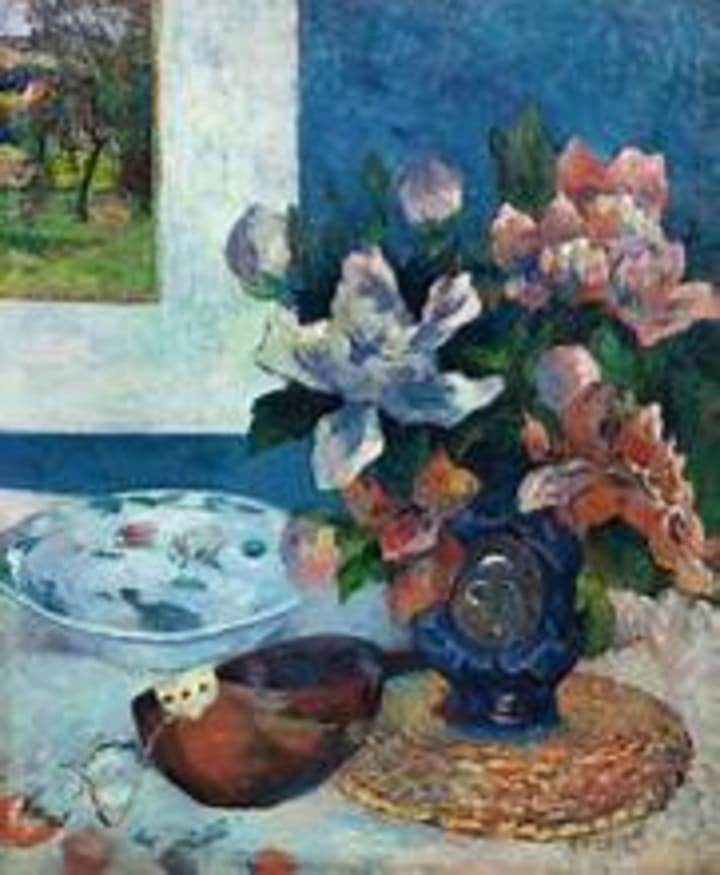
Nature Morte à la Mandoline is an artwork in which Gauguin abandoned the Impressionist technique and moved toward the planes of color. This made his painting more two-dimensional, and he made use of line and color as complementary possibilities of expression.

La Orana Maria, or Ave Maria, is an oil-on-canvas created in 1891. This artwork is one of the earliest paintings from the Tahitian period. The painting depicts two Polynesians greeting the Madonna and Child. This is Paul Gauguin’s first large canvas painted in Tahiti.
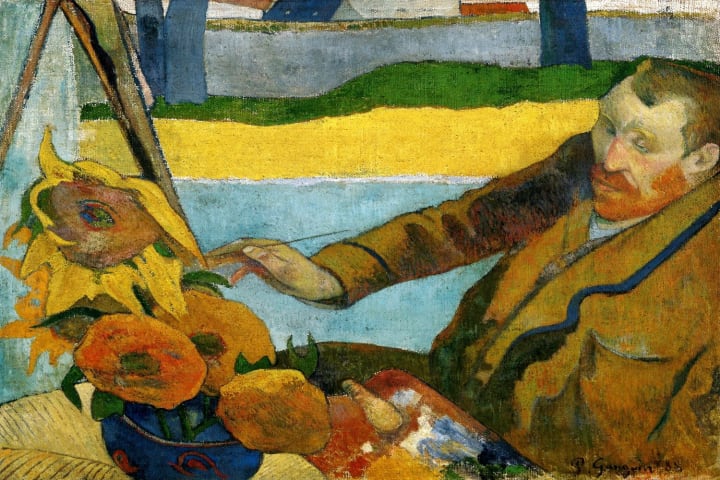
The Painter of Sunflowers is a portrait of Dutch artist Vincent Van Gogh created in 1888. Gauguin was staying with Van Gogh in Arles, France. Van Gogh’s brother Theo was also staying there, and soon Gauguin tired of their fighting and left. It was after one of these famous fights that Van Gogh cut off his left ear with a razor.

Tahitian Women on a Beach is a painting also known as Femmes de Tahiti in French. It depicts two Tahitian women on the beach in Tahiti in the South Pacific. It can be viewed at the Musée d’Orsay in Paris, France.

Another similar painting, Parau api/Two Women of Tahiti, was completed in 1892 and is on display at the Galerie Neue Meister in Dresden, Germany.

Vision after the Sermon is also known as Jacob Wrestling with the Angel. It is an oil-on-canvas completed in 1888. The painting depicts the scene from the Bible in which Jacob is wrestling with an angel. It is shown in an indirect manner, in the form of a vision the woman portrayed had after listening to a sermon in church. The artwork was created in the town of Pont-Aven in Brittany, France.

Where Do We Come From? What Are We? Where Are We Going?
It is a painting that was completed on the island of Tahiti. This painting is “a philosophical work similar to the subjects of the Gospels,” and the artist regarded it as one of his greatest artworks. The painting is emphasized by the vivid use of colors and broad brushstrokes. Gauguin was a pioneer in the post-impressionist movement, and this artwork is an exaggeration of that style. It can be viewed at the Museum of Fine Arts in Boston, Massachusetts.
Will You Marry Me? (pictured above) When the artist arrived in Tahiti, he discovered that at least two-thirds of the indigenous population had died as a result of different diseases. Despite this, he created many paintings of native women, including this one. Returning to France, these paintings were not very well received. However, the artwork was sold to Sheikha Al-Mayassa bint Hamad Al-Thani in February 2015 for close to US$210 million (£155 million). This price is one of the highest prices that has ever been paid for a piece of art.
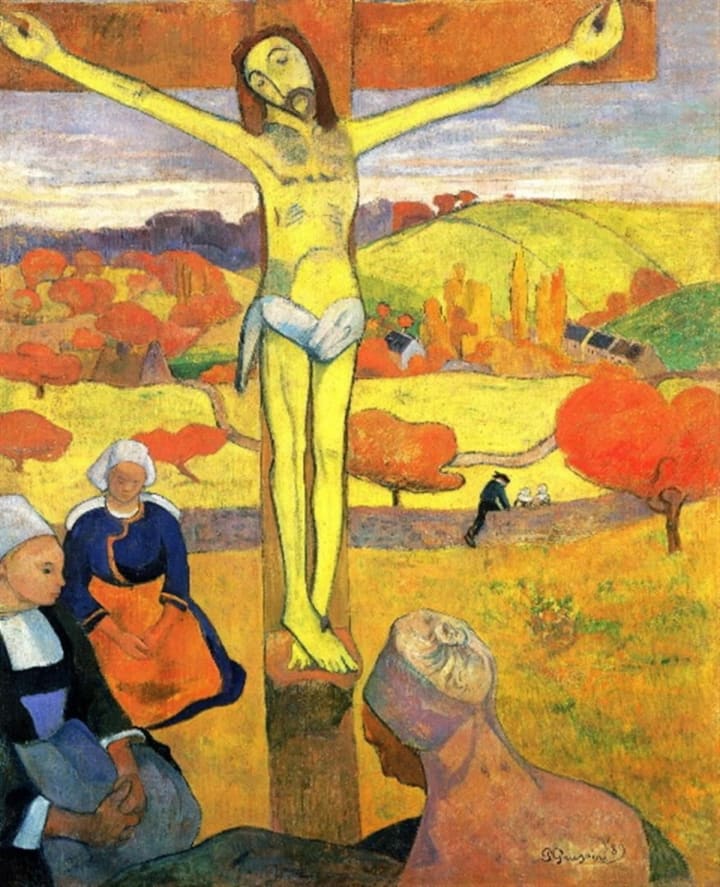
The Yellow Christ is an artwork created in 1889 at Pont-Aven. It is among the most important symbolism paintings. This is a symbolic painting that depicts the crucifixion of Christ among a group of praying Breton women in northern France. The artist made use of strong lines to delineate his figures and lightly shaded the female figures. Autumn’s predominant color in Christ’s figure is reflected in the season’s palette of yellow, crimson, and green in the landscape.
About the Creator
Rasma Raisters
My passions are writing and creating poetry. I write for several sites online and have four themed blogs on Wordpress. Please follow me on Twitter.
Keep reading
More stories from Rasma Raisters and writers in Art and other communities.
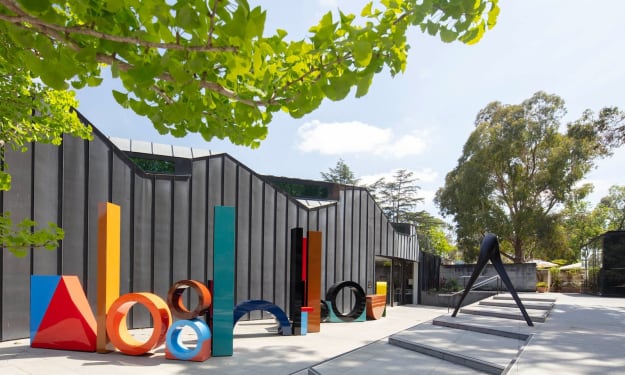
Top Art Museums in Australia
Located in Sydney, the Art Gallery of New South Wales is among the largest art galleries in Australia. It was founded in 1872 as the New South Wales Academy of Art. Presently the museum offers 40 exhibitions per year. It has a collection of Aboriginal, Asian, Australian, and Pacific art. There are also displays of European and contemporary artworks.
By Rasma Raisters3 months ago in Art
'Till Death We Do Art
There would be nothing divine in this world without art. Nature may surpass the divine to all intents and purposes, but like everything it absorbs and is absorbed by, it remains here, stuck on the surface of this world, ever-present, physically bound to the universe.
By Avocado Nunzella BSc (Psych) -- M.A.P 25 days ago in Art
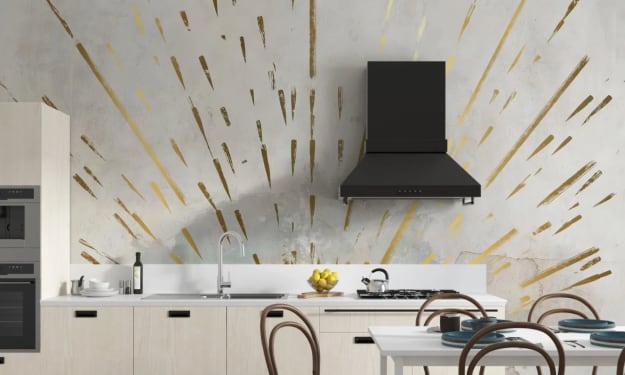
Modern Wall Decor Ideas with Bathroom Wallpaper and Kitchen Wallpaper
Creating Beautiful Interiors with Wall Decor A well-designed home begins with thoughtful wall decor choices that reflect both style and personality. Walls are often the largest surfaces in any room, so the way they are decorated has a major impact on the overall atmosphere of a space. From minimalist textures to bold decorative patterns, modern wall design has evolved into an important part of interior styling. By choosing decorative elements that complement furniture, lighting, and color palettes, homeowners can create a balanced and inviting environment that feels both comfortable and visually appealing.
By Wallanza Wallpapera day ago in Art


Comments
There are no comments for this story
Be the first to respond and start the conversation.